
Anatomy TUESDAY – Let’s Talk About Lats (Part 3)
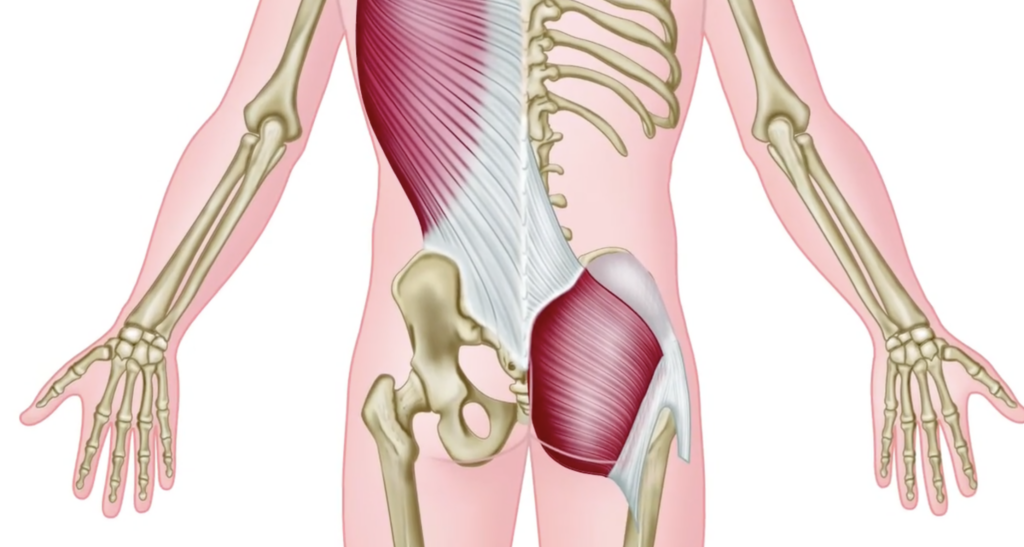
The latissimus dorsi is linked via the thoracolumbar fascia to the opposite gluteus maximus. This link is most obvious when pulling with one hand (as in the picture below).
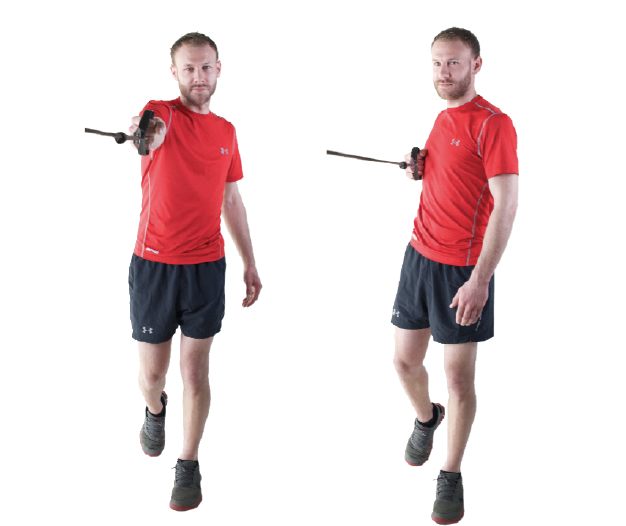
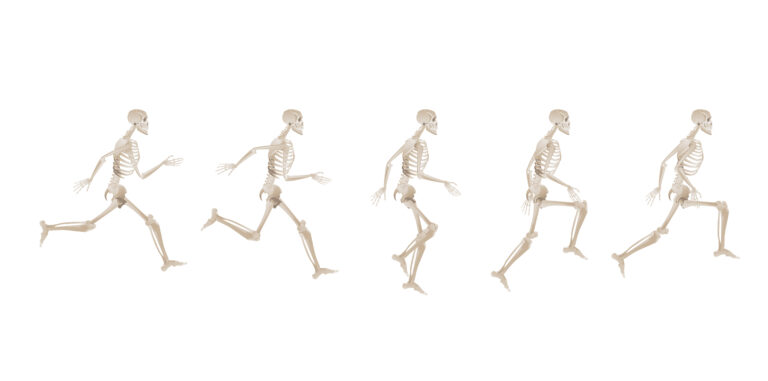
The first phase (left picture) is the eccentric phase in which the left gluteus maximus is eccentrically loaded alongside the right shoulder extensors (tricep and latissimus dorsi). The second phase (right picture) is when these muscles work concentrically. In this sense, these muscles are functional antagonists. They work the same way at the same time to produce motion.
Chronic over-firing or increased neurological input of the latissimus may occur if the opposite gluteus maximus is weak, resulting in a tight latissimus dorsi. Tightness of the latissimus dorsi often lies at the root of rotator cuff impingement and lower back pain (stenosis, spondylolysis or other diagnoses that do not tolerate lumbar extension).
How do you know the gluteus maximus is weak? Here are some quick tests:
- Standing glute squeeze test – you should be able to isometrically contract one glute max at a time (Hint: almost everyone can squeeze both glutes simultaneously)
- Dumbbell Romanian Dead Lifts (RDL’s) – Stand on one leg while holding a dumbbell with both hands. Lower the dumbbell to the floor while hinging at your hip. Perform 10 repetitions on each side. Does one side feel weaker?
- Supine single leg Swiss ball isometric bridge – Lie you your back with your legs on a Swiss ball. Bridge up by lifting your butt off the floor so that your body is as straight as a plank. Your arms can be by your side. Lift one leg off the ball for 5 seconds. Place that leg back on the ball and lift the other one. Does one side feel weaker?
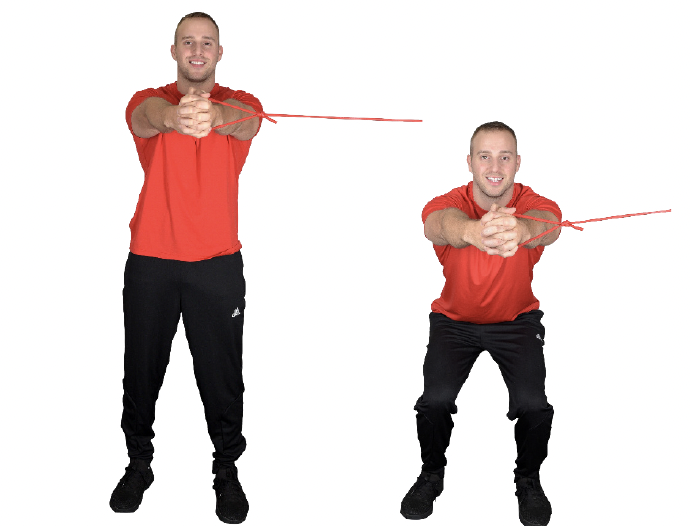
- Paloff Squat (pictured below) – Stand with feet hip width apart and toes pointed straight ahead. Secure a tubing band at shoulder height and hold the free end of the band with both arms outstretched in front of you. Keeping your arms locked out in front of you perform a full depth squat. Return to the starting position. Try with the band pulling towards the other side. The glute closest to the direction the tubing is pulling is the one you are testing. In the photo below, the left gluteus maximus is being tested.
Why does this matter?
In cases where the latissimus dorsi seems tight, despite consistent stretching, the missing link may be weakness in the opposite gluteus maximus. Testing the gluteus maximus and incorporating functional strengthening to increase glute activation with one-arm pulling activities decreased latissimus dorsi tightness.
Next time your patient’s lat doesn’t seem to be responding to stretching, test the opposite glute and fix what you find.
Because nobody has time to be in pain.
Until next time…
Kind Regards,
MoveWell Academy
[email protected]