Anatomy TUESDAY – From Pecs to Palms (Why Yoga Poses Sometimes Hurt)
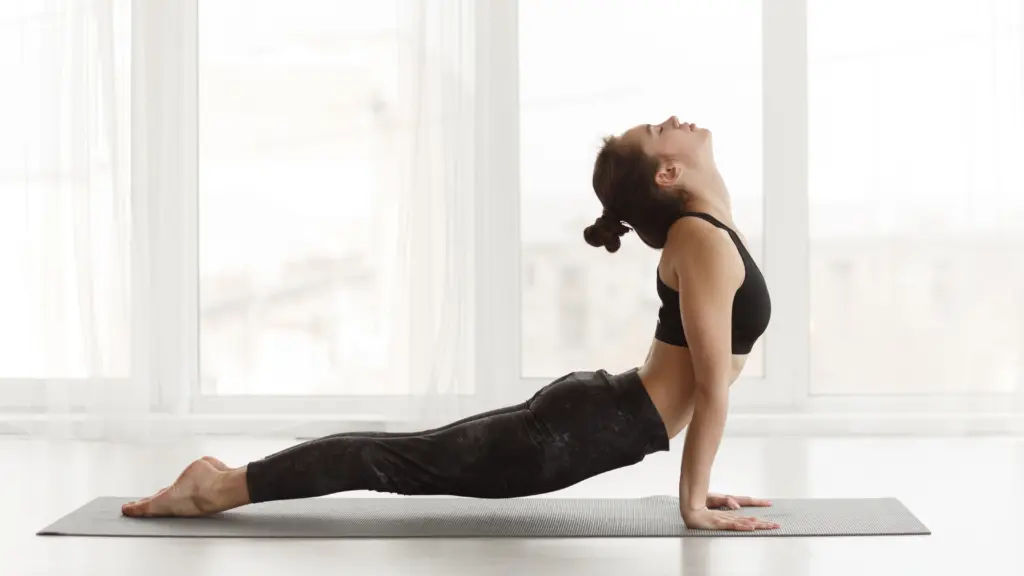
Have you ever tried to place your palms flat on the floor during a stretch, push-up, or yoga pose and felt tightness or discomfort at the base of your hands?
You might assume your wrists just need more stretching. But the sensation of tightness may involve more than your wrist joint. The connective tissues of your forearm, wrist, and palm all work together to support movement.
Understanding the Transverse Carpal Ligament
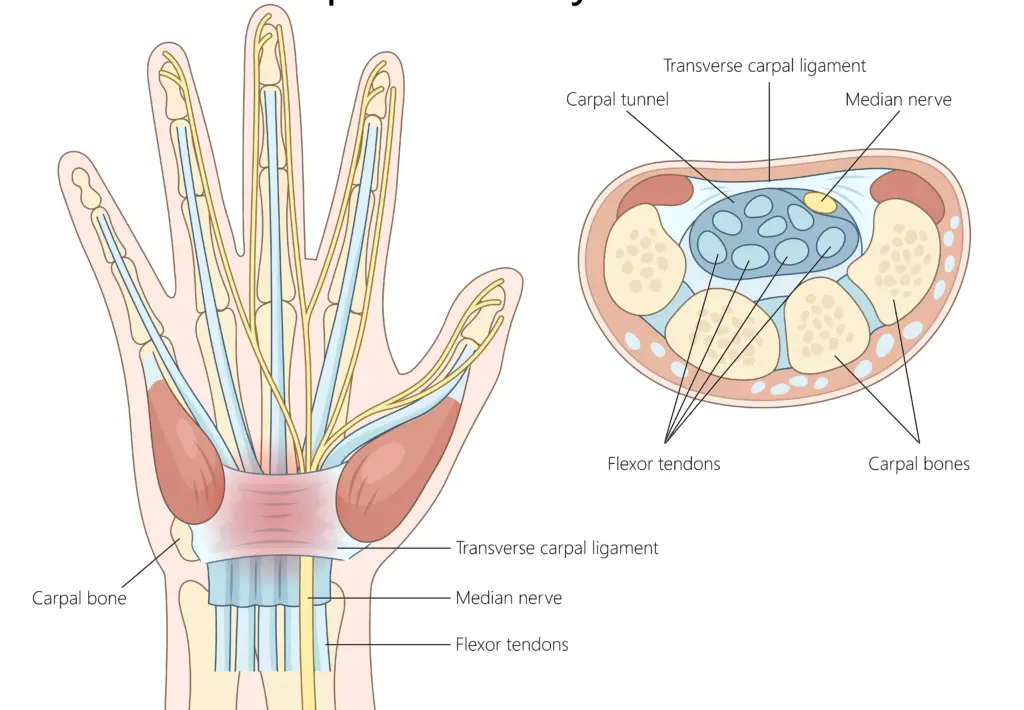
At the base of your palm is a strong band of connective tissue called the transverse carpal ligament, also known as the flexor retinaculum.
This ligament forms the roof of the carpal tunnel, a small passageway that protects the median nerve and several tendons responsible for moving your fingers.
The transverse carpal ligament is closely associated with a network of fascia—connective tissue that surrounds and supports muscles, tendons, nerves, and other structures.
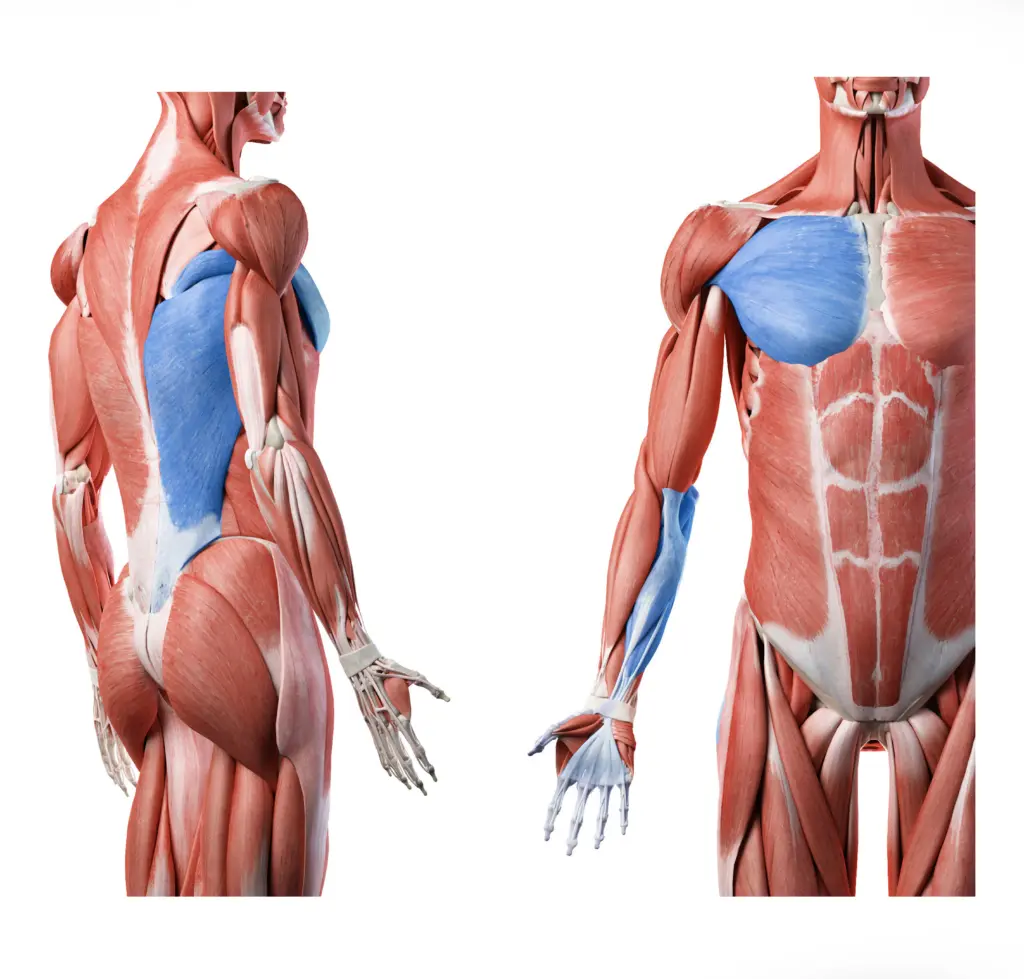
These fascial relationships a connection from your shoulders to your fingertips (known as the front of the arm line):
Pectoralis major and latissimus dorsi (which is on the back but connects to the front of your shoulder) > the antebrachial (forearm) region > palmar aponeurosis > hypothenar and thenar fascia (base of the thumb and 5th finger). This makes up the superficial fascia of the front of the arm line.
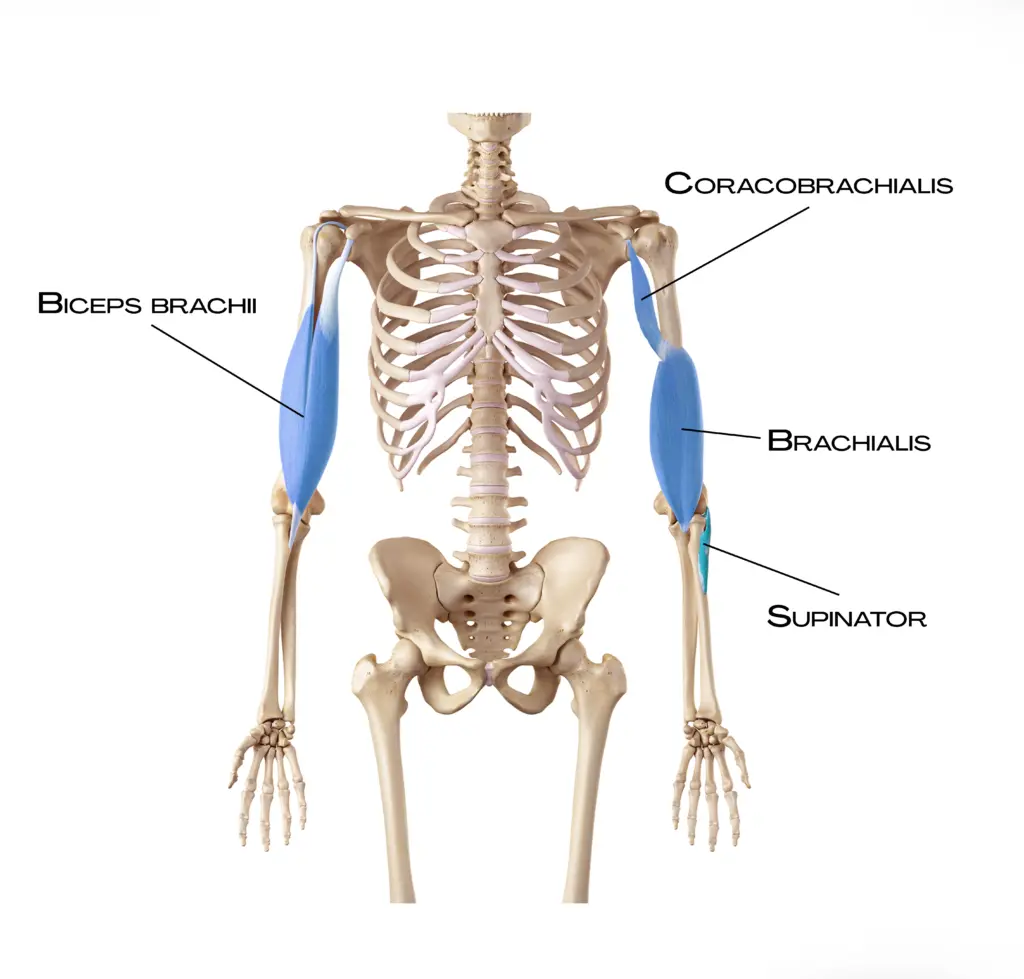
It looks like it skips the upper arm, but the deep fascia of the front of the arm line is shown below. It includes: coracobrachialis and biceps brachii > brachialis > supinator.
Because these structures are anatomically connected or closely related, mobility and loading throughout the forearm and hand may influence how comfortable your wrists feels during movement.
Why Does Placing Your Hands on the Floor Feel Tight?
When you place your palms flat on the ground, several things happen simultaneously:
- Your wrist moves into extension.
- Your fingers extend and spread to support your weight.
- Your flexor tendons and surrounding tissues accommodate the position.
- Your wrist joints and the base of your palm experience increased pressure.
If these tissues aren’t accustomed to the movement or load, you may experience tightness or discomfort.
The solution isn’t always to stretch harder. Sometimes, warming up the structures of the front of the arm line is a better solution.
Try this test. Place your palms on the ground and assess the level of discomfort or tightness you feel. Then try these quick warm-ups:
Three Quick Warm-Ups to Try
- Wake Up Your Fingers
Start with your wrist in a comfortable position. Open your hand wide then make a gentle hook fist, straighten your fingers, and then make a full fist, straight your fingers then make a straight fist:
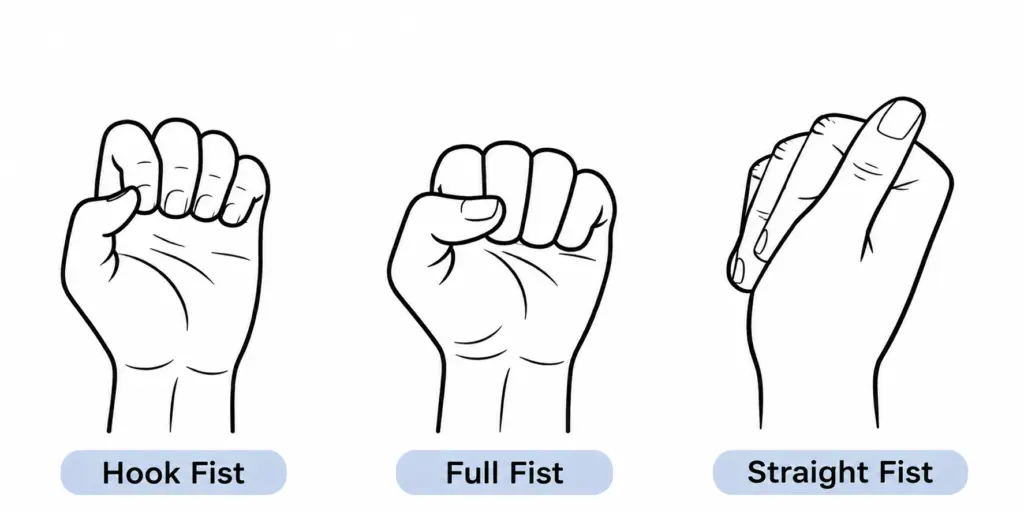
Repeat 6-10 times.
These movements encourage the flexor tendons to glide through their surrounding tissues and prepare your hands for movement.
- Get Your Forearms Moving
With your elbows bent at your sides, slowly rotate your palms toward the ceiling and then toward the floor.
Repeat 10–15 times.
Next, gently move your wrists up and down through a comfortable range.
This helps prepare the forearm muscles and joints that contribute to wrist and hand movement.
- Gradually Load Your Wrists
Instead of immediately placing your hands flat on the floor, start with your palms against a wall.
Slowly lean toward the wall, allowing your wrists to extend comfortably. Rock forward and backward 10 times.
As this becomes easier, progress to placing your hands on a countertop, then a lower surface, and eventually the floor.
The goal is to gradually improve your tolerance to wrist extension and weight-bearing, not force your wrists into a painful position.
- Don’t forget the pecs
Sit up tall and place your hands on lap. Rotate your shoulder blades in a backwards circle. Make sure your hands don’t move on your lap. This ensures you are getting scapular movement and not just shoulder or elbow movement. Perform 6-10 repetitions.
Then open your arms wide like you are making the letter “T” with your arms. Bring your hands together, then open your arms wide and make the letter “Y”. Bring your hands together. Then open your arms wide and make the letter “A”. Perform 6-10 repetitions.
Now, re-test your wrist mobility by placing your palms on the floor. Is it different?
Why does this matter?
Your wrists don’t work in isolation. The fascia, muscles, tendons, and joints of your forearms and hands all contribute to comfortable movement.
If placing your palms flat on the floor feels tight, try warming up your shoulders, fingers and forearms before gradually increasing the load through your wrists.
A little movement preparation may be more helpful than forcing a deeper stretch.
In preparation for loaded postures through your hands, remember pecs to palms and warm up accordingly. (Join me next week when we talk about the jam in the wrist when you do this motion).
Because nobody has time to be in pain.
Until next time…

Kind Regards,
MoveWell Academy
[email protected]