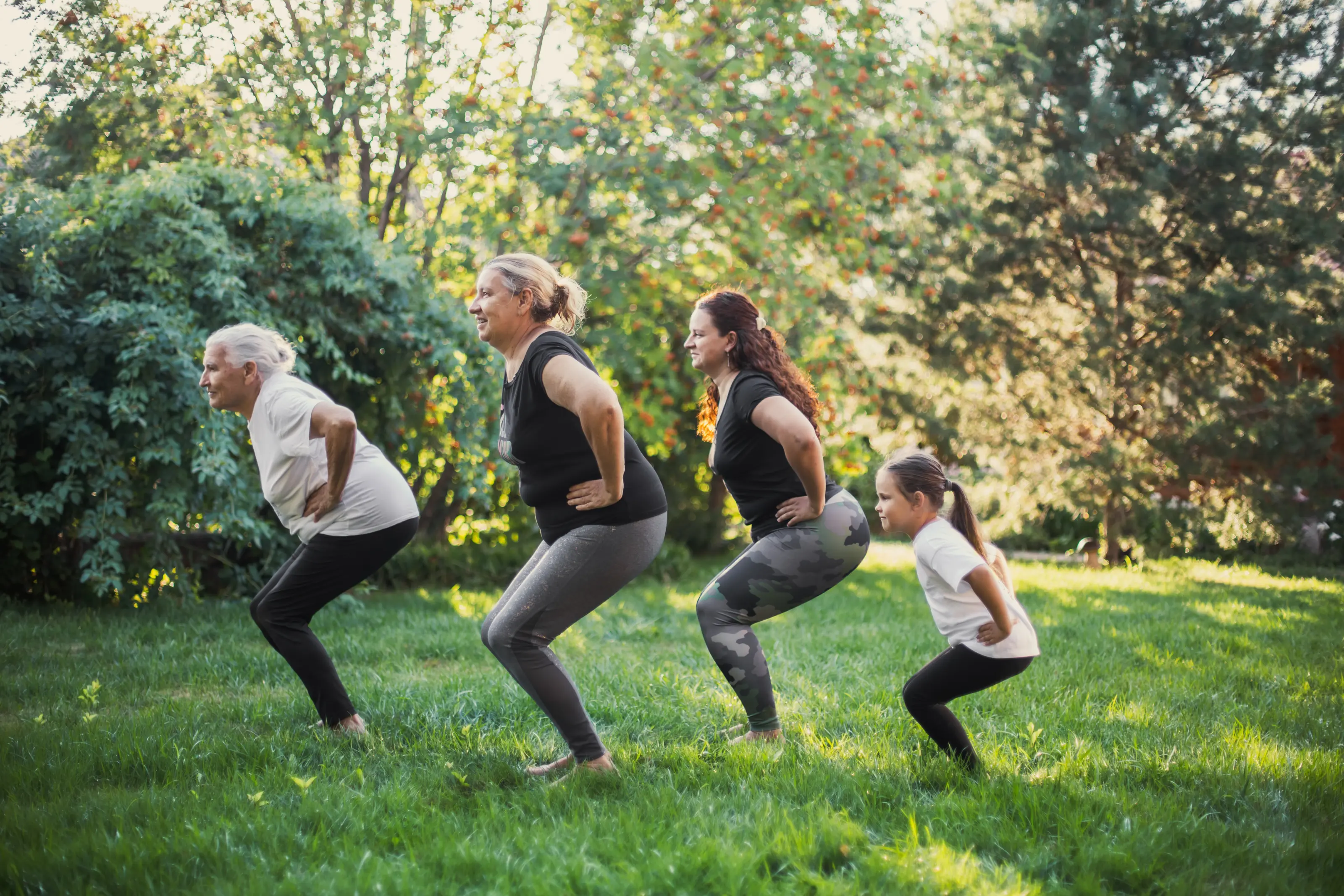
Kinesiology THURSDAY – When More is Less: The Biomechanics of a Full Squat
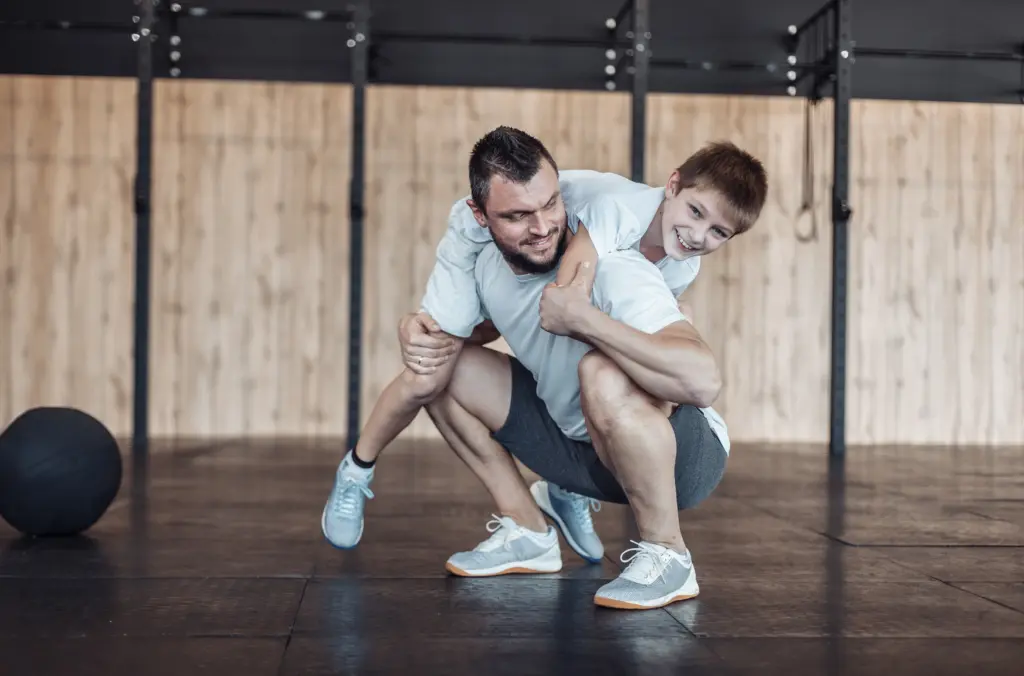
It is possible to squat this deep and still have a smile on your face and there is a kinesiological explanation why.
Deep squatting is often associated with increased knee stress. As knee flexion increases, the quadriceps must generate force to decelerate and control the movement. This increases compression at the patellofemoral and tibiofemoral joints.
But something interesting happens at the bottom of a very deep squat: the posterior thigh comes in contact with the calf muscles, creating an additional pathway for load transfer. This contact actually reduces compressive forces acting on the knee.
It looks a little like this:
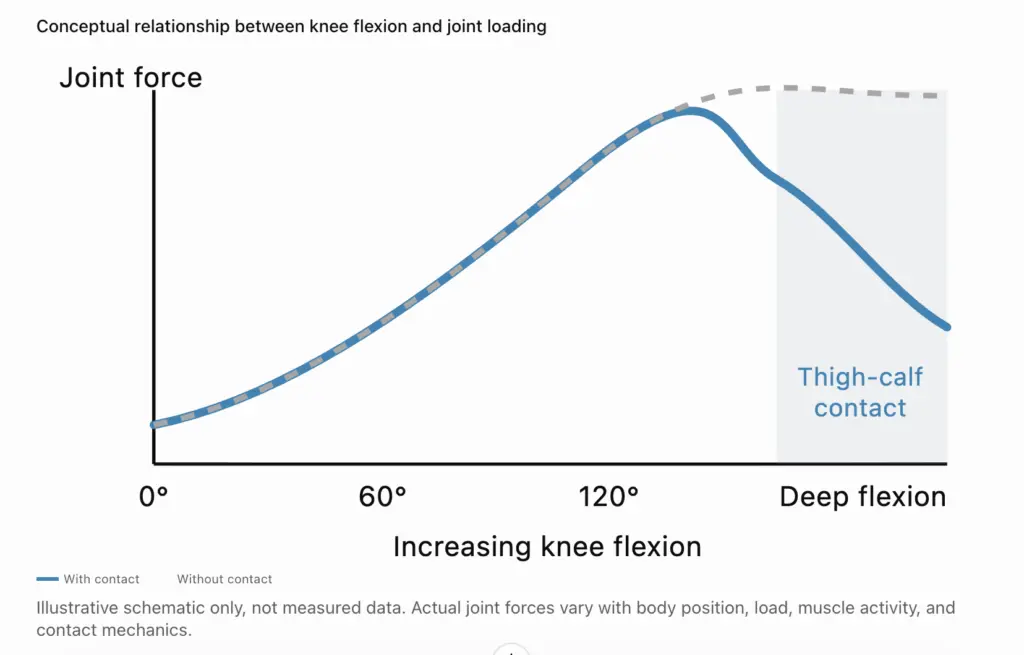
At extreme knee flexion angles, typically around 130-150˚, the posterior thigh begins pressing against the calf. This contact force between the soft tissues of the thigh and lower leg reduce the net knee-extension moment that must be generated by the quadriceps.
As quadriceps force decreases, the compressive force transmitte through the patellofemoral and tibiofemoral joint also decreases.
In other words, your knee joint gets a break when you squat deep.
A biomechanical investigation by Glitsch, Heinrich and Ellegast (2022) examined knee joint loading during squatting and kneeling.
Their findings demonstrated that accounting for thigh-calf contact can substantially change estimated joint forces in deeply flexed knee positions. Importantly, the researchers showed that models that ignore thigh-calf contact may overestimate forces acting at the knee.
Thigh-calf contact is also an important factor in reducing knee forces during kneeling.
Try this test…
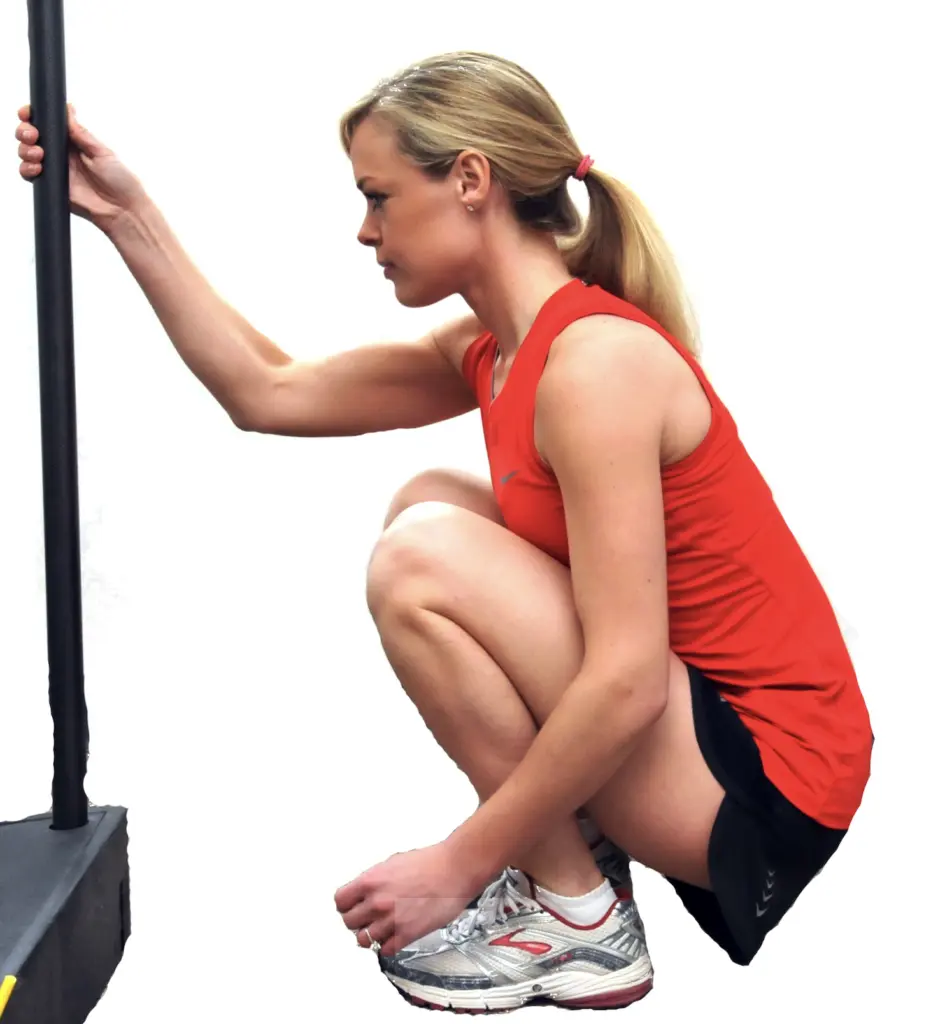
Hold onto a post and lower down into a squat until your thigh comes in contact with your calf. Then stand up using your legs (not pulling yourself up).
The first squat will always feel stiff and challenging. But if you can successfully perform 3-6 repetitions you may notice improved quad activation and less knee pain. Think of it as your knees and quads getting a brief rest as you settle into the deep position and then activating through full range as you stand up.
It’s a strategy I use daily when I’ve been on my feet all day and I start to avoid squatting to pick something up off the floor.
Why does this matter?
Squatting often gets a bad rap because of increased quadricep demand and the associated increase in patellofemoral and tibiofemoral compression. But there is no better way to activate your quadriceps than during a squat.
Performing a deep squat allows your quads maximal activation but with a reprieve at the bottom of the range. It’s worth exploring for healthy knees.
Because nobody has time to be in pain.
Until next time…

Kind Regards,
MoveWell Academy
[email protected]