

Anatomy TUESDAY – Let’s Talk About Lats (Part 2)
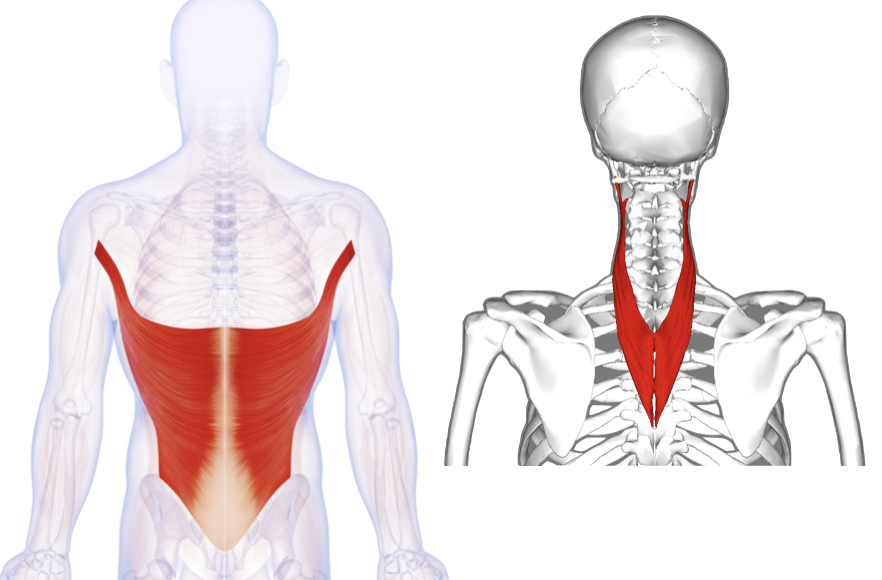
The latissimus dorsi is a powerful muscle often associated with pulling as it extends, adducts and internally rotates the shoulder. But I have two patients on my caseload with symptoms involving the lats that had nothing to do with the shoulder. Last week, I discussed the latissimus dorsi connection to someone with chronic lower back pain. This week, the discussion is about a patient with the latissimus dorsi tightness contributing to chronic neck pain. Let’s dive into this second case:
Patient is a 53-year old male presenting with complaints of insidious onset right cervical pain that increases with extension and side bending to the right (feels a “jam” on the right side of his neck). He presents with:
- Increased thoracic kyphosis and forward head
- Elevated left shoulder
- Protracted right shoulder
- Tighter right>left latissimus dorsi when tested with alternating shoulder flexion (pictured below)
- Trigger points in right upper trapeizus and splenius capitis (pictured above)
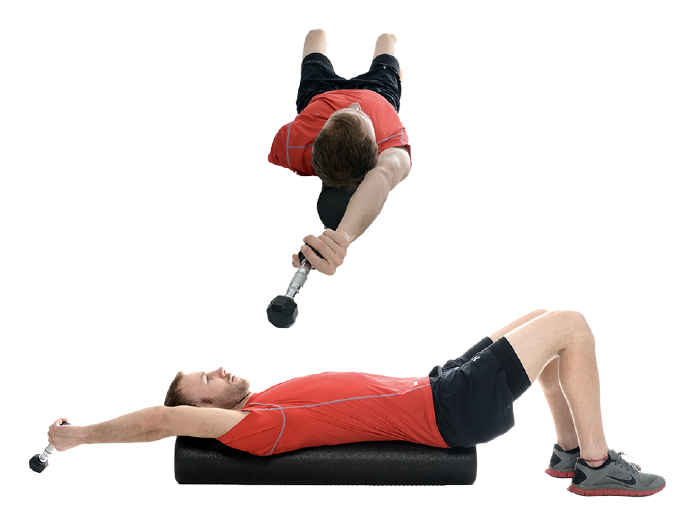
Normal latissimus dorsi flexibility would allow for full arm elevation with the pelvis posteriorly tilted. In the foam roll alternating shoulder flexion test pictured above, the rules are this:
- Knees are bent and feet flat on the floor to promote posterior pelvic tilt
- Perform shoulder flexion with a light weight (3#)
- Most important: elbow must remain extended and the arm should graze the ear
People with tight lats will bend their elbow or deviate their arm away from the head.
Why does this matter?
What does the tight lat have to do with the neck? The splenius cervicis is responsible for ipsilateral side bending and rotation. A tight latissimus dorsi results in a protracted right shoulder causing relative ipsilateral cervical rotation and chronic shortening of the splenius cervicis. Trigger points in the splenius cervicis will result in a “bottoming out” of the range of motion, causing a jam in the cervical spine extending to the upper thoracic region with ipsilateral side bending.
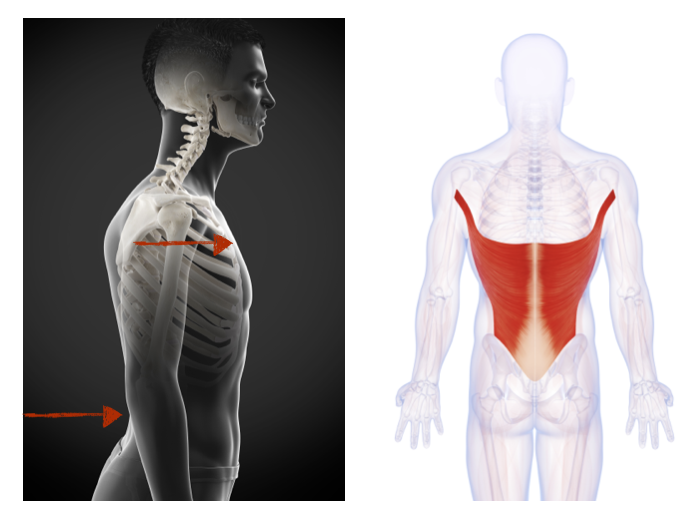
A tight latissimus dorsi increases thoracic kyphosis and lumbar lordosis. The increase in thoracic kyphosis causes forward head posture requiring overactivity of the upper trapezius to hold the head on the shoulders. The upper trapezius also performs ipsilateral side bending, so trigger points in this muscle will also results in a “jam” in cervical spine in end ranges of side bending.
So, what do we do in this case? Keep working to release the latissimus dorsi in addition to releasing upper trapezius and splenius capitis. Use the foam roll alternating shoulder flexion as an exercise. Some other favorite exercises to stretch the lat include: wall swims, child’s pose and arm hangs. Here is a manual technique to release the lats.
In cases of chronic neck pain and joint jamming with end range extension and side bending, consider the latissimus dorsi and its strong biomechanical connections to neck function.
Because nobody has time to be in pain.
Until next time…
Kind Regards,
MoveWell Academy
[email protected]