

Anatomy TUESDAY – Median Nerve
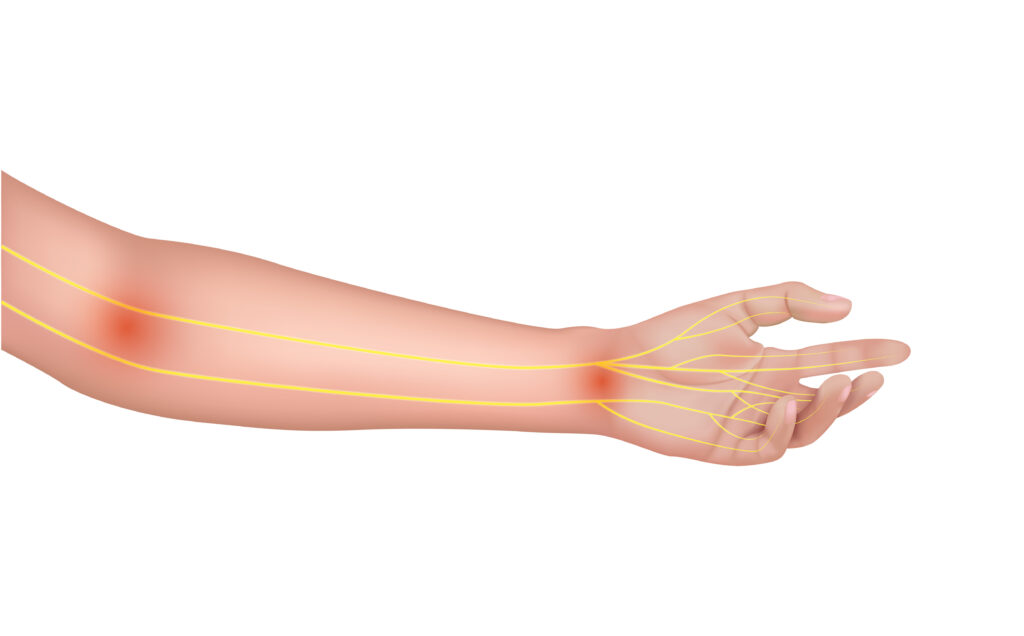
Numbness or tingling in the hand is often blamed on the wrist, but the median nerve begins much farther away. It travels from the neck, through the shoulder and arm, across the elbow, through the forearm, and finally into the hand. Irritation anywhere along this pathway can influence how the nerve feels and functions.
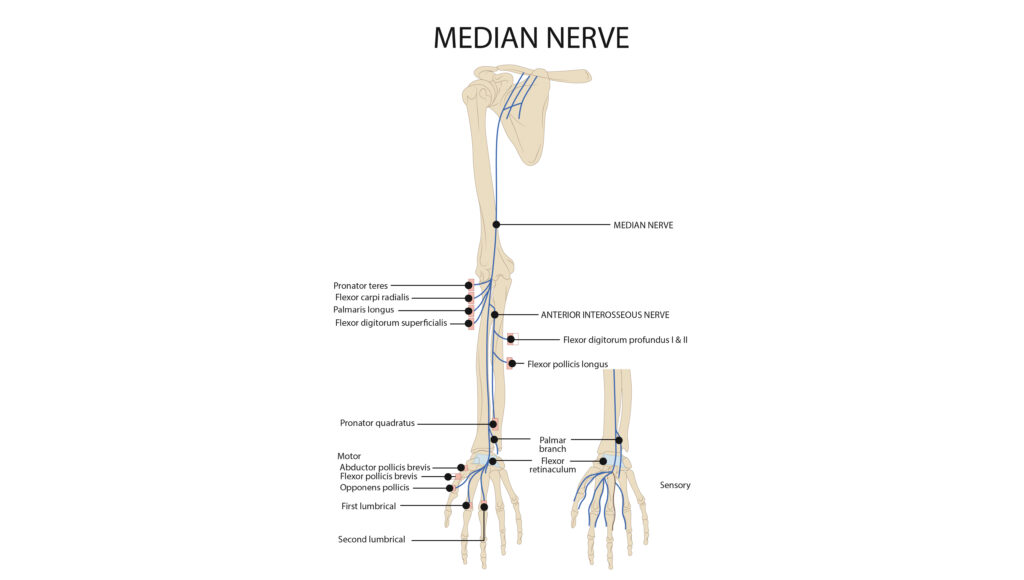
The median nerve innervates the muscles that perform wrist and finger flexion, forearm pronation and thumb movement. It also provides sensation to the palm side of digits 1-4.
When Things Go Wrong…
When the nerve is irritated, patients may notice:
- Numbness or tingling in the thumb and first three fingers
- Hand or forearm pain
- Nighttime symptoms (from sleeping position)
- Weakness when gripping or pinching
- Difficulty fastening buttons or handling small objects
- A tendency to drop things
Carpal tunnel syndrome is the best-known median nerve disorder, but the wrist is only one possible compression site. Below is the path of the median nerve:
- Originates from C5-T1 (lateral root comes from lateral cord of the brachial plexus (C5-C7) and medial root comes from the medial cord (C8-T1))
- These roots join together in front of the axillary artery in the axilla (armpit)
- Beneath the bicipital aponeurosis at the elbow
- Between the two heads of the pronator teres
- Beneath the flexor retinaculum that forms the carpal tunnel (wrist)
Testing the Median Nerve
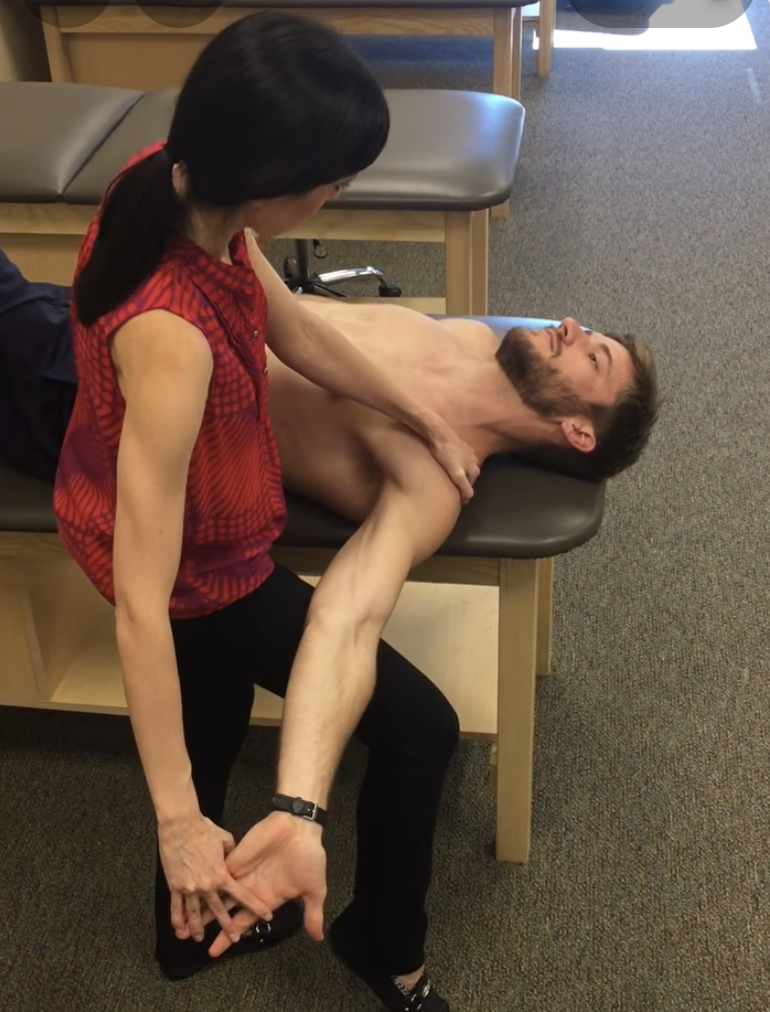
For clinicians, tensioning the median nerve means placing the nerve under progressive longitudinal strain by positioning multiple joints so that the distance between the nerve’s proximal and distal ends increases simultaneously. This is the basis of the Upper Limb Neurodynamic Test 1 (ULNT1) and of median nerve tensioning exercises.
The median nerve tension test involves:
- Scapular depression
- Shoulder abduction (90–110° initially, progressing toward 110–120°)
- Forearm supination
- Wrist and finger extension
- Thumb extension and abduction
- Elbow extension
- Contralateral cervical side bending
Median Nerve Slider vs. Tensioner
It’s important to distinguish between these two techniques:
Median Nerve Slider
- One end of the nerve lengthens while the other shortens.
- Example:
- Goal: maximize nerve excursion while minimizing strain.
- Best for highly irritable nerves.
Median Nerve Tensioner
- Both ends of the nerve are lengthened at the same time.
- Example:
- Goal: progressively increase the nerve’s tolerance to tensile loading.
- Best used later in rehabilitation after irritability has decreased.
Sliders restore movement. Tensioners build tolerance.
Why does this matter?
Median nerve compression may occur in several places besides the carpal tunnel. Evaluations should involve assessing each compression point as well as evaluating the ability of the median nerve to slide and tolerate tension.
Join me next week when we take a closer look at the path of the radial nerve.
Because nobody has time to be in pain.
Until next time…

Kind Regards,
MoveWell Academy
[email protected]