
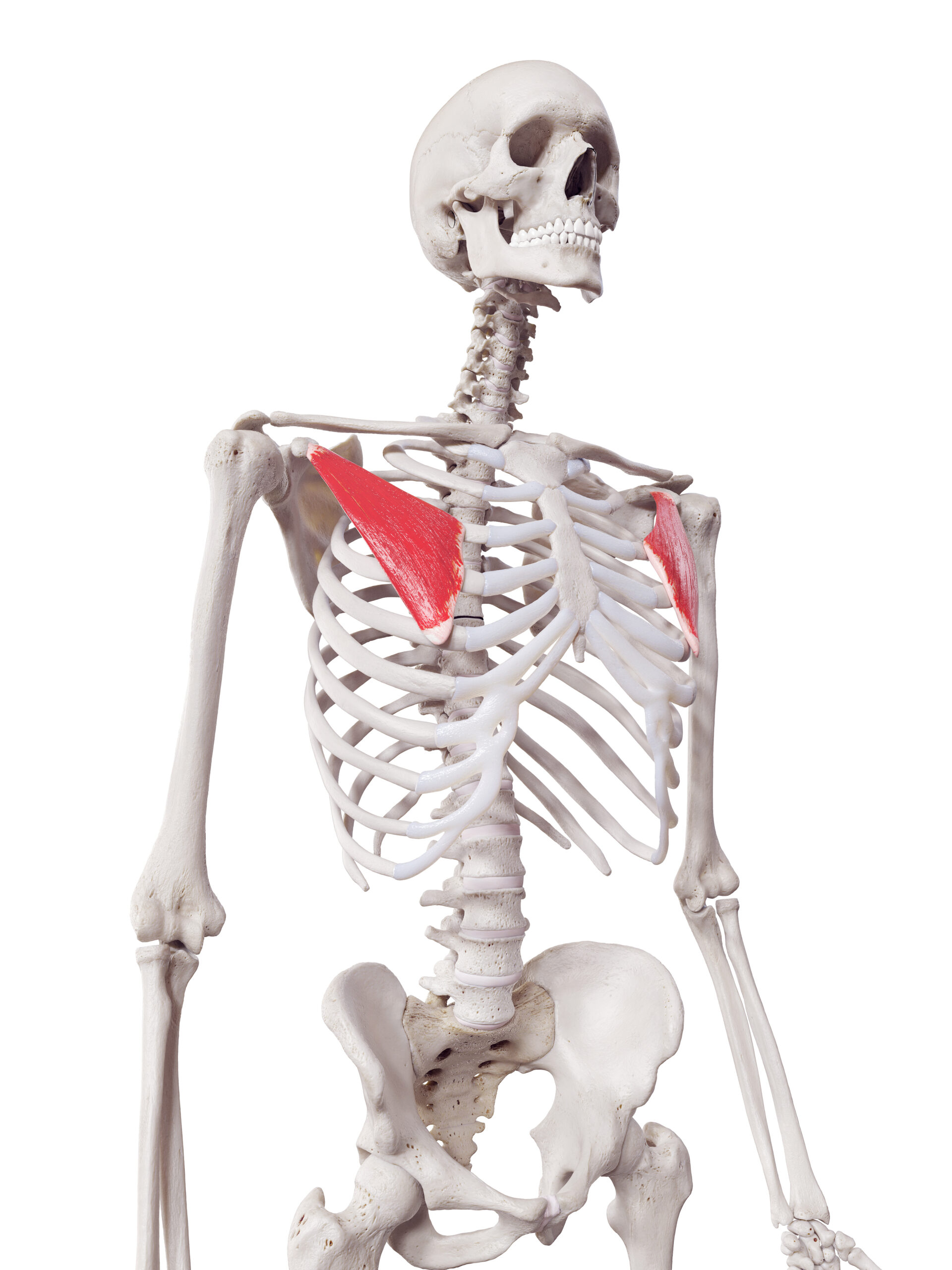
Muscle Minute TUESDAY – Meet the Pec Minor
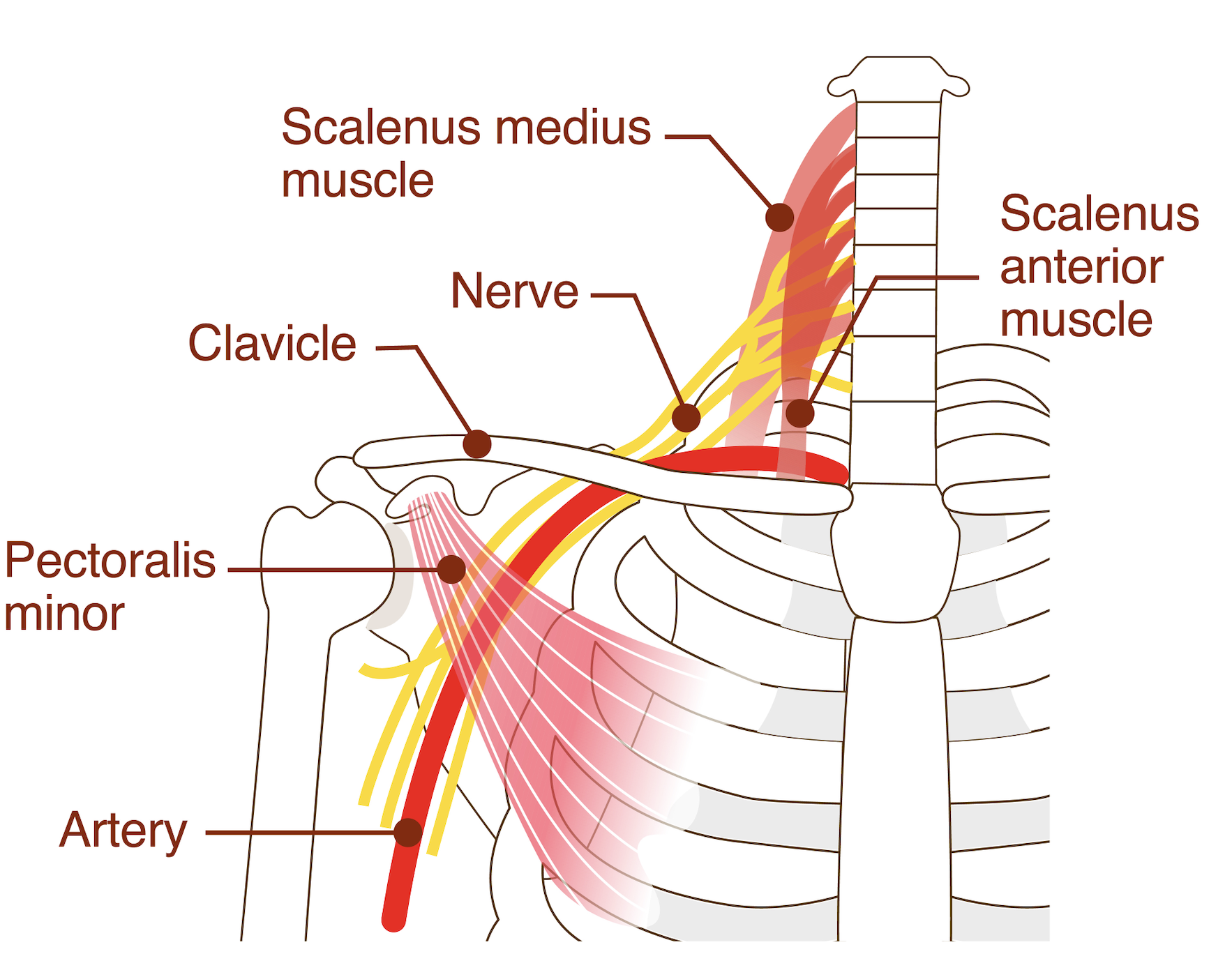
Have you ever woken up with your arm over your head and felt numbness in your hand? Chances are you’ve experienced the result of a tight pec minor. This small triangular muscle wields great power over the function of your arm because of it’s proximity to the brachial plexus, a bundle of nerves coming from C5-T1 and extending into the upper extremity. Let’s take a deeper dive.
| Origin | ribs 3-5 |
| Insertion | coracoid process (scapula) |
| Action | scapular protraction and downward rotation |
| Innervation | medial pectoral n. (C8) |
| Antagonists | lower trapezius, rhomboid and serratus anterior |
The Real World Pec Minor
The plumb line and proper posture. If you drop a plumb line from the ceiling, your ear, shoulder and hip should all fall on that line.
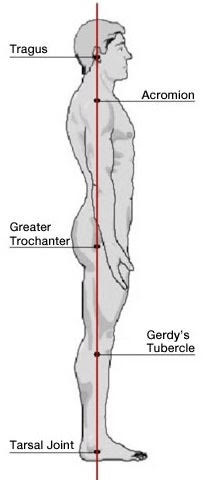
For a lot of people, the shoulder and head tend to fall forward, and for most of us, one shoulder is more forward than the other. Shortening of pec minor is often seen on the dominant side (from reaching more with one arm) or from the side that lacks thoracic rotation, causing impingement of the brachial plexus as one reaches overhead.
A tight pec minor is also often at the root of rotator cuff impingement. Remember, arm elevation is a combination of humeral AND scapular upward rotation. A tight pec minor may restrict scapular upward rotation, causing impingement of the supraspinatus and bicep long head tendon underneath the acromion.
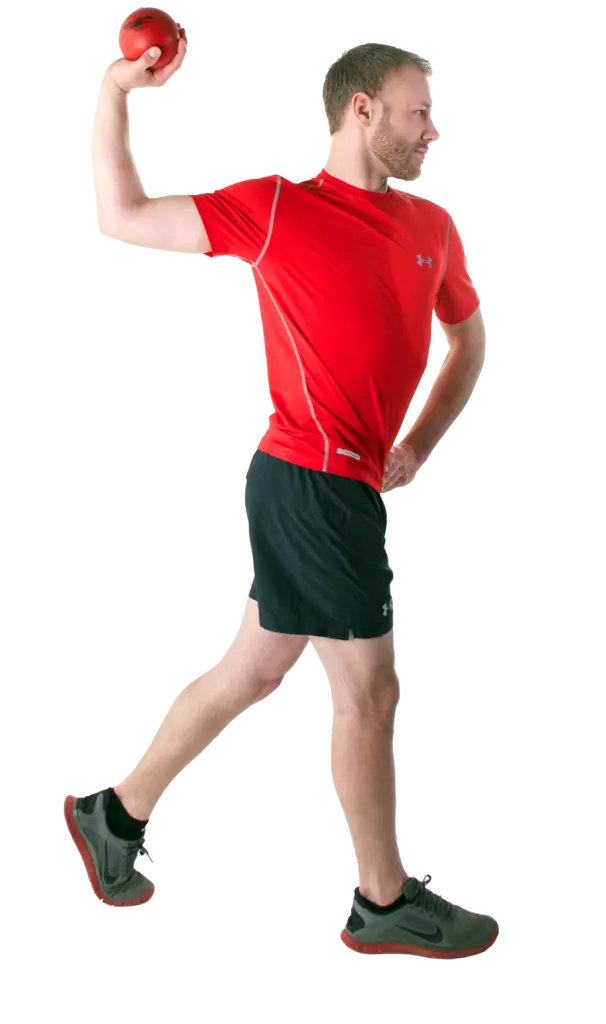
The important thing to observe is pec minor’s antagonists, lower trapezius, rhomboid (scapular retractors) and serratus anterior (scapular upward rotator). It is possible to override an overactive pec minor by strengthening its antagonists. Ironically, one of the best activators of the lower trapezius is an overhead press. So training to press a weight overhead will actually correct the numbness and tingling that occurs with your arm being overhead. Another great exercise to elongate pec minor while activating lower trapezius is throwing a ball using the proper “high goal post position” to load the throw.
Here’s a short list of why this matters:
- If pec minor is tight, it will impinge on the brachial plexus, causing thoracic outlet syndrome and numbness/tingling of the arm with prolonged arm elevation
- If pec minor it tight, lower trapezius and serratus anterior may be weak, a common cause of rotator cuff impingement and tendonitis.
- Protraction of the scapula is also associated with limited ipsilateral thoracic rotation
- Stretching pec minor may cause impingement of the brachial plexus. It’s better to activate pec minor’s antagonists to inhibit this muscle.
- If using manual therapy, it is better to counterstrain pec minor than to stretch it as this prevents compression of the brachial plexus.
Conventional thinking says: Stretch the pec minor to correct shoulder posture.
Real World Thinking says: Restore thoracic rotation and activate pec minor antagonists to combat chronic pec minor tightness.
Because nobody has time to be in pain.
Until next time…

Kind Regards,
MoveWell Academy
[email protected]