
Anatomy TUESDAY – Clinical Anatomy Pearls 5 – Patellar Tendon
Ask a room full of clinicians what the patellar tendon does, and most will answer:
“It connects the quadriceps to the tibia and extends the knee.”
While that description is anatomically correct, it overlooks one of the tendon’s most remarkable characteristics.
The patellar tendon is not simply a rope connecting muscle to bone. It is a highly specialized biological spring designed to tolerate enormous loads, store elastic energy, and release that energy with extraordinary efficiency.
More Than a Connector
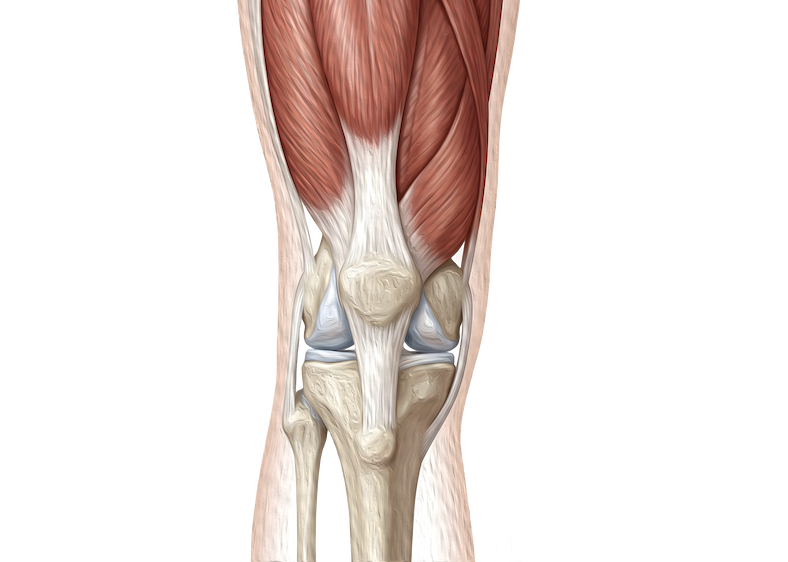
The patellar tendon begins at the inferior pole of the patella and inserts onto the tibial tuberosity. Together with the quadriceps tendon and patella, it forms the knee extensor mechanism.
During every squat, step, jump, and landing, enormous tensile forces pass through this relatively small structure.
Research has shown that patellar tendon forces commonly exceed 5–7 times body weight during running and may be even higher during jumping and landing activities. Unlike positional tendons that primarily transmit force, the patellar tendon is designed to repeatedly absorb, store, and return mechanical energy.
That distinction is clinically important.
A Biological Spring
Imagine jumping onto a box. As you descend into the squat before takeoff, the quadriceps contract eccentrically while the patellar tendon stretches. Rather than simply resisting the load, the tendon stores elastic energy.
Milliseconds later, as the knee extends, that stored energy is released, contributing to explosive movement while reducing the amount of muscular work required. The same mechanism occurs during running, sprinting, landing, changing direction and climbing stairs.
Healthy tendons function like efficient springs. Diseased tendons become less efficient springs.
Why Jumping Hurts More Than Squatting
One of the most common misconceptions surrounding patellar tendinopathy is that any heavy knee exercise overloads the tendon equally.
It doesn’t.
Heavy squats certainly produce substantial tendon forces. However, jumping, sprinting, and rapid deceleration introduce something additional: high-rate energy storage and release.
These activities load the tendon at much higher velocities, requiring the tendon to rapidcly elongate, store energy and recoil within fractions of a second.
For this reason, athletes often tolerate heavy strength training long before they are ready for repeated jumping. The tendon’s ability to manage elastic loading—not simply force production—is frequently the limiting factor.
Repetitive jumping exposes the tendon to hundreds of rapid loading cycles requiring continuous energy storage and release. The issue is often cumulative tendon demand rather than a single overload event.
The Tendon Doesn’t Like Surprises
One of the hallmarks of tendon biology is its remarkable ability to adapt. Given adequate time and progressive loading, collagen becomes stronger, stiffer, and better organized.
Problems arise when training loads change faster than the tendon can adapt.
Examples include:
- Returning to sport after inactivity
- Sudden increases in jumping volume
- Beginning plyometric training too aggressively
- Tournament weekends with inadequate recovery
- Rapid increases in practice intensity
The tendon responds poorly to unexpected spikes in demand.
This principle helps explain why many athletes report that symptoms began “all of a sudden,” even though the underlying process developed gradually.
Rehabilitation Should Match Tendon Function
If the patellar tendon functions as a spring, rehabilitation should eventually prepare it to behave like one.
Strength training remains essential. Heavy resistance improves tendon stiffness and load tolerance.
However, stopping rehabilitation after heavy squats often leaves athletes underprepared for return to sport. A comprehensive progression typically includes: Pain-modulating isometrics > heavy slow resistance > functional single leg strengthening > energy storage activities > plyomerrics > sport-specific jumping, cutting and sprinting.
Energy-storage activities are any exercises that require the tendon to absorb, store, and return elastic energy. The emphasis is on reintroducing the stretch-shortening cycle to the tendon in a graded manner.
Examples include:
Early Rehabilitation
- Jump rope
- Pogo hops
- Line hops
- Fast step-ups
- Mini squat jumps
Intermediate Rehabilitation
- Skater hops
- Bounding
- Single-leg hops
- Low box jumps
The goal is not maximal performance.
The goal is improving the tendon’s ability to tolerate progressively faster loading.
Think of these as tendon-conditioning exercises prior to engaging in higher intensity plyometric drills.
Why does this matter?
The patellar tendon is much more than a force transmitter. It is an energy-storing tendon specifically designed to absorb, store, and release elastic energy during athletic movement. Successful rehabilitation restores not only strength but also the tendon’s capacity to manage rapid loading, making progressive exposure to jumping, landing, and cutting essential before return to sport.
Don’t ask, “How strong is the quadriceps?” Ask, “Can the patellar tendon efficiently absorb and return energy?” That question often distinguishes a patient who is ready to return to sport from one who is simply strong enough to perform a squat.
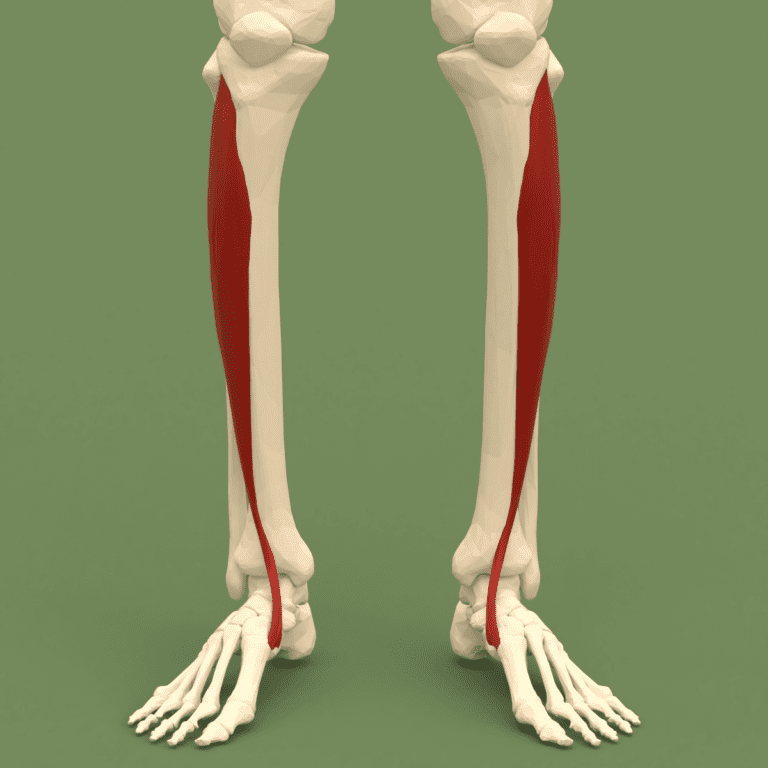
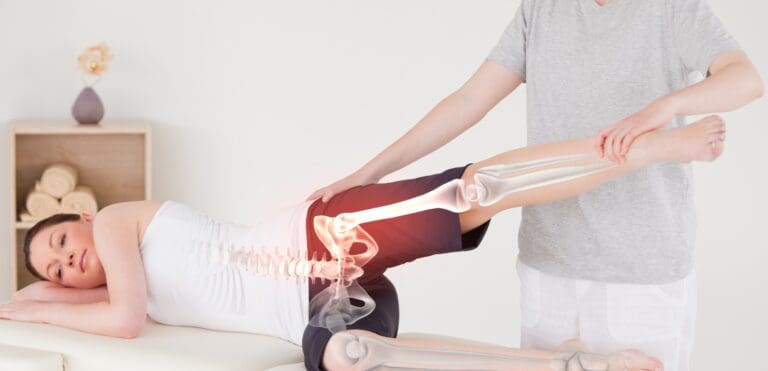
One more thing: the patellar tendon is often in a long/weak position in a limb that is over pronated. Adding exercises that ensure adequate dorsiflexion and gluteus medius strength are key.
Join me next week when we discuss the common extensor tendon.
Because nobody has time to be in pain.
Until next time…

Kind Regards,
MoveWell Academy
[email protected]