
Anatomy TUESDAY – Stuff that Gets Pinched (Part 2) – Meniscii
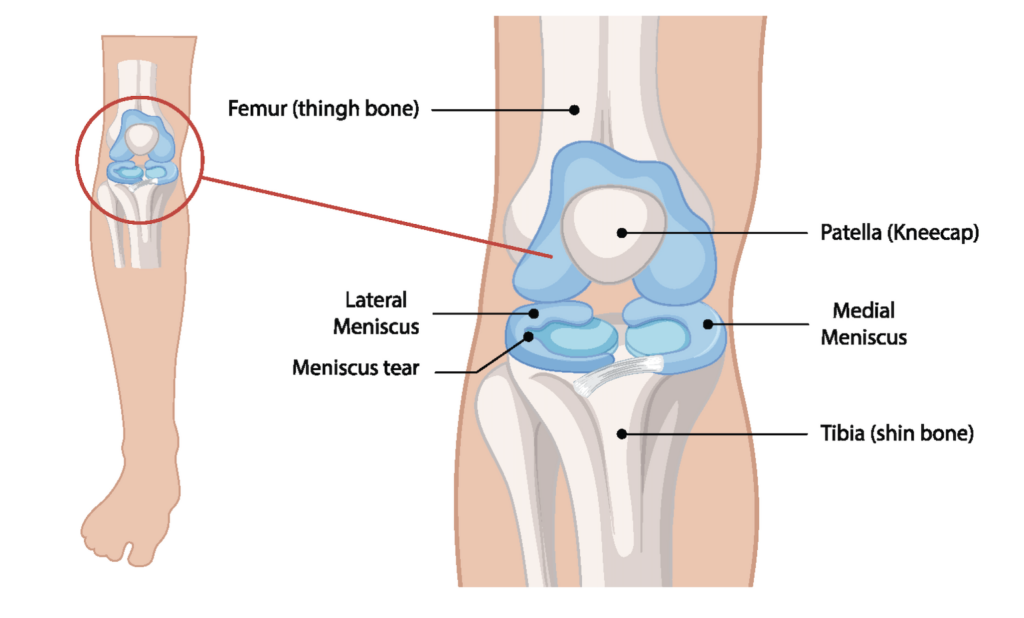
“My knee has been feeling pretty good,” my patient stated, “except yesterday, I stood up from sitting at a restaurant and it felt like my knee wouldn’t hold me up.” She went on to explain that her pain felt deep, and that she couldn’t touch it.
I flexed her knee and put over pressure. She felt pressure deep in the knee. Then I had her extend her knee and put over pressure in end range and she felt a pinch in the front of her knee. The limitation and abnormal endfeels in end rages of motion signal a knee that is out of alignment.
Why does this matter?
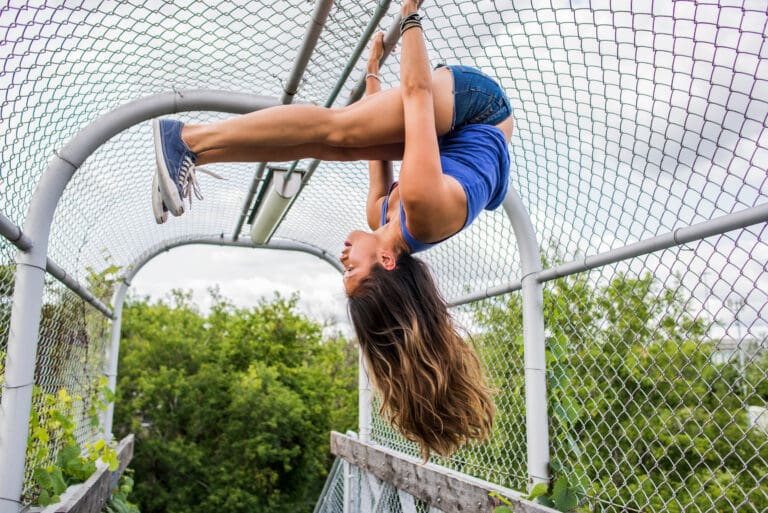
Remember this sitting position from last week?

Look closely at his right knee. Notice the external rotation of the tibia. This prolonged positioning potentially creates one of two scenarios:
- impingement of the posterior medial and/or anterior lateral mensicus (due to excessive tibial external rotation)
- impingement of the anterior medial and/or posterior lateral meniscus (due to excessive femoral external rotation)
Either situation will result in knee pain and quad inhibition when attempting to stand up. Normally, sitting like this wouldn’t pose a problem IF the neutral position for the person was aligned. But we get into trouble when our normal posture is already positioned at the end ranges of our movement.
For instance, when you stand, your feet should be pointed straight ahead. If you normally stand and one foot is turned out (either due to femur or tibial external rotation), muscles will become chronically tight as evidenced by a certain trigger point pattern. If you stand and your foot rolls to the outside (supination), trigger points will also tell that story.
That’s the bad news. The good news is that is very fixable.
Here’s a quick list of what to check if your (or your patient’s) knee hurts when you stand up from sitting. Check for trigger points in:
- Lateral gastrocnemius – this signals an externally rotated femur
- Medial gastrocnemius – this signals a supinated foot
- Medial hamstring – this signals an internally rotated tibia
- Lateral hamstring – this signals an externally rotated tibia
- Adductor magnus – this signals an externally rotated femur
A Quick Fix
A quick fix for this problem usually is to put your feet and knees together and squeeze for 10 seconds before standing up. This isometric contraction counteracts the common sitting position pictured above and may “unpinch” the meniscii.
If you are a clinician, make sure to check the muscles listed above for trigger points and release them with deep tissue massage or counterstrain. Then teach your patient how to release it themselves using a percussion massager or rolling stick to alleviate their pain, and then prescribe the exercises to solve their problem based on the offending trigger point. For instance, the common medial gastrocnemius trigger point is easily counteracted by walking on a line (which promotes pronation).
How do you know you’ve unpinched it? You can stand up without pain and you can bend and straighten your knee and not have any discomfort in end range.
Unpinching a meniscus is an easy thing to do but it also not something that happens automatically or gets fixed with rest. In fact, ignoring the pinch for a prolonged period of time may result in a meniscal tear. So, stop the pinch.
Because nobody has time to be in pain.
Until next time…
Kind Regards,
MoveWell Academy
[email protected]