Anatomy TUESDAY – Muscles of the Superior Nuchal Line
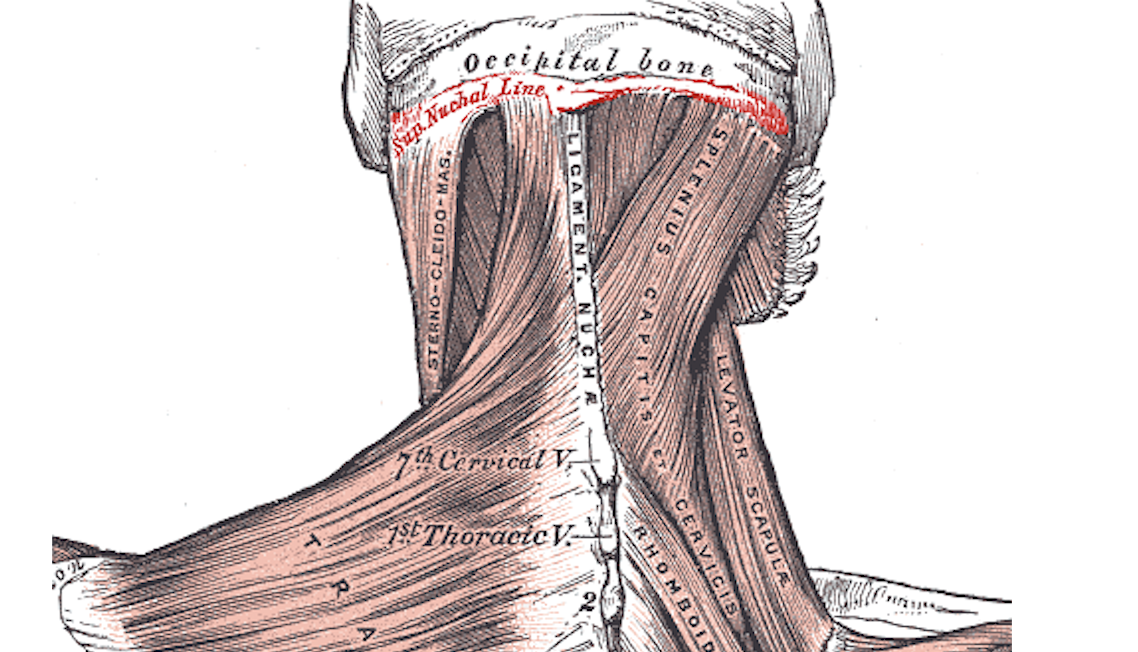
The superior nuchal line is a structure we don’t often name, but we deal with it daily. Anyone who has ever had a tension headache and found relief by having pressure placed on the back of their skull has experienced trigger points along the superior nuchal line. Here are the three muscles that attach on the superior nuchal line and their actions:
- Upper trapezius (UT) – scapular elevation, scapular upward rotation, cervical extension, ipsilateral side bending, contralateral rotation
- Sternocleidomastoid (SCM) – cervical flexion, ipsilateral side bending, contralateral rotation
- Splenius capitus (SC) – cervical extension, ipsilateral side bending, ipsilateral rotation
Notice what they have in common:
- They all perform ipsilateral side bending.
- UTand SC extend the cervical spine; SCM flexes
- UT and SCM perform contralateral rotation; SC performs ipsilateral rotation
- UT attachment is more medial; SCM and SC more lateral
Here are their unique points:
- Upper trapezius is the only one that attaches to the scapula
- SCM attaches to the clavicle
- Splenius capitus attaches to the ligamentum nuchae (C4-C6) and the spinous processes of C7-T3
A Quick Evaluation:
Perform occipital release or lie with an object pressing on your superior nuchal line. Is it more tender on the right or left?
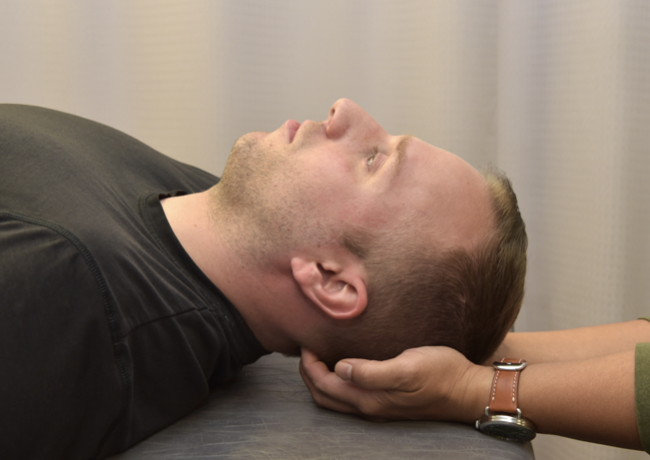
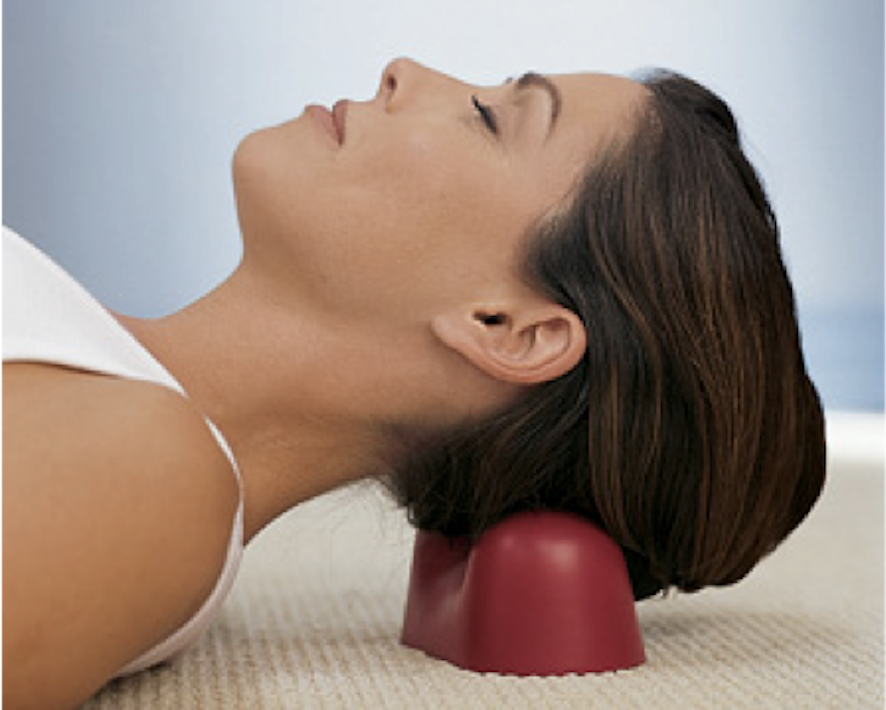
THEN sit up and turn your head right and left. Is it more limited turning towards the tender side or away?
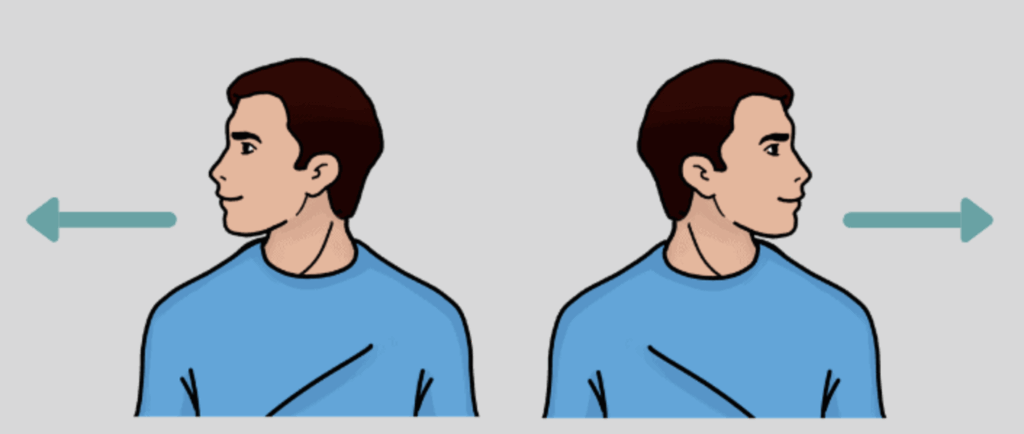
If it is more limited turning towards the tender side, UT and SCM are involved. If it is more limited turning away from the tender side, SC is involved.
Why does this matter?
The muscles of the superior nuchal line are designed to provide movement of the head/neck. Forward head posturing and asymmetrical shoulder height increases activation of these muscles causing trigger points to form and limiting cervical ROM (especially rotation).
The next time you notice it is hard to turn your head to back out your car, evaluate for tenderness on the superior nuchal line. You just might find the solution to your problem.
Because nobody has time to be in pain.
Until next time…
Kind Regards,
MoveWell Academy
[email protected]