Anatomy TUESDAY – The Beef About Bones
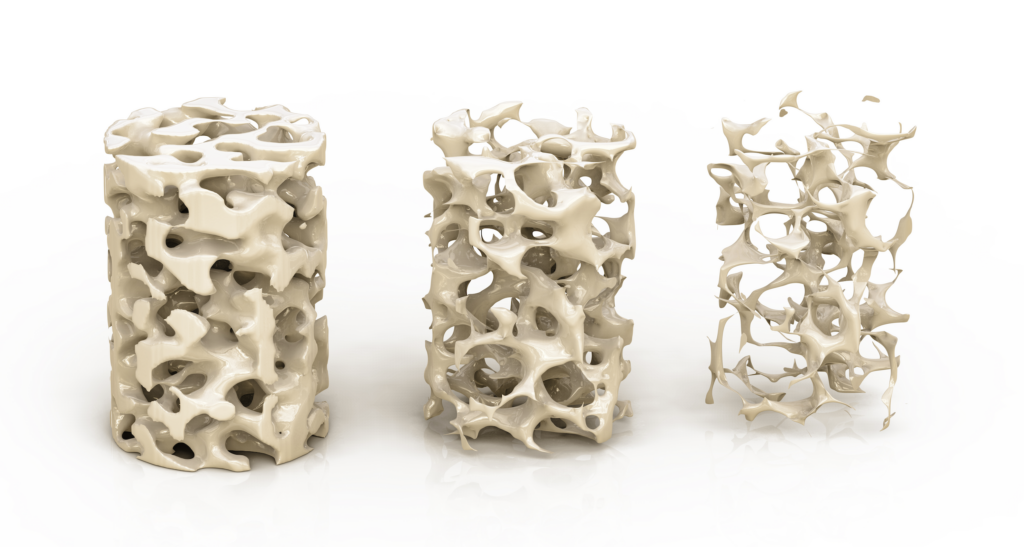
One in two women and one in four men over the age of 50 will break a bone due to osteoporosis, a bone disease involving the loss of bone mass often resulting in fractures from minor falls or stresses. That’s the bad news. The good news is it’s preventable.
Bone is unique in its structure in that bone is taken away and laid down on a daily basis in response to stress. Wolff’s Law essentially states that if you place stress on a bone, the bone grows in response by sending more osteoblasts (bone building cells) to the area. If you minimize stress on bones, bones begin to break down due to proliferation of osteoclasts (cells that remove bone). When astronauts go up into space and spend some time in zero gravity, their bones become brittle, an example of Wolff’s Law. Gravity is our friend.
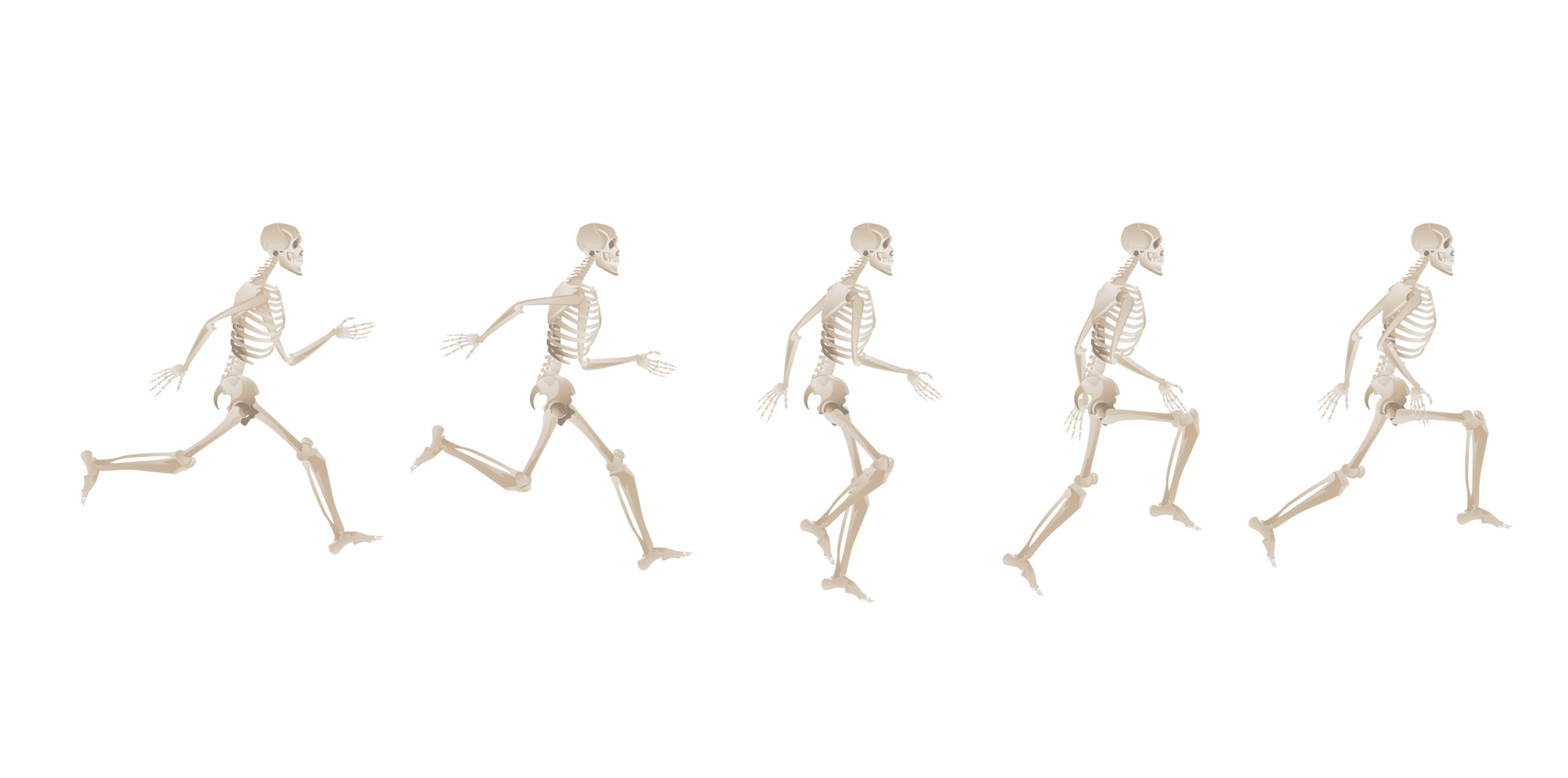
The question is how much stress is enough? You need exercises that create ground reaction forces of 3x your body weight to stimulate bone growth. Check out this list of ground reaction forces for simple activities:
- Walking – 1.2x body weight
- Jogging – 2.5x body weight
- Jumping – 4-6x body weight
- High load resistance training (75%-80% RM) – 4-8x body weight
Studies show in order to stimulate bone growth, walking isn’t enough. Jump training and resistance training are key.
- 40-50 jumps per session, 2-3x per week (more reps than this is NOT better and may predispose one to a stress fracture). Simple jumps like ankle bounces, jumping jacks, cycle jumps, jumping off a low step or skipping will work. Work up to the prescribed number of jumps over 2-3 weeks.
- 75%-80% RM (repetition max) amounts to 8-12 repetitions each set. This doesn’t mean you just count to 12. Rather, it means the weight is heavy enough that you can’t do 13 reps. 2-3 sets of 8-12 reps of load bearing exercises such as: squats, lunges, overhead presses, bench presses and deadlifts. 2x per week.
Why does this matter?
Osteoporosis can result in devastating, life-altering injury. 1.5 million people will suffer from osteoporotic fractures each year with hip fractures being the most devastating.
Bone is laid down along lines of stress. The solution to brittle bones is simple, but not always easy. Learning how to jump (again) and learning how to tolerate heavy lifting takes practice. But no better time than the present. Build bones with purpose. (And stay tuned for some upcoming videos on simple lifts and jump training).
Because nobody has time to be in pain.
Until next time…

Kind Regards,
MoveWell Academy
[email protected]