

Anatomy TUESDAY – The Talocrural Joint
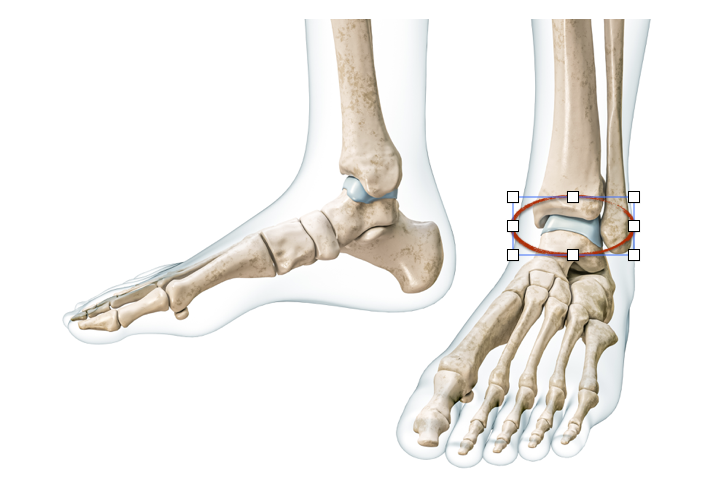
When the foot hits the ground, everything changes. That was the title of a seminar I attended by Gary Gray, PT over three decades ago, the premise being the motion of the foot and ankle in closed-chain position (foot on the ground) had consequential effects up the biomechanical chain. The 26 bones of the foot secured by 112 ligaments forms an intricate complex in which the “whole is greater than the sum of its parts”. The primary goal of the foot and ankle is three-fold:
- Absorb shock
- Maintain contact of the foot on the ground
- Load the butt (gluteus maximus)
This is the first in a three-part series exploring the foot and ankle. Let’s get started.
Talocrural joint
The talocrural joint is the articulation between the talus and distal the tibia and fibula. The primary motion occurring here is dorsiflexion/plantarflexion. The talus is wider anteriorly and longer on the medial side forming a pie-shaped wedge that glides posteriorly with dorsiflexion and anteriorly with plantarflexion. Due to the longer medial edge, this is not a pure swing. Dorsiflexion is combined with eversion and plantar flexion with inversion. Normal dorsiflexion=15-20 degrees (and even more if you are squatting or descending stairs). Normal plantarflexion=40-50 degrees.
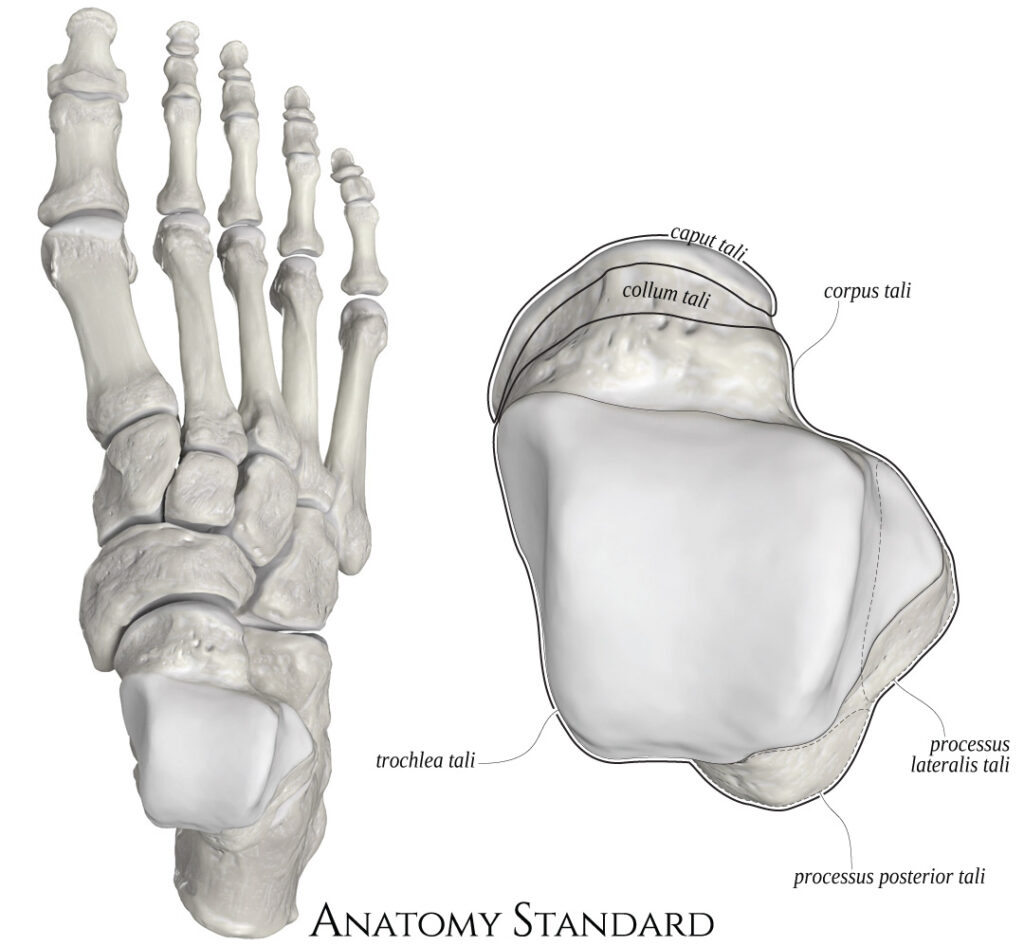
Pull your toes up towards your shin. You should feel a stretch in the back of your leg. If you feel a “jam” in the front of your ankle, chances are you are getting dorsiflexion without eversion. This may occur for one of the following reasons:
- Lack of subtalar joint eversion (we’ll study this joint next week)
- Trigger points in tibialis anterior and/or tibialis posterior (ankle invertors)
The wider anterior edge of the talus requires the distal tibia and fibula to separate as dorsiflexion occurs. This is checked by the distal anterior and posterior tibiofibular ligaments and the interosseus membrane.
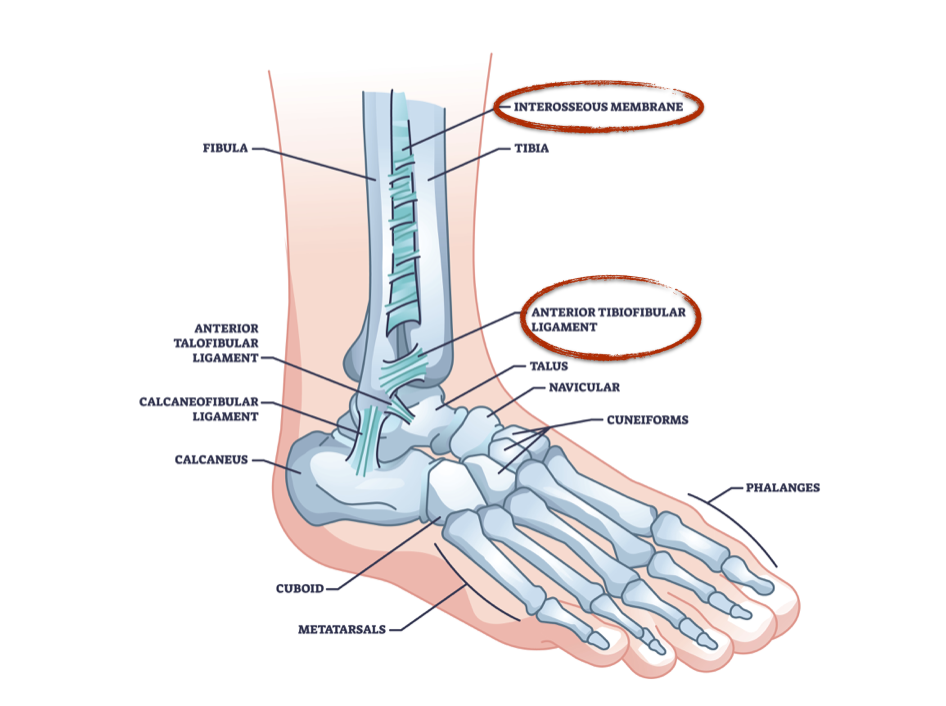
A high ankle sprain occurs if rapid dorsiflexion causes excessive spreading of the distal tibia and fibula, tearing the anterior and/or posterior tibiofibular ligaments.
Why does this matter?
Ankle dorsiflexion and plantarflexion are integral in initiating shock absorption when your foot hits the ground. An ankle jam may indicate lack of coupled eversion in the foot/ankle when you dorsiflex. But this is fixable.
Consider the talocrural joint and stay tuned for more in this series.
Because nobody has time to be in pain.
Until next time…
Kind Regards,
MoveWell Academy
[email protected]