Muscle Minute TUESDAY – Meet the Abductor Hallucis
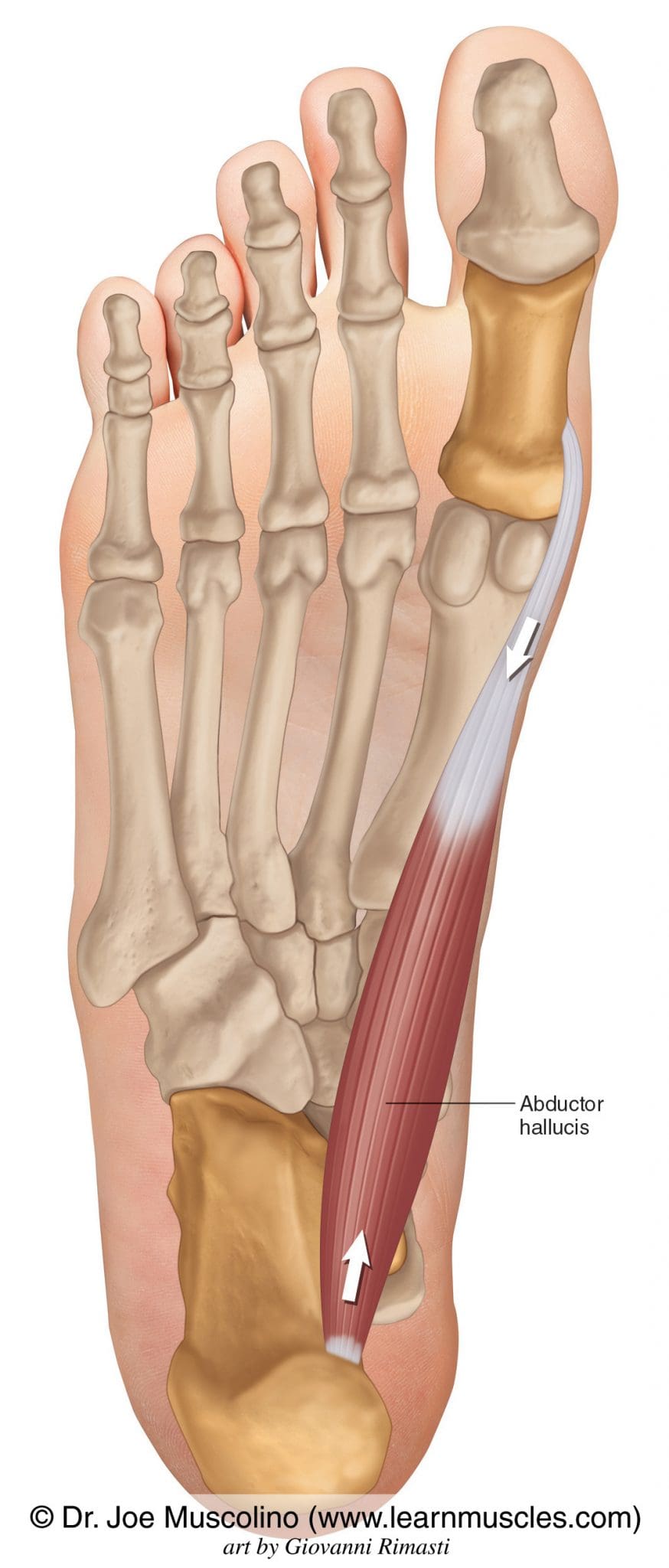
We don’t think about this muscle too much, but we should. The abductor hallucis (AbH) has been proven to be weak in people suffering from hallux valgus, or bunions. Let’s take a deep dive…
| Origin | medial calcaneal tuberosity |
| Insertion | medial aspect of the base of 1st phalanx |
| Action | abducts and flexes the hallux (great toe) |
| Innervation | medial plantar n. |
| Antagonists | adductor hallucis |
The Real World Abductor Hallucis
Wait. This muscle causes a bunion? Research studies are inconclusive as to whether weakness in the AbH is the result of or the cause of hallux valgus (bunion). But what has been proven is that the AH is weak in people with hallux valgus. And it doesn’t just abduct the great toe, it flexes the great toe.
When your foot hits the ground, the metatarsal bones splay out, bringing the first metatarsal into abduction and the AH should assist in bringing the phalanx along with it. Some people blame bunions on shoes that are too narrow in the toe box, but it isn’t uncommon to see a bunion just on one foot or worse on one foot than the other, so it’s hard to blame just the shoes.
As the first metatarsal abducts, the AbH becomes more of a flexor than an abductor, allowing the adductor hallucis to pull the the great toe in further.
Here are two scenarios that may put this muscle in a weak position:
- Over pronation. Spending more than 25% of stance time pronating may cause the first metatarsal to remain splayed, placing AbH in a weak position. This may be due to tight gastrocnemius limiting ankle dorsiflexion
- Over supination. Not getting your first metatarsal head to the ground may cause your toe flexors to try to stabilize and anchor the foot. AbH may be overused as a flexor in this scenario, thereby over riding its function as an abductor.
Here’s what you can do:
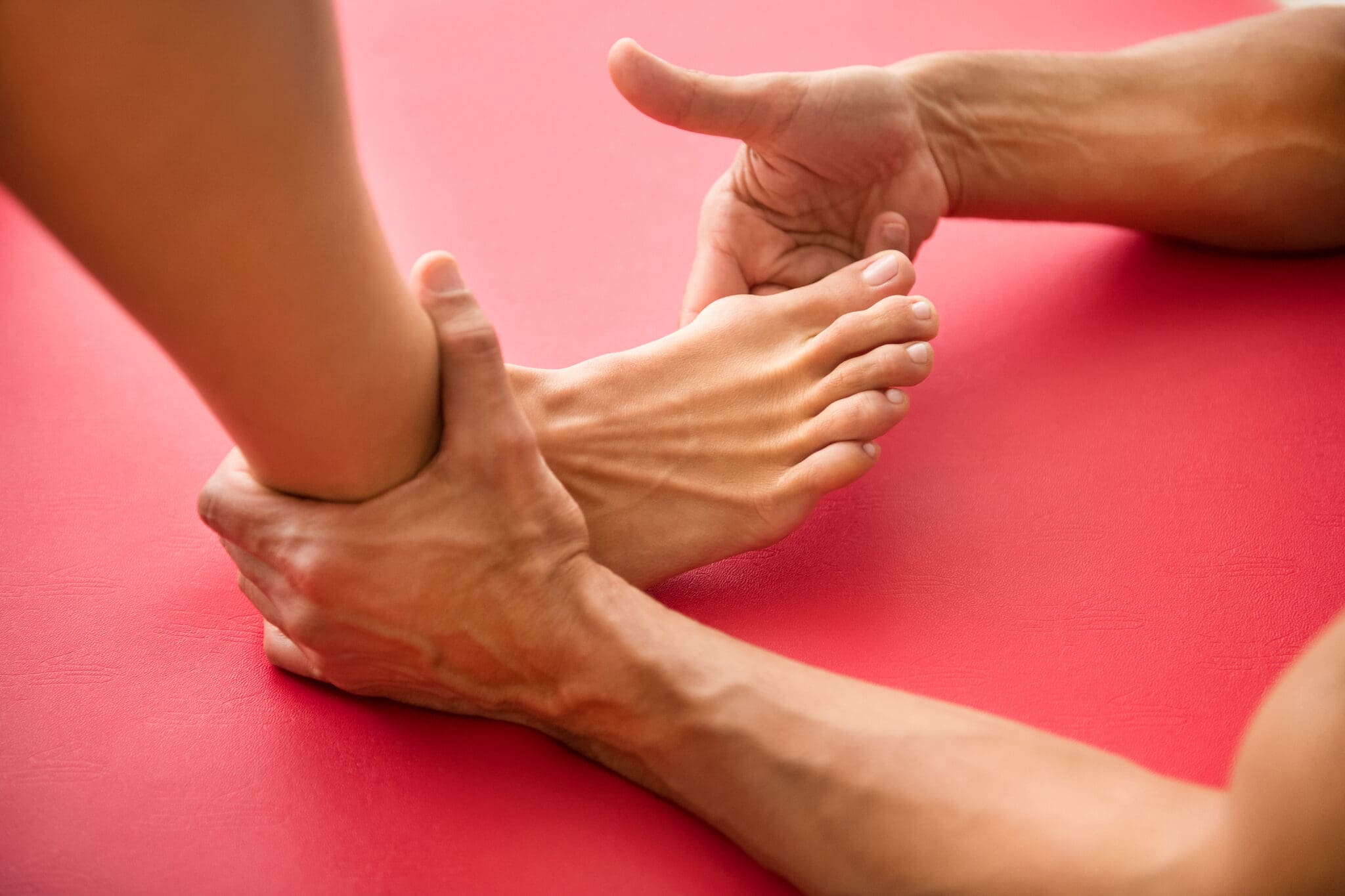
- Practice moving your big toe away from all the others (abduction), creating a gap between your big toe and your second toe. Hold for 5 seconds. One study recommended doing this 200 times a day.
- Practice flexing your big toe (separate of the other toes)
- Practice flexing your big toe while you are separating it from the 2nd toe.
That should keep you busy during commercial breaks. Whether its shoe wear or foot mechanics that are creating weakness of this muscle, you can’t go wrong with waking it back up.
Conventional thinking says: Bunions are caused by shoes that are too tight.
Real World Thinking says: This muscle is often shut off or weak in people with bunions. Wake it up by practicing moving your big toe away and separate from your other toes. We’ll unpack the biomechanical causes of bunions in a future blog. So stay tuned.
Because nobody has time to be in pain.
Until next time…