
Kinesiology THURSDAY – Quadratus Lumborum v Gluteus Medius (Tug-o-War Series)
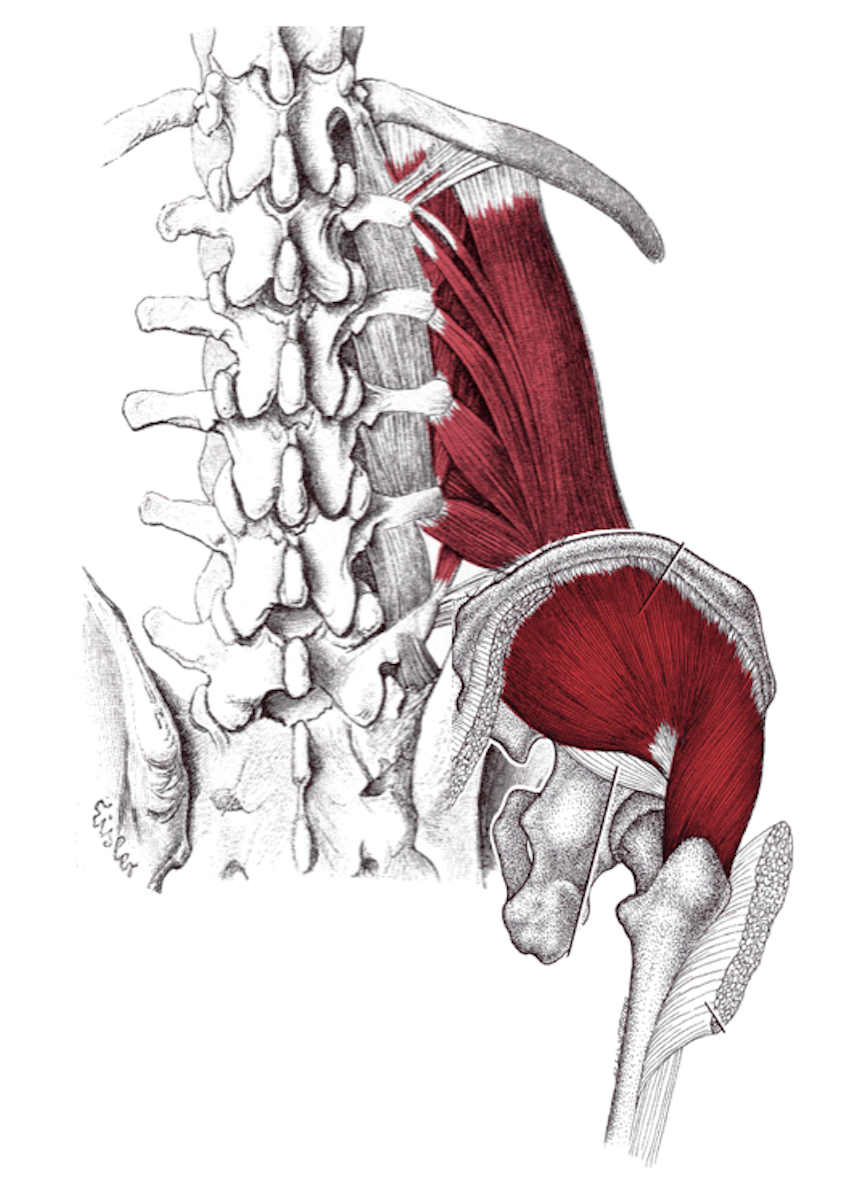
Ever see one iliac crest higher than the other when you do a postural check on your patient? It is one of the most common asymmetries and often is NOT due to a true leg length discrepancy.
One of the most important but least mentioned agonist v antagonist relationships is the quadratus lumborum v the glutues medius. In anatomy class, we learned quadratus lumborum unilaterally performs lateral flexion of the trunk. That’s because we learned the origin always moves towards the insertion. But that isn’t always the case. In reality, when a muscle contracts, the lighter end moves. So it isn’t uncommon for a trigger point in the quadratus lumborum to elevate the pelvis on one side, making the iliac crest higher. This elevation creates relative hip adduction on the same side, making the gluteus medius long/weak.
Two tests to know this is the case:
- Modified side plank – lying on one side, lift the pelvis off the floor. This tests the strength of the glutues medius on the stabilizing side.
- Palpation of quadratus lumborum – if its short and tight, there will be a trigger point present between the iliac crest and 12th rib, deep to the lumbar paraspinals.
Here’s a manual therapy fix: Counterstrain the quadratus lumborum by having the patient lie prone and pulling the knee up and out to the side (prone figure 4 position). This creates side bending of the trunk.
Exercise corrections:
- Half pancake stretch – this stretches quadratus lumborum
- Wall washing – this stretches quadratus lumborum
- Mini-band lateral stepping – this activates the gluteus medius
- Modified side plank – the test becomes the fix for activating gluteus medius
Why does this matter?
A weak gluteus medius often lies at the root of lower back pain and lower extremity pain and one of the main culprits in inhibiting this muscle is a tight quadratus lumborum. Frontal plane movement is often forgotten in therapeutic exercise programs and yet many patients exhibit one iliac crest higher than the other without a true leg length discrepancy. Do two simple tests: the side plank and QL palpation. Fix what you find.
Because nobody has time to be in pain.
Until next time…

Kind Regards,
MoveWell Academy
[email protected]