

Kinesiology THURSDAY – Lat Dorsi v Lower Trap (Tug-o-War Series)
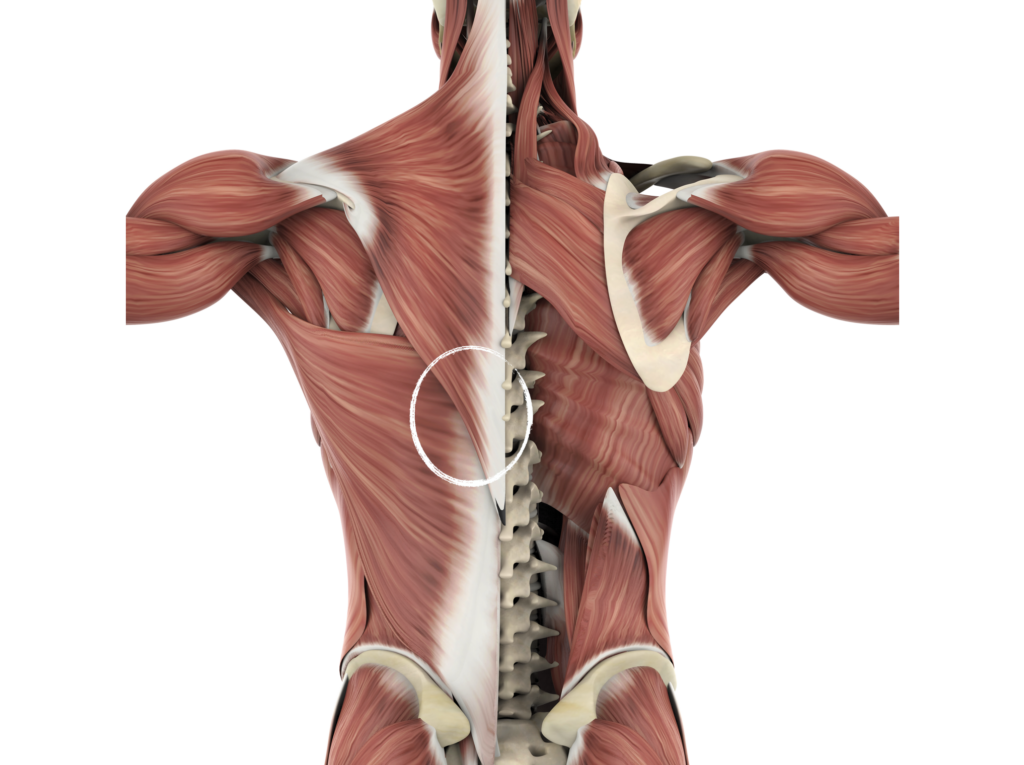
You will never see these two muscles listed in an anatomy book as antagonists to one another, because the latissimus dorsi and the lower trapezius don’t even insert on the same bone, with the former being attached to the humerus and the latter to the scapula. But what makes them antagonistic to one another is their effect on the thoracic spine.
People with tight lats and weak lower traps look a lot like this:

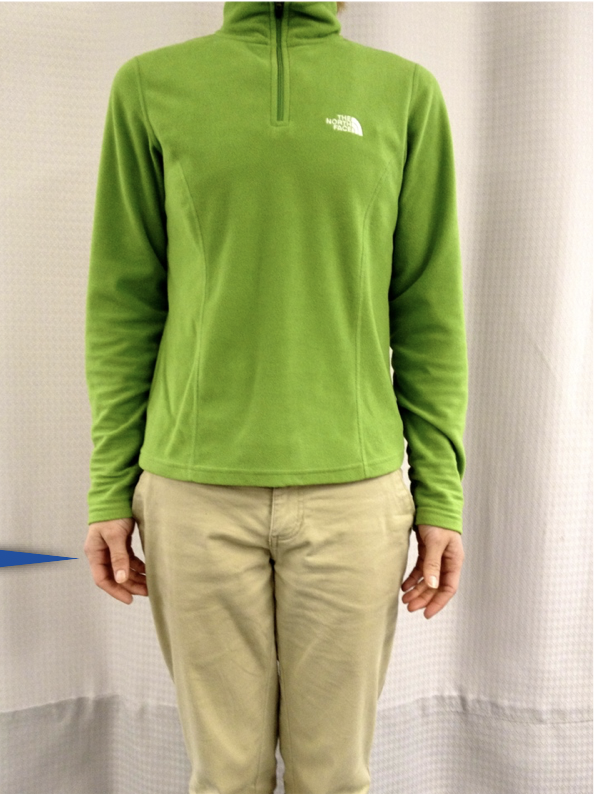
But wait. Isn’t the picture on the left “good posture”? No. Look at his hands. If you stand in front of a mirror and you see knuckles, chances are your lats are tight and internally rotating your shoulders. If your back is rounded, that is a sure fire way to shut off or inhibit your lower trapezius.
Do the mirror test. If your lats and lower trapezius are in perfect balance, you will see the your thumbs and side of your index fingers. Not your knuckles.
Try this test for lat flexibility:
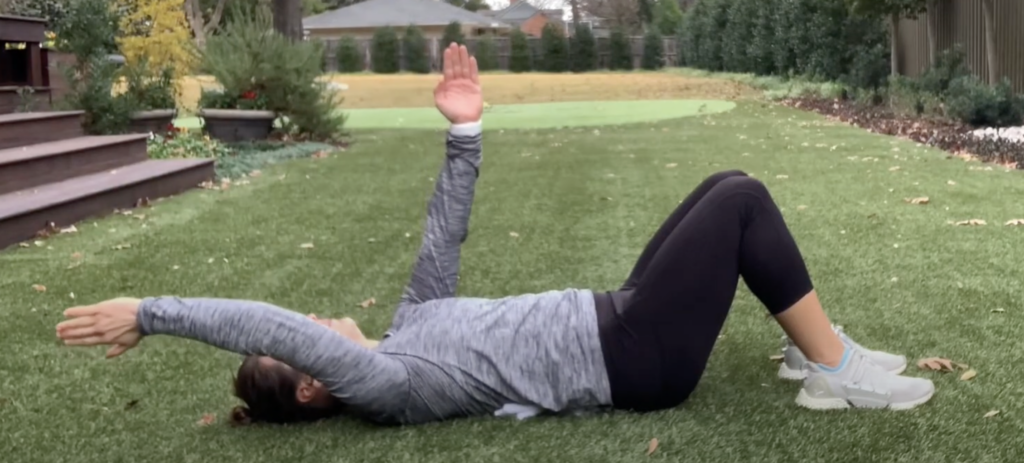
Lie on your back with your knees bent and your feet on the floor. Alternately lift one arm up and back, keeping your elbows locked straight. Make sure your arm stays close to your ear. You should be able to touch the floor with your hand. Is it harder to do on one side than the other?
Why does this matter?
Look at the picture at the top. See the circled portion? The lower trapezius and latissimus dorsi cross in what has been described as a myofascial super highway. This area should move and glide but will become restricted if the latissimus dorsi overpowers the lower trapezius. It intersects near the T8-T10 vertebrae, an area responsible for thoracic side bending. Restrictions here often contribute to rotator cuff tendonitis/impingement and lower back pain (the kind that increases with standing/walking)
How do I fix it?
Lubricate the intersection of these two muscles by adding two things into your daily movement program:
- Supine shoulder flexion (shown above). Perform 6-12 repetitions.
- Alternating dumbbell overhead press. Lifting your arms overhead dynamically stretches the latissimus dorsi and activates the lower trapezius. Perform 10-12 repetitions.
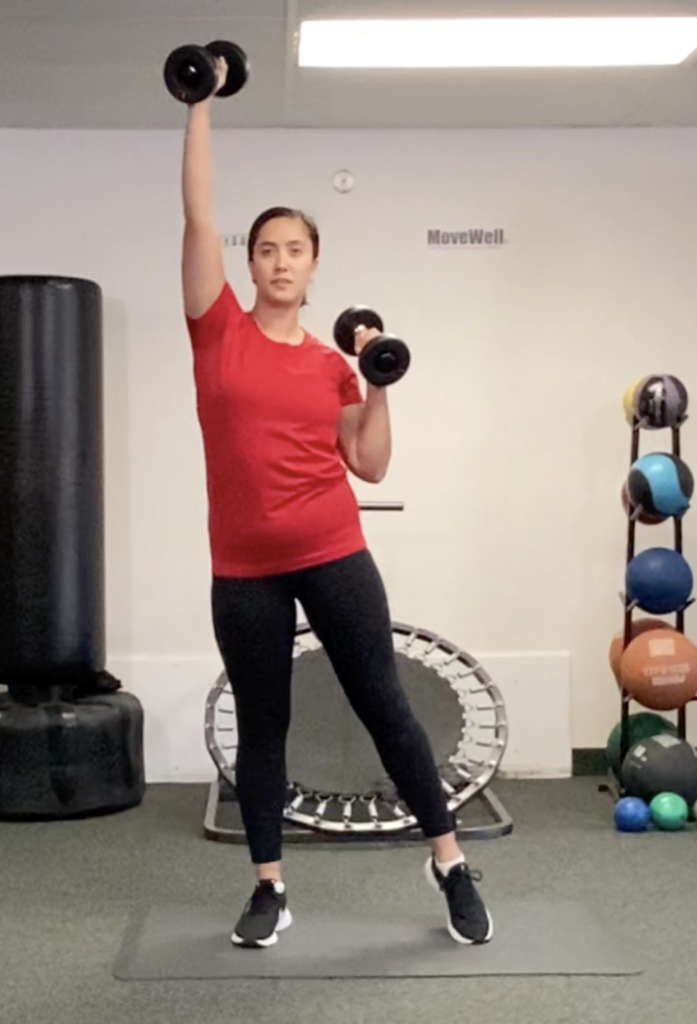
That’s it. Simple fix. Stop giving your knuckles so much mirror time. Lubricate the intersection of the latissimus dorsi and lower trapezius. Your body will thank you.
Because nobody has time to be in pain.
Until next time…

Kind Regards,
MoveWell Academy
[email protected]