Muscle Minute TUESDAY – Sciatica and the Sciatic Nerve
Ever experience a literal pain in the butt? Sciatica affects up to 40% of people in their lifetime, causing pain in the gluteal region and potentially radiating into the posterior thigh. Let’s take a closer look at the potential sciatic nerve compression points:
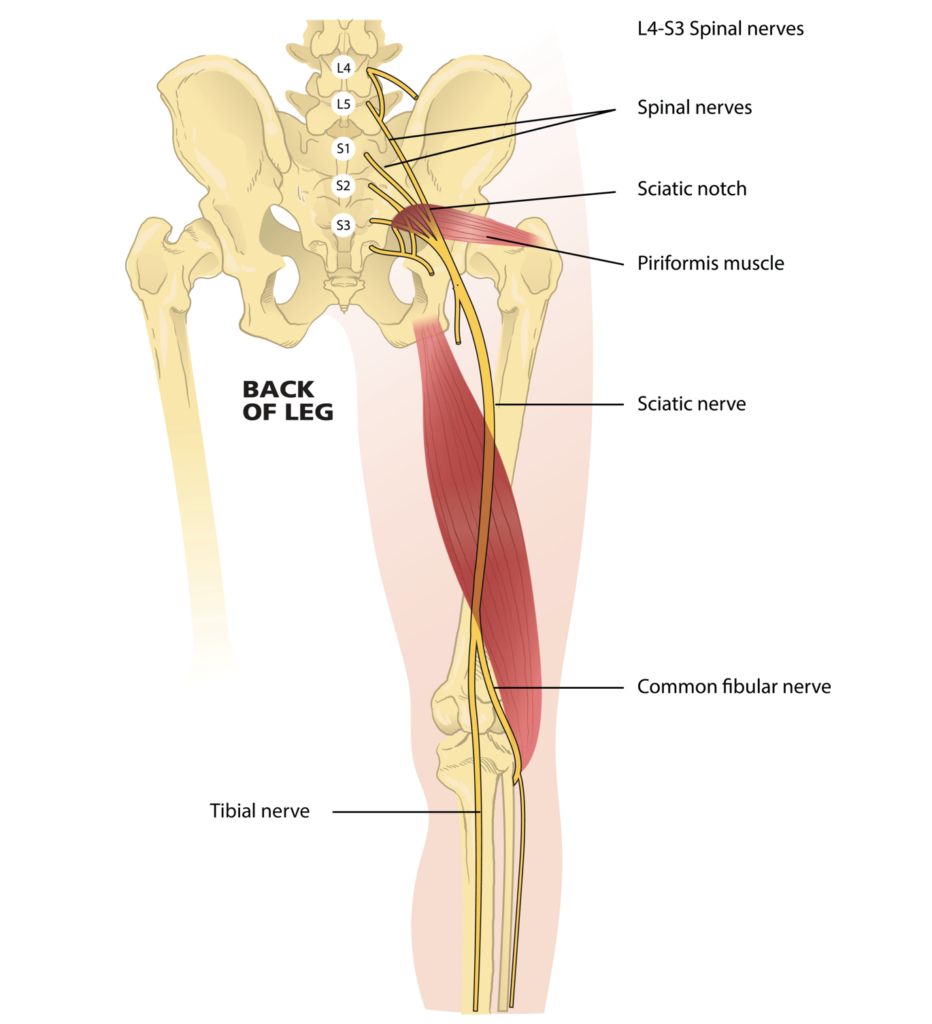
- Exits from L4-S3
- Passes underneath the piriformis
- Exits the pelvis through the greater sciatic foramen
- Passes deep to the bicep femoris
- Divides into common fibular n. and tibial n. just proximal to the popliteal fossa (above the popliteus)
The sciatic nerve must not only traverse through those structures but it must also be able to glide (like dental floss) as you walk and bend.
- Laseague’s test (SLR test) is used to assess the ability of the sciatic nerve to stretch
- Neurotension testing may be used as a treatment to restore gliding of the nerve
Below is a picture of a full stretch position of the sciatic nerve:
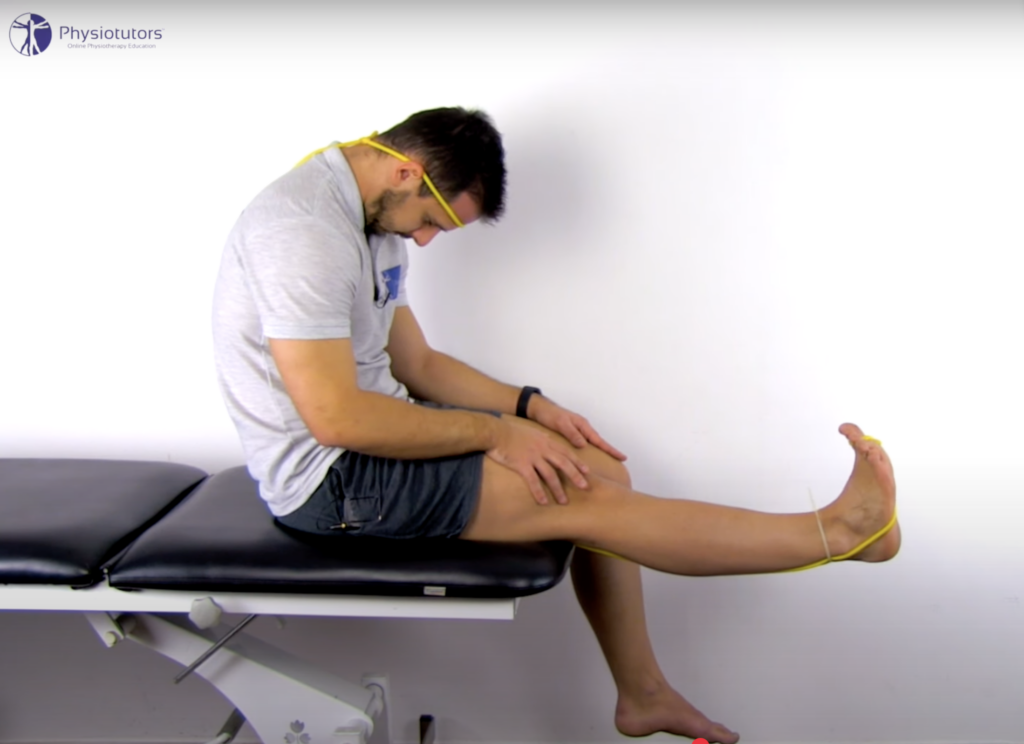
This is an example of the sciatic nerve being glided (like dental floss):
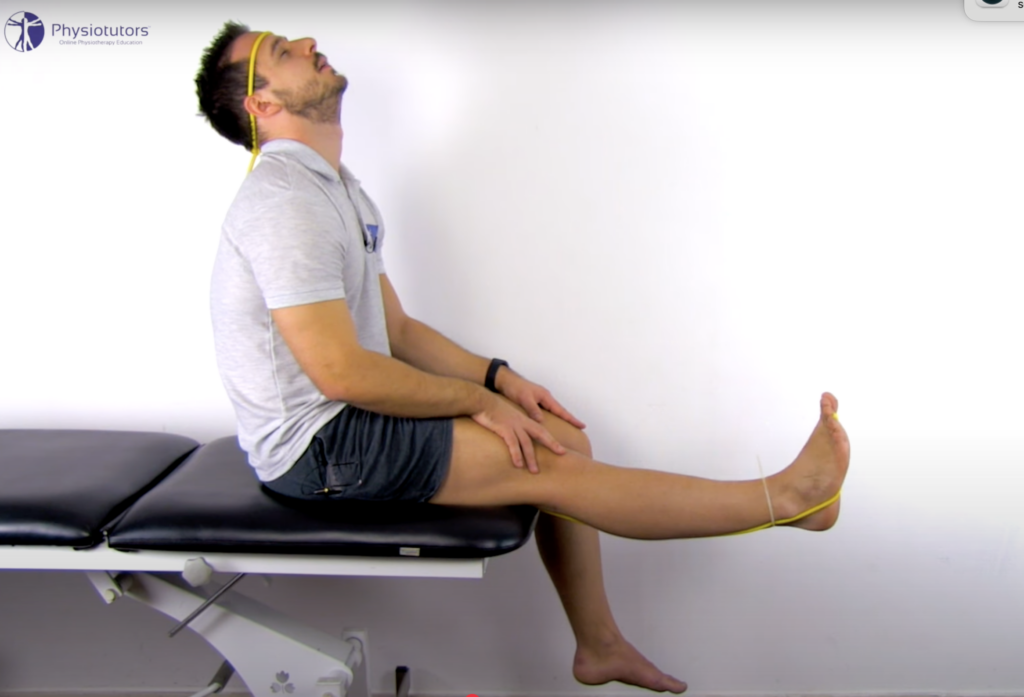
Notice in the gliding position, the nerve (represented by the yellow tubing) is shortened on one end and lengthened at the other end. (Note: the sciatic nerve does not start at the head, but was just attached there for illustrative purposes).
Successful treatment of sciatica must include evaluation of each of the potential compression sites. Here is a quick checklist to help you get started:
| Compression site | Evaluation | Treatment |
| L4-S3 | Manual lumbar traction | Lumbar traction Muscle energy technique |
| Piriformis | Palpate for trigger point midway between greater trochanter and PSIS | Counterstrain piriformis Strengthen gluteus maximus in sagittal plane with hip hinging Correct sacral torsion with MET |
| Greater sciatic foramen | Palpate for pain midway between greater trochanter and ischial tuberosity | (this is just a confirmation of sciatic nerve inflammation) |
| Behind bicep femoris | Palpate for trigger point in mid-muscle belly (mid thigh) or 1.5″ above fibular head | Correct posteriorly displaced fibular head with MET Stretch bicep femoris with revolving triangle |
| Popliteus | Palpate for trigger point proximal to the medial gastroc muscle belly | Counterstrain with passive tibial IR with the knee flexed |
Why does this matter?
There is a reason why sciatica is sometimes so difficult to manage. There are so many potential causes of compression, making it so that one stretch doesn’t always fix the problem. Successful treatment depends on a thorough evaluation of all potential compression points. So roll up your sleeves and get to the bottom of the pain in the bottom.
Because nobody has time to be in pain.
Until next time…

Kind Regards,
MoveWell Academy
[email protected]