Kinesiology THURSDAY – Bottoming Out (Part 4 – Lumbar Spine (again))

I thought I was done with this series…and then I got a massage. One of my patients graciously gifted me a session with her massage therapist and I scheduled it this week for two reasons:
- I’m always interested in finding a new practitioner to refer patients
- I was feeling a stiffness in my low back when standing up after lying on the couch at the end of a long day
“How much pressure do you like?” he asked. He stood just a few inches taller than me and I’m sure I outweighed him by a few pounds. I really wanted him to get at the trigger points I thought he might find in my psoas major.
“Deep,” I replied.
He found a lot of trigger points, but the one that was extreme was in this muscle:
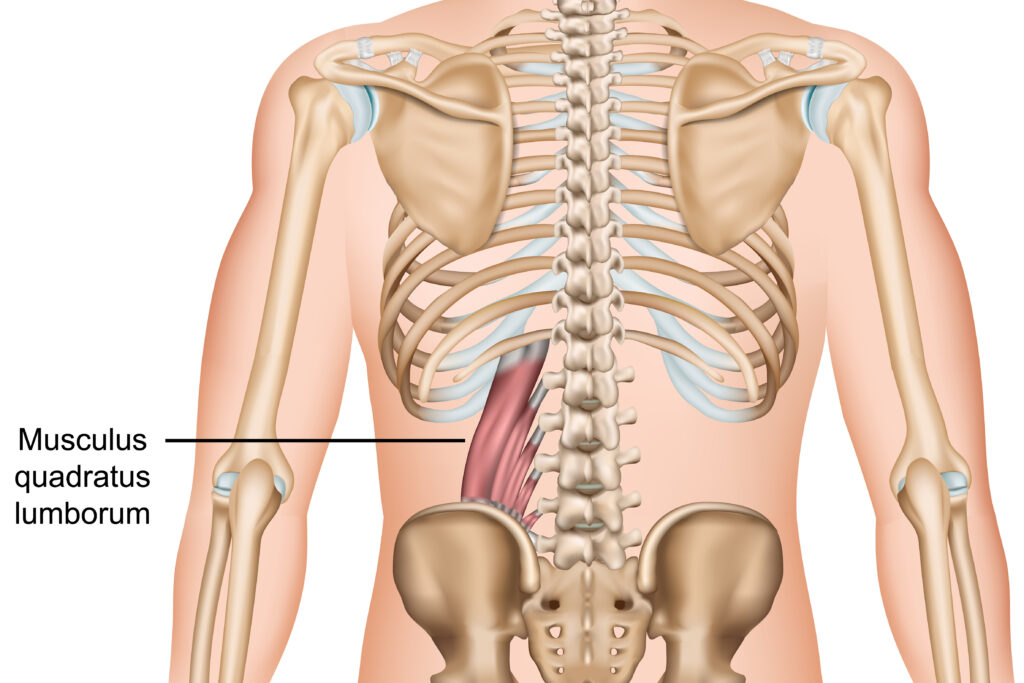
In between my silent cries of pain and trying to take deep breaths, I thought, of course! The quadratus lumborum is an extender of the lumbar spine when acting bilaterally. Trigger points and fascial tightness in this muscle could cause the lumbar spine to “bottom out”. When acting unilaterally, it side bends the spine. In the case of postural tightness, this usually exhibits as a pelvis that is higher on that side.
He used three main techniques to release it:
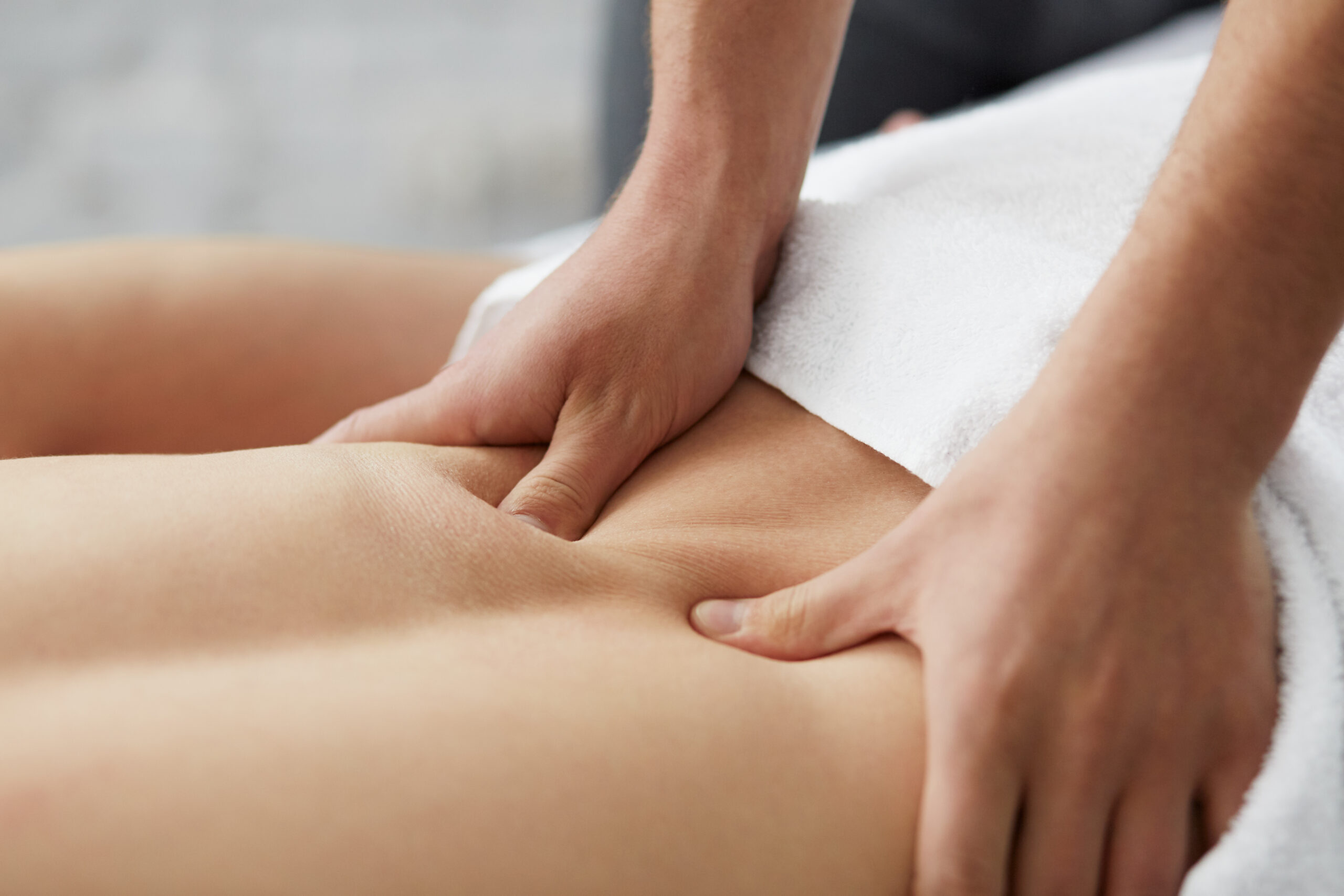
- Using his thumbs, he traced the borders of the muscle with deep pressure to release the fascia along the tendons (iliac crest, lumbar spine, 12th rib). This felt very effective.
- Longitudinal strokes parallel to the muscle fibers
- Dynamic cupping both parallel and perpendicular to the muscle fibers. He used an acrylic cups that suctioned with a handle and then slid it with a moderate pace in each direction multiple times
I know you are probably wondering why I wasn’t just relaxing into this not-so-relaxing massage instead of thinking about all of this, but all that kept running through my mind was “I have to tell people about this un-bottoming out technique”. I will be making a video on this, so stay tuned.
Interestingly enough, I was not having any restriction with lumbar range of motion in any direction. Stretching would not have been an answer to releasing this muscle for me. Abdominal activation to inhibit this muscle is a better answer (see last week’s blog).
Why does this matter?
Bottoming out of the lumbar spine may involve the quadratus lumborum as it is an extender and side bender of the spine. Weak abdominal muscles may predispose it to tightness, a restriction that isn’t always felt by stretching into flexion. Treating the muscle and surrounding fascia is key.
I’ve had long days and couch collapsing sessions since and am happy to report, I get off the couch pain-free. Remember the quadratus lumborum. (And if you want to try this very talented massage therapist, you can find Kostyantyn here. Tell him I sent you.)
Because nobody has time to be in pain.
Until next time…