

All About You FRIDAY – The Art of Smufato
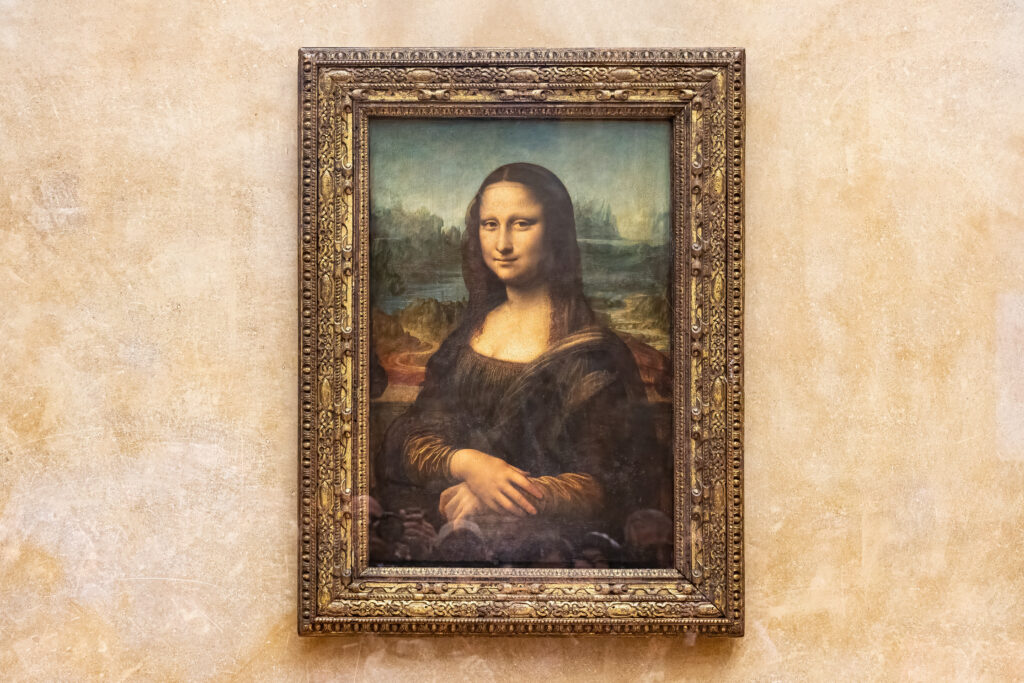
In 1508, Leonardo Da Vinci was commissioned by Florentine silk merchant Francesco del Giocondo to paint a portrait his wife, Lisa Gherardini. He never really finished it. At least, he never handed it over to its proper owner.
Instead, he carried it with him intermittently working on it as he traveled. He employed a revolutionary technique called smufato, blurring the lines between light and dark, making the transition almost imperceptible. It is the secret behind the mysterious smile and the background that seems to continue into the distance.
Following Da Vinci’s death in 1519, the painting was acquired by King Francis I of France, proudly being displayed in several royal estates, including the Palace of Versailles. Following the French Revolution, it passed into the possession of the French public until in 1804 it was officially installed where it resides today, in the Musee’ de Louvre in Paris.
Even then, the Mona Lisa wasn’t a household name. It didn’t become famous until August 21, 1911 when Vincenzo Peruggia, a Louvre employee, pulled off the art heist of the century. An Italian nationalist, he stole the painting believing it belonged to Italy. The theft created a media frenzy. Even Pablo Picasso was investigated as a possible suspect.
In 1913, two years later, Peruggia was arrested trying to sell the painting to an art dealer in Florence, thus cementing the Mona Lisa’s place in history. It now sits behind fireproof, waterproof glass in one of the largest rooms in the Louvre.
In 2022, I was fortunate enough to lay eyes on it when I fulfilled a bucket list item and traveled to Paris. I took this picture:
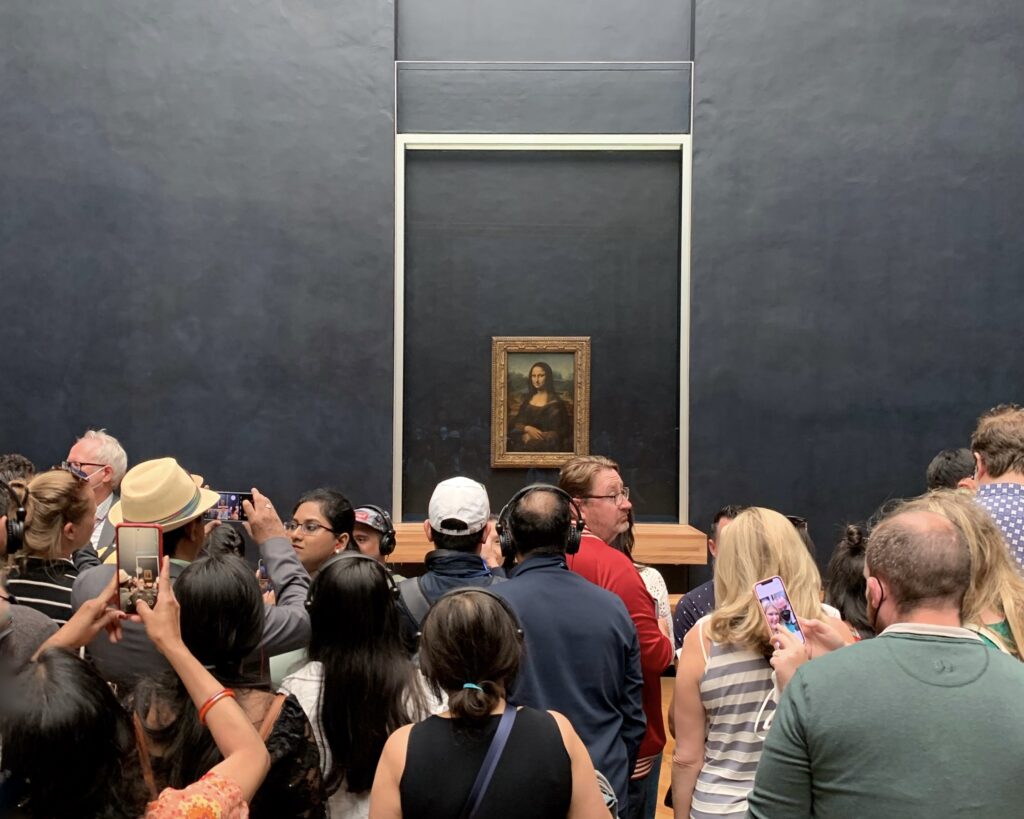
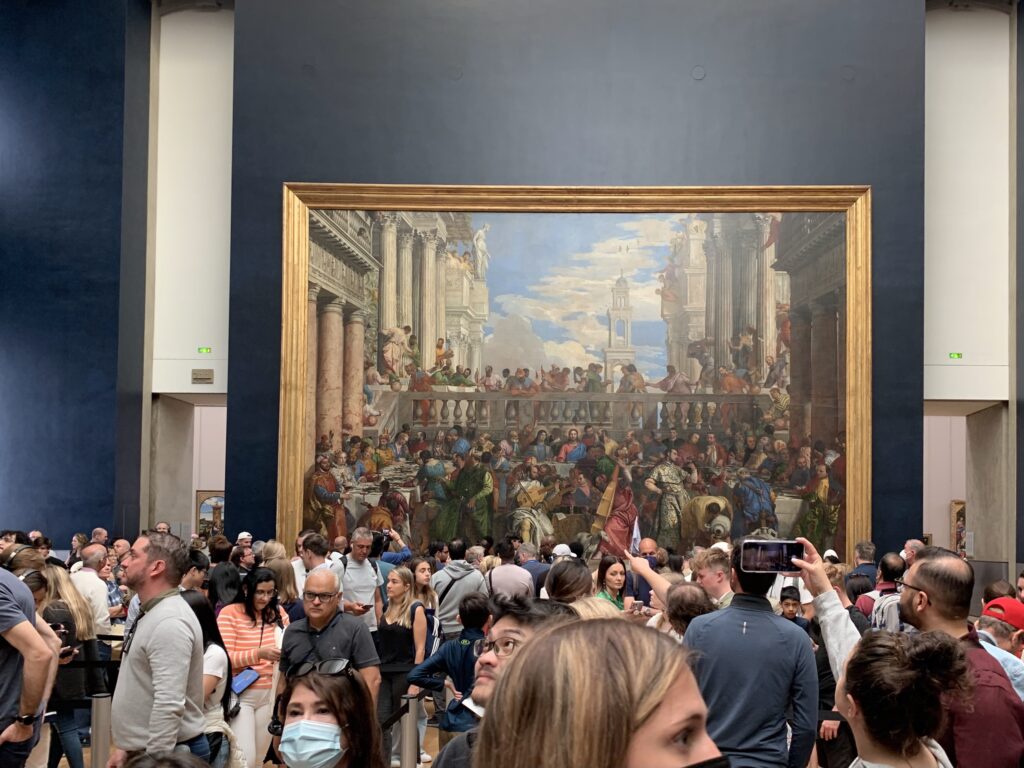
It’s so small, I thought, as I made my way closer. It’s not the kind of painting you can sit in front of and ponder as the line is long and constantly moving. In this large room in the Louvre, this masterpiece of Da Vinci sits opposite to one of the largest paintings in the museum, the Wedding Feast at Cana by Paolo Veronese, depicting Jesus turning water into wine.
I wonder why Da Vinci hung onto the Mona Lisa so long? It has been said his work wasn’t just art. The use of smufato to blur the lines held the secret to his genius. To him, smufato wasn’t just a technique. It was a philosophy.
And it just may hold the secret to an abundant life.
The word comes from the Italian smufare, which means to evaporate like smoke.
Leonardo believed wisdom began the moment you stopped demanding sharp boundaries. Smoke has ambiguous edges. So does real life.
We like it when things are neat and orderly and put into defined boxes. We search for answers to the hard questions and only feel settled if we can know what the future holds. We like to plan and predict. We spend time seeking answers because we think knowing equals intelligence.
But Da Vinci’s radical insight was this: the greatest minds stay comfortable in the fog.
He didn’t fill notebooks with statements of knowing. Instead, his pages were filled with questions. And when he painted the Mona Lisa, he intentionally collaborated with your uncertainty. He understood that reality isn’t static.
There’s a reason you can stare at the Mona Lisa for a long time. All the soft edges keep you seeking and wondering. The reason it is a masterpiece isn’t because you get it. On the contrary, it is compelling because you’re not quite sure if you do.
Da Vinci understood something profound. Meaning emerges through interaction. Not from knowing the answers all of the time. And life works the same way.
Modern psychologists who study creativity have rediscovered what Da Vinci already knew:
Creative people display what is known as cognitive flexibility. They are not necessarily smarter than their less creative counterparts. Rather, they tolerate ambiguity better than average. They don’t force complex things to be simple. They allow contradiction to occur.
And when contradiction occurs, they don’t become defensive. They become curious.
It’s been said, your need to be right may be ruining your life. The people who thrive aren’t the ones who always know. The ones who flourish in life are the people who remain calm even while they don’t have the answers. They are okay with smufato.
How many opportunities have been ignored, how many relationships have ended, how many steps did you not take because you felt paralyzed from not knowing the answer? For me, far more than I’d like to admit.
But it’s worth the practice. Because more and more, the ability to survive when life is not so well-defined, is becoming a super power.
In my hours of greatest need and uncertainty, my mentor, Bob, has told me: “Our greatest strength is our ability to ask ‘Why?’ and our greatest weakness is our need to.”
Stop seeking the right answer and instead ask what can I learn next? Allow curiosity to override fear. Let life finish the sentence.
Love and purpose. Meaning and identity. None of those sit in defined boxes. Instead, they are discovered layer by layer, like Da Vinci painted. The Mona Lisa wasn’t an example of procrastination. I believe Leonardo hung onto it for years because it never felt finished. He was reveling in the discovery that can only occur when you don’t put something neatly in a box.
Let go of boundaries. Let go of fear. Open your mind and your heart to what happens next. Embrace smufato. It just may become your superpower.
It’s been a long week. Don’t forget to celebrate.
Until next time…
Kind Regards,
MoveWell Academy
[email protected]