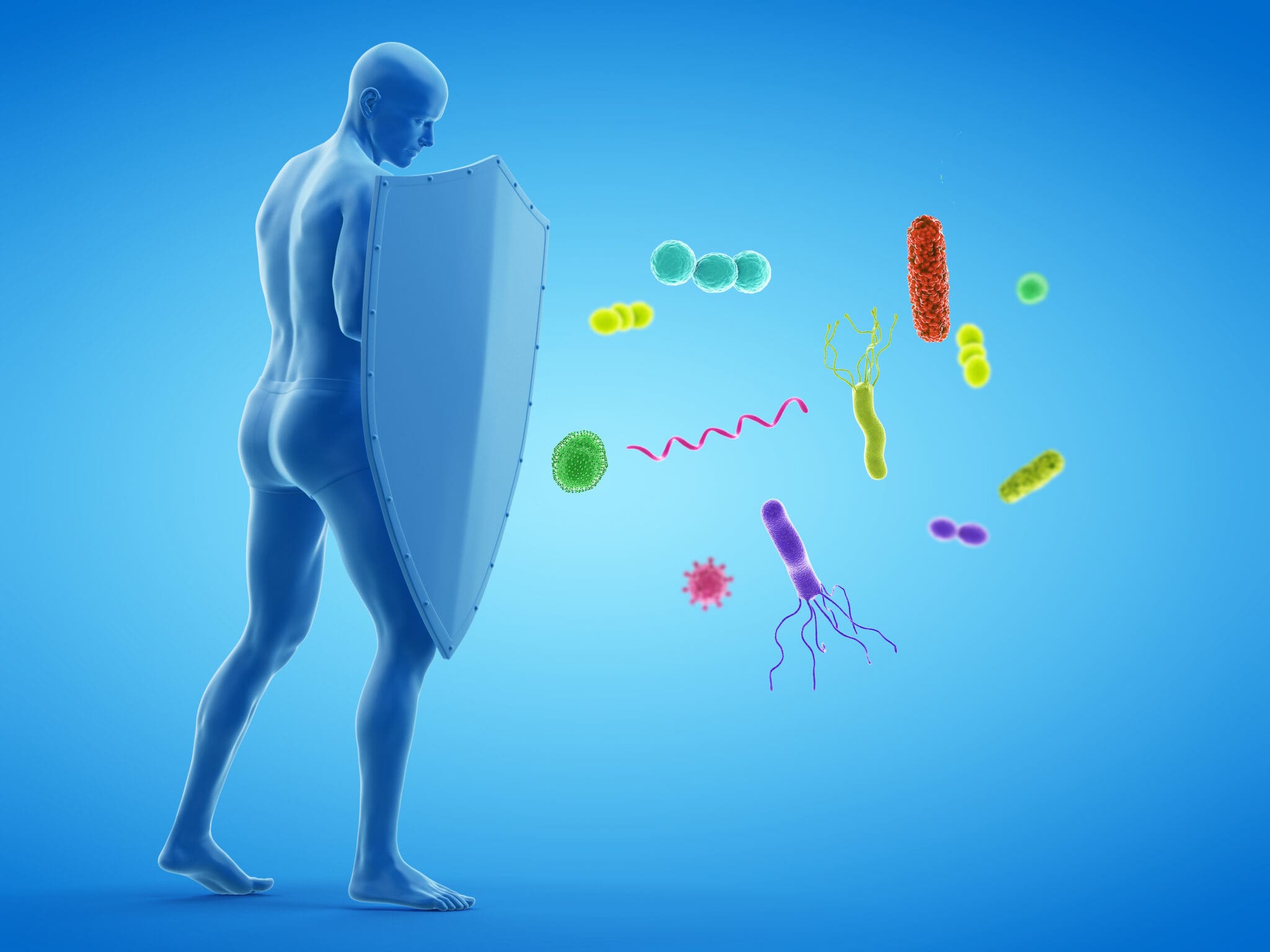
All About You FRIDAY – Bullet Proofing Your Immune System
On the downslope of the pandemic from a novel coronavirus, it is important to ask some questions. Have we learned anything? What could we have done better? And most importantly, what can I do to give myself the best chance at fighting this or any other virus again?
Viruses live among us and there will be no eliminating them from our environment. Our best defense is prevention and science has a lot to say about how to boost our immune system and battle the devastation of a pandemic and the solutions are surprisingly simple.
Here are three things you can do quickly and immediately to strengthen your immune system for the next viral onslaught.
- Get Moving
In a Kaiser Permanente Southern California (KPSC) study involving over 48,000 subjects from March 2020 – March 2021(1), consistent inactivity ranked only below age, pregnancy and a history of organ transplant as resulting in the highest odds for hospitalization with COVID-19. According to the study, the “odds of death for consistently inactive patients was higher than the odds of other COVID-19 risk factors.”
What is defined as consistently inactive? These are individuals taking part in less than 10 minutes of activity a day. People who take part in over 20 minutes of exercise a day meet the US Physical Activity Guidelines of 150 min/week of moderate physical activity (like a brisk walk). This can be done in as little as 10- minute increments of activity.
It’s a simple solution to an otherwise daunting outcome. Americans spend an average of four hours a day on leisure activities, mostly on electronic devices. 20 minutes is only 8% of that time.
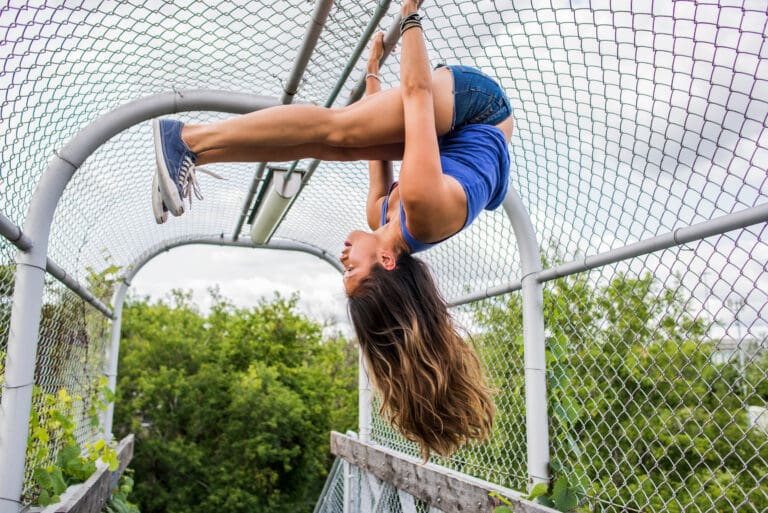
Walk your dog. Take a hike. Do a short yoga video. Climb some stairs. A little bit of time can go a long way in ensuring your longevity.
- Box Breathing
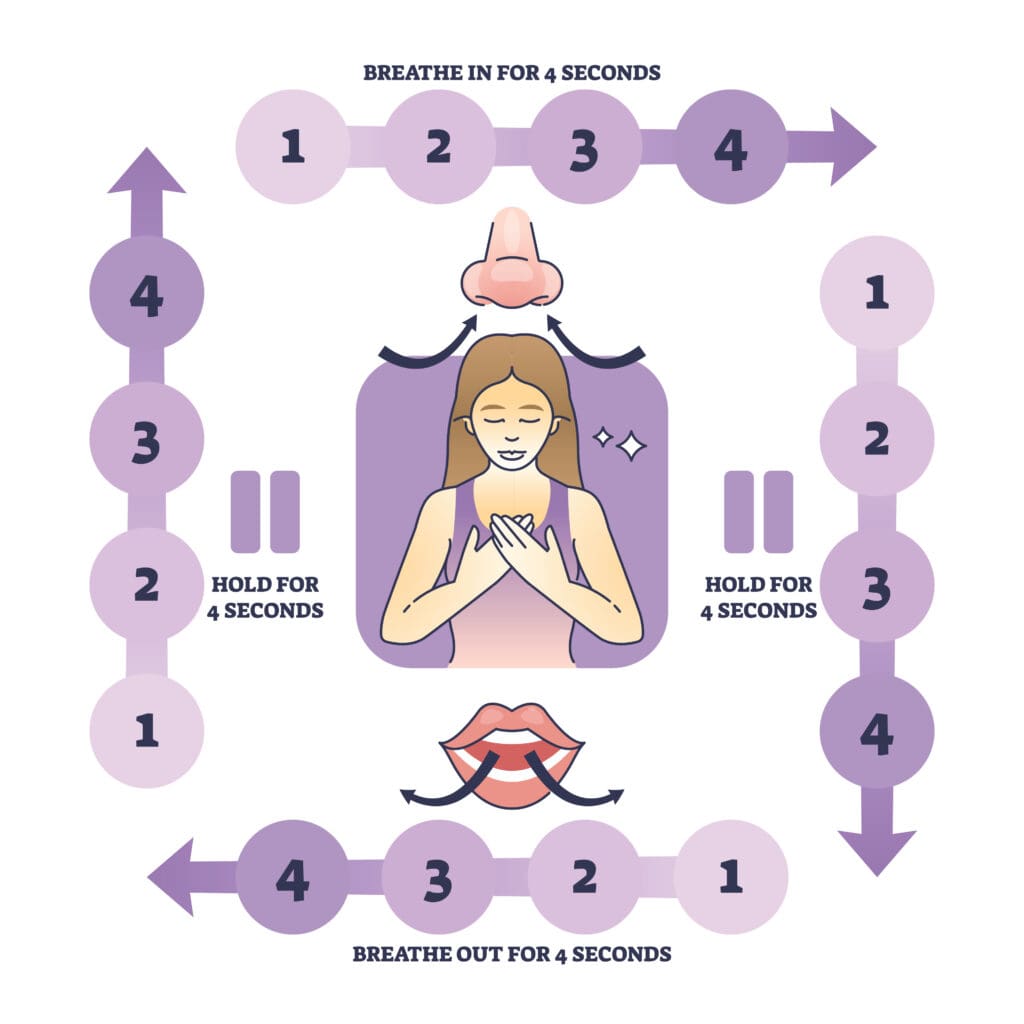
Box breathing is a technique adopted by the Navy Seals to aid in stress management and overall wellness. It is a simple technique that can be done anytime and anywhere. Here’s how to do it:
- Slowly exhale. Before you begin, sit upright and slowly exhale through your mouth emptying the oxygen out of your lungs.
- Slowly inhale. Inhale slowly and deeply through your nose to a slow count of four. Imagine filling your lungs one section at a time.
- Hold your breath for a slow count of four
- Slowly exhale again through your mouth expelling all the air from your lungs and abdomen
- Hold your breath again for a slow count of four
According to the Mayo Clinic, there’s sufficient evidence that intentional deep breathing can actually calm and regulate the autonomic nervous system (ANS). The ANS is responsible for all of the automatic functions of your body, such as breathing, temperature regulation, digestion and cardiovascular function.
Box breathing also improves lung function by increasing total tidal volume and may also help treat insomnia. Getting adequate sleep is another way to boost your immune system.
So, stop and take a breath. In less than a minute, you can fortify your body for physical and mental challenges ahead.
- Cut the Sweet
Limiting sugar intake for good health is not new news. Empty calories lurk among sweet baked goods and sugary drinks that can quickly add calories and cause weight gain.
But did you know that sugar can also suppress the immune system? For several hours after you eat a donut or drink a sugary drink, your immune system is temporarily dampened. If you consume sweet’s several times a day, your immune system will be functioning at a perpetual disadvantage. Sugar also promotes inflammation. Inflammation is a normal healthy response, but an inflammatory response fueled by sugar may promote aging and disease. Keeping your intake of sugar to less than 10% of your diet (which for most of us is about 50g) can help your immune system function most efficiently.
But all is not lost for those of you with a sweet tooth. According to Monica Reinagel, a board-certified licensed nutritionist and author, there is a loophole. Sugar consumed right after exercise is taken up very quickly by your recently active muscles and exercise sensitizes your cells to the effect of insulin. So, if you want a sweet treat, use it as a reward after exercise. It’s a win/win!
What the pandemic has taught us is there is no better time than the present to prepare your body to withstand the onslaught of viruses and other illnesses. These fundamental actions are probably things you have heard of before, but repetition breeds impression. It’s always good to be reminded of the value of simple goal setting and daily discipline. We are all in this together. Encourage one another and let’s create a world where the fight for wellness and longevity is the path we walk hand in hand.
- Sallis R, Young DR, Tartof SY, et al Physical inactivity is associated with a higher risk for severe COVID-19 outcomes: a study in 48 440 adult patients. British Journal of Sports Medicine 2021;55:1099-1105.