

All About You FRIDAY – Hope as a Strategy
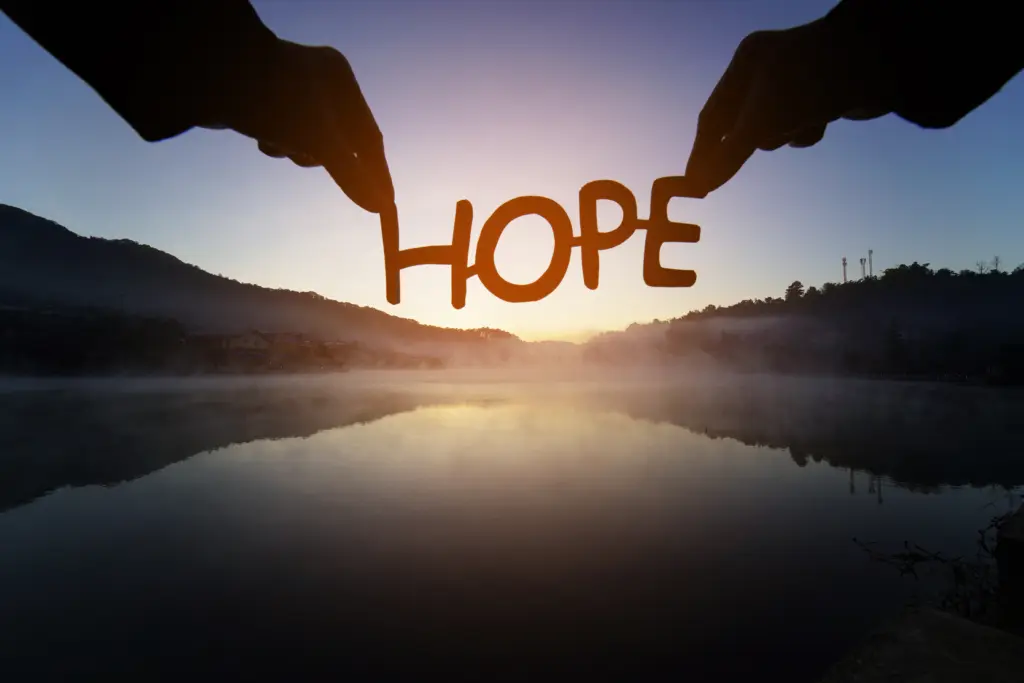
“I hope you can fix me,” he said.
“Hope is not a strategy,” I answered confidently, quoting legendary Vince Lombardi as I mobilized his thoracic spine. I said it partly in jest, but his eyes grew wide with amusement.
“Well done! Did you just make that up?” A retired attorney and man of high intelligence, he appreciated the sensibility in my treatment plan. I admitted that it was a line my mentor had used with me in the past, usually when I began to fall into a pattern of wishful thinking.
The message is simple but powerful: Success requires more than optimism.
But a few hours later, I would rethink my comment.
She walked into my clinic like a woman with a cloud over her head. She moved as if she was stiff and in a bit of pain, but her countenance betrayed a heaviness that went beyond the physical.
I knew her. She was my student over thirty years ago and I remember her well. In that time, she logged a couple of decades in the field and raised two kids to young adulthood before she retired. How time flies, I thought.
Up until two years ago, she was active, regularly playing pickleball.
As I took down her history, she grabbed her phone to show me her x-ray results. I caught a glimpse of the photo on her home screen.
“Is that your son?” I asked.
“No, that’s my husband. He just died this year.”
She paused to let that sink in.
It happened one morning in May. She had walked past him as he sat in the living room on her way to the bathroom to fix her hair. When she came back out to talk to him, he was gone.
Just like that.
Forty-four years of marriage, and her life had changed in a moment.
Her story hit close to home for me.
“I’m so sorry,” I replied, feeling the inadequacy of my words. My heart ached for her loss.
As I continued my evaluation, I kept thinking, I hope I can fix her.
And then I caught myself.
The irony was not lost on me.
You see, when someone comes to me with a problem in one area, I go on a hunt to find all the things wrong with them that I can find. Biomechanically speaking, of course.
I find it exciting.
That probably sounds weird, but believe me, it’s the best-case scenario. If you have pain and I find a stiff ankle here, a trigger point there, and something a bit out of line somewhere else, those are things I can work on. And more importantly, I can usually explain how something nowhere near your site of pain might be contributing to the very thing you’re complaining about.
I love that part of what I do.
Some say it’s a gift. But truly, it’s the product of more than 36 years of deep study of musculoskeletal anatomy and kinesiology. That, combined with a bit of geekiness, all adds up.
But all those years of experience have also taught me something else.
Healing involves more than the things I do.
And standing there with this woman, I was reminded of just how true that is.
I could assess her movement, identify mechanical problems, and develop a treatment plan. I could draw on everything I had learned over the course of my career to help relieve her physical pain.
But I couldn’t fix the loss of her husband. I couldn’t take away the grief she carried. And I couldn’t promise that correcting her physical problems would restore the life she once knew.
Have you ever read 1 Corinthians 13? Even if you’ve never read it, you’ve probably heard it recited at a wedding or two. It’s often referred to as the Love Chapter.
But what most people miss is the transition from the chapter right before it.
Paul was writing to the believers in Corinth, where people had begun placing greater value on certain spiritual gifts than others. Instead of bringing people together, their gifts had become a source of pride, comparison, and division.
Paul reminded them that each person had been given different gifts, and that those gifts were meant to complement one another for the good of the whole body. No one person had everything, and no gift made someone more important than another.
After describing these gifts and their place within the church, Paul ends chapter 12 with a remarkable statement:
“And yet I will show you the most excellent way.” — 1 Corinthians 12:31
And with that, he ushers us into the Love Chapter.
He goes on to explain that even the most extraordinary gifts mean little if they are not accompanied by love. You can possess great knowledge, remarkable faith, and the ability to do amazing things, but without love, something essential is missing.
Then he ends the chapter with these familiar words:
“And now these three remain: faith, hope and love. But the greatest of these is love.” — 1 Corinthians 13:13
Perhaps the familiar saying is right. Hope is not a strategy if by hope we mean simply wishing that things will somehow get better.
But hope rooted in faith, expressed through love, and made tangible through the gifts we have been given is something altogether different.
It is the willingness to sit with someone in their suffering without surrendering to despair. It is the conviction that even when we cannot change the past, we can still help shape what comes next. It is recognizing that healing does not always just mean curing, and that sometimes the most meaningful thing we can offer another person is the assurance that they will not have to face their suffering alone.
Hope is not merely what we wish for. It is something we can choose to practice.
Perhaps that is because love is what transforms hope from an abstract idea into something we can actually do. It’s not just about our gifts. It’s about our delivery.
I’ll say it again..this time with conviction and a prayer in my heart. I hope I can fix her.
Because sometimes, hope is our most important strategy.
It’s been a long week. Don’t forget to celebrate.
Until next time…

Kind Regards,
MoveWell Academy
[email protected]