Kinesiology THURSDAY – Sleeve by Sleeve: The Science of Putting on a Coat
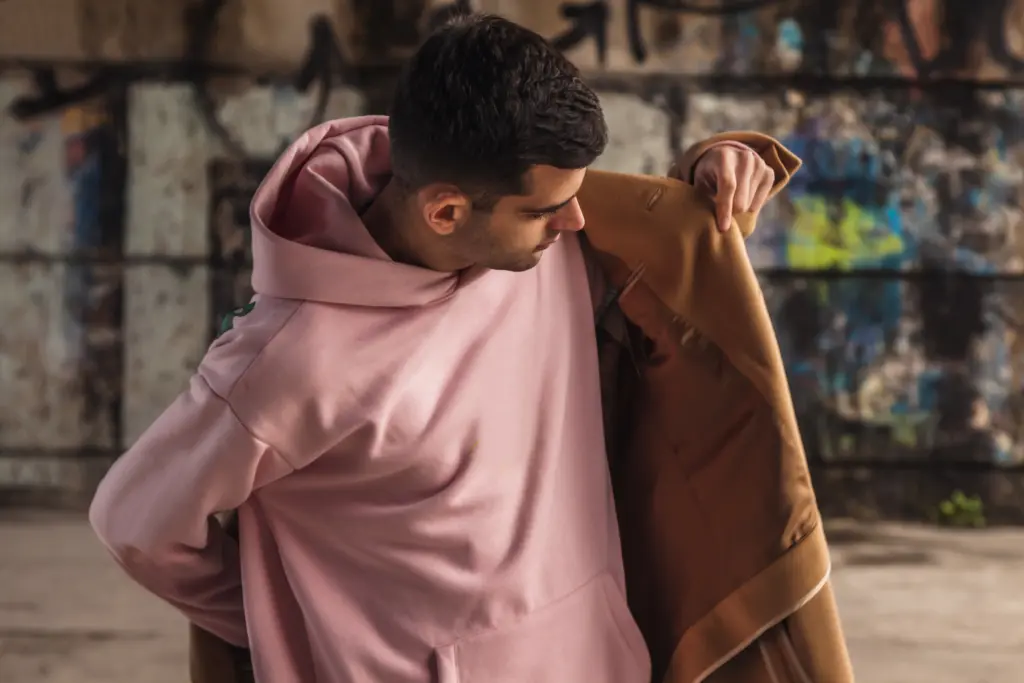
Putting on a coat is one of those activities most of us perform without thinking about it.
One arm goes into a sleeve. You reach behind yourself for the other sleeve. A quick shrug and tug—and you’re ready to go.
But from a kinesiology standpoint, there’s a lot happening during those few seconds.
Putting on a coat requires a coordinated combination of shoulder rotation, elevation and extension; scapular movement; elbow motion; thoracic mobility; and even trunk rotation.
And here’s the interesting part: Your two arms don’t perform the same movement.
First Arm Kinesiology
The first arm has the easy job. Most people have a preferred arm that they put into the coat first.
That arm generally reaches forward and slightly outward to find the sleeve. The shoulder moves through slight amounts of flexion and abduction to place your hand into the sleeve. The scapula protracts while the elbow extends to push the hand through the sleeve.
Once that first arm is inside, however, the movement becomes much more interesting.
Second Arm Kinesiology
Now you have to find the other sleeve—often without being able to see it.
The second arm typically reaches backward while the shoulder moves into some combination of extension, adduction and internal rotation (EADIR), depending on how you put on your coat.
Try the movement without a coat and you’ll recognize the position immediately. It resembles reaching toward your back pocket or behind your waist. It is movement that often feels limited on one side more than the other.
EADIR is accompanied by movements in the scapula and thoracic spine:
- Scapular retraction and downward rotation
- Thoracic side bending towards the arm that is moving
- Thoracic rotation to the opposite side
The humerus never moves independently.
The scapula must move on the rib cage as the arm moves. The rotator cuff helps stabilize the humeral head while larger muscles, like the deltoid, triceps and latissimus dorsi move the arm.
This coordinated relationship between the humerus and scapula is one reason seemingly simple functional tasks can become difficult when shoulder mechanics are impaired.
Try this experiment…
Sit or stand very stiffly and try to put on a jacket without allowing your trunk to rotate.
Now try it normally.
Most people naturally rotate or slightly extend their trunk to help position the arm and shoulder.
Thoracic rotation increases the available movement of the entire upper extremity.
If thoracic mobility is limited, the shoulder may have to contribute more motion to accomplish the same task. Most people who have difficulty putting on a coat will feel discomfort in the shoulder when moving into the EADIR position. This is often a sign that something besides the shoulder (glenohumeral joint) is limited.
When things go wrong…
- Scapula protraction at rest – If the scapula is protracted due to trigger points in pec minor, shoulder extension will primarily be used to reach your arm behind. This results in anterior shoulder pain as the humeral head is already sitting anteriorly at rest.
- Increased thoracic kyphosis – If your upper back is rounded, it will be more difficult for the scapula to retract. The scapula follows the cues of the thoracic spine.
- Lack of full elbow extension – The straighter your arm can be, the easier it slides into the sleeve. Trigger points or tightness in the biceps brachii or caspular restrictions to full elbow extension can make donning a coat tougher and require more scapular movement.
This is an important principle of human movement: when one part of the kinetic chain doesn’t move sufficiently, another area often changes its strategy to complete the task.
And Finally, the Shrug
Once both arms are in the sleeves, there’s usually one final movement: the shrug, pull or wiggle that gets the coat comfortably onto the shoulders.
Now the shoulders may elevate, the scapulae reposition and the hands may pull downward on the front of the coat.
What seemed like one simple task has actually involved multiple movement patterns.
Nervous system coordination
The coordination of thoracic spine, scapula and humerus movement is a learned movement over hundreds of repetitions. To prove this, try putting your coat on putting the opposite arm in first.
For many people, something they’ve done thousands of times suddenly feels surprisingly awkward.
That’s because movement isn’t just about having adequate strength and range of motion. It’s also about coordination, habit and motor learning. Your nervous system has practiced your preferred strategy over and over again.
You SHOULD be able to put your coat leading with either arm.
Why does this matter?
Putting on a coat is far more complex than simply moving your arms into two sleeves.
It requires the shoulder joint, scapula, elbow and thoracic spine to work together, while your nervous system coordinates a familiar sequence of movements.
And your two arms aren’t doing identical jobs.
So tomorrow morning, pay attention when you put on your coat. If it’s easy, thank your body parts for working. If it’s difficult or you have shoulder pain when donning a coat, look to the scapula, thoracic spine and elbow and fix what you find.
Because nobody has time to be in pain.
Until next time…
Kind Regards,
MoveWell Academy
[email protected]