
Kinesiology THURSDAY – A Tight Quad and Pelvic Rotation
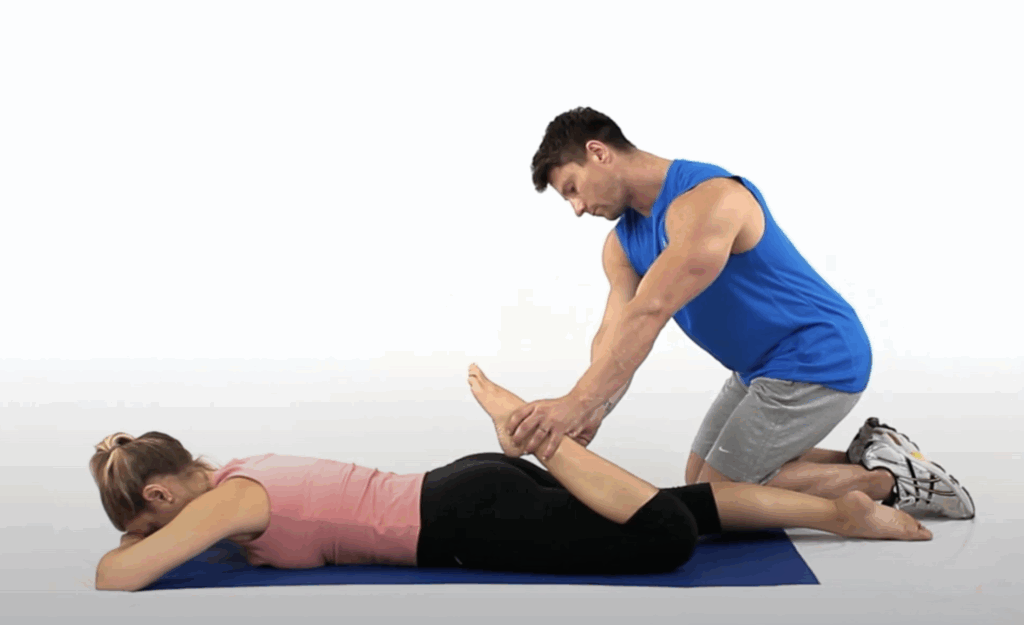
Next time you have a patient with ankle, knee, hip or low back pain associated with over supination of a limb, try the prone quad stretch above. You can also try it yourself like this:
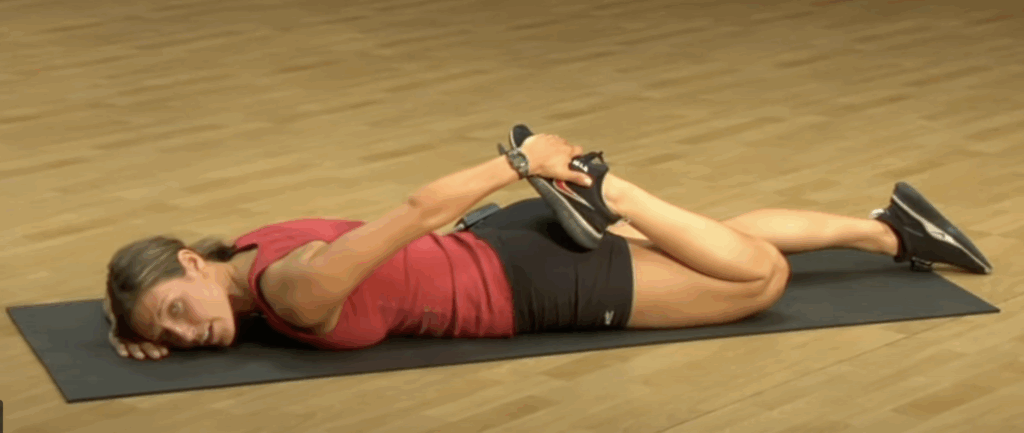
Observe what happens at the pelvis. There are three options:
- Pelvis stays level – this is normal but not that exciting
- Hip flexes – this indicates a saggital plane tightness of the rectus femoris
- Pelvis rotates ipsilaterally – this indicates a transverse plane tightness of the rectus femoris
Turns out, the prone quad stretch is an excellent test for pelvic rotation to one side. In most cases, the pelvis will only rotate in one direction even when testing the opposite side.
Remember the FABER test?
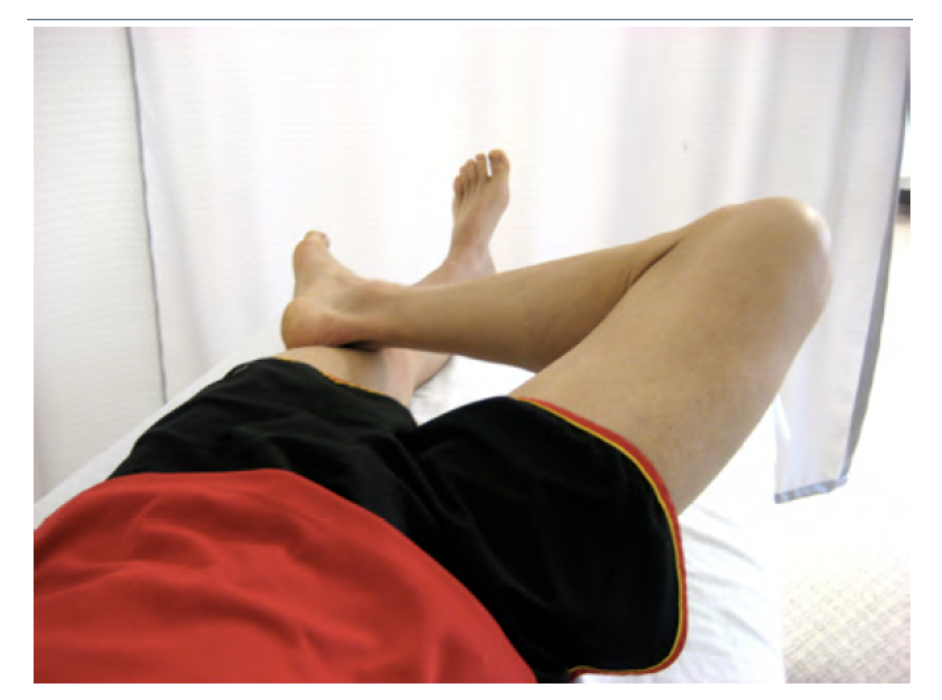
If you attempted this test and your hip felt locked up (pain in the posterior hip or lower back region in end range or limited ROM), you probably noticed as you forced your knee closer to the table your pelvis rotated towards that side. This is significant as pelvic rotation to one side is often the cause of over supination of a limb (lateral ankle, lateral knee or medial hip pain) or over rotation of lumbar spine (herniated disc or lumbar nerve root impingement).
Releasing the quad with manual techniques and a simple exercise may FIX YOUR FABER!
Here’s some ways to fix it…
If the prone quad stretch yields ipsilateral pelvic rotation, try the following:
- Soft tissue mobilization to the quadricep muscle. Trigger points will usually be found in rectus femoris and vastus lateralis.
- Skin rolling technique for the quad
Then do this exercise, the standing rotational quad stretch:
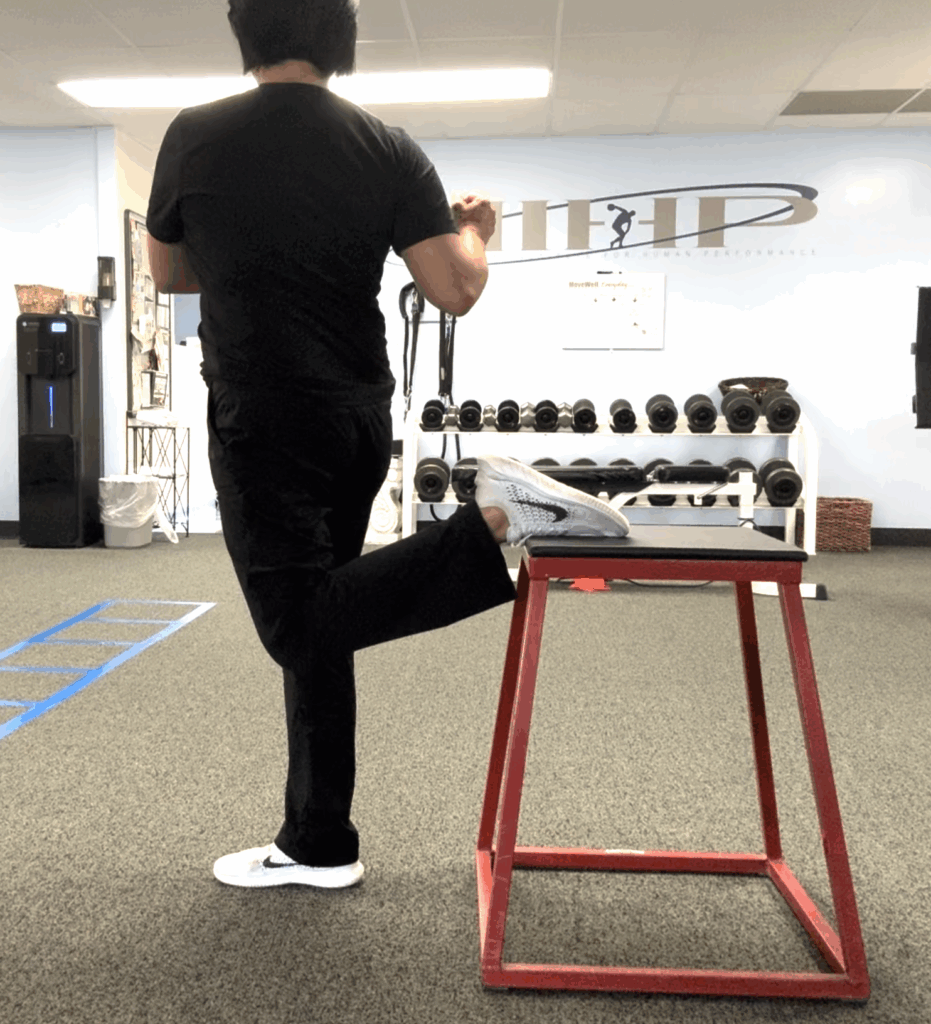
- Stand and place your foot on a chair or table
- Extend your hip so your knee points towards the floor. Hold for 30 seconds.
- Then dynamically rotate away from the stretching leg and return to neutral for 6-10 repetitions
- Re-check your FABER
Why does this matter?
Pelvic rotation to one side lies at the heart of many lower extremity issues. For example, a pelvis rotated to the left will over supinate the left foot and over pronate the right foot. Quad tightness in the transverse plane is one cause of this rotation. If the quad is tight in the transverse plane then it needs to be taught to lengthen in the transverse plane. A rotational quad stretch is a simple fix to level your pelvis.
Stay tuned for next Monday’s Move You Should Do where I will demonstrate this exercise and several variations to get your quad to move in the transverse plane. You won’t want to miss it.
Because nobody has time to be in pain.
Until next time…

Kind Regards,
MoveWell Academy
[email protected]