Kinesiology THURSDAY – Bottoming Out (Part 1 – The Hip)
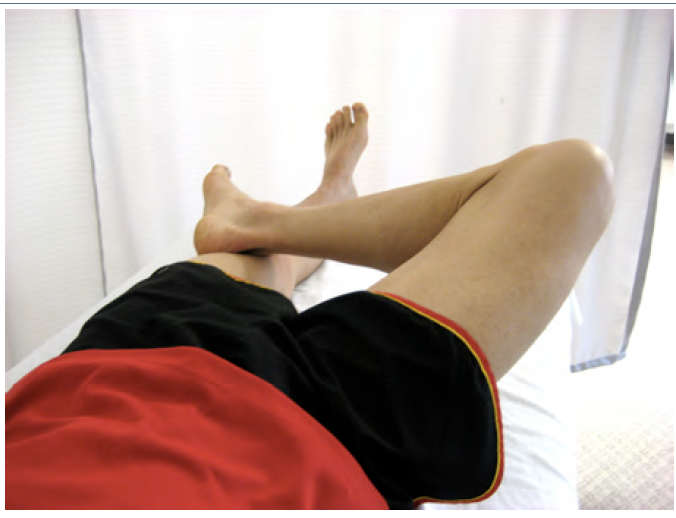
This is the first in a three part series I am calling “bottoming out”, describing the range of motion limitation that occurs if a joint is subluxed. This usually happens if certain muscles are chronically short, causing a joint to sit slightly out of alignment at rest. Let’s start at the hip.
The FABER test (Flexion, Abduction, External Rotation) is pictured above. Give this test a try. You should be able to lie on you back, cross your leg in this figure 4 position and lower your knee towards the floor until your tibia is parallel to the floor. Make sure to test both sides. Your hip should open up without restriction. If you feel a “jam” or pinch in the back of the hip, your joint may be “bottoming out”. Notice how that doesn’t feel like a stretch.
This is how the hip normally sits in the acetabulum (socket):
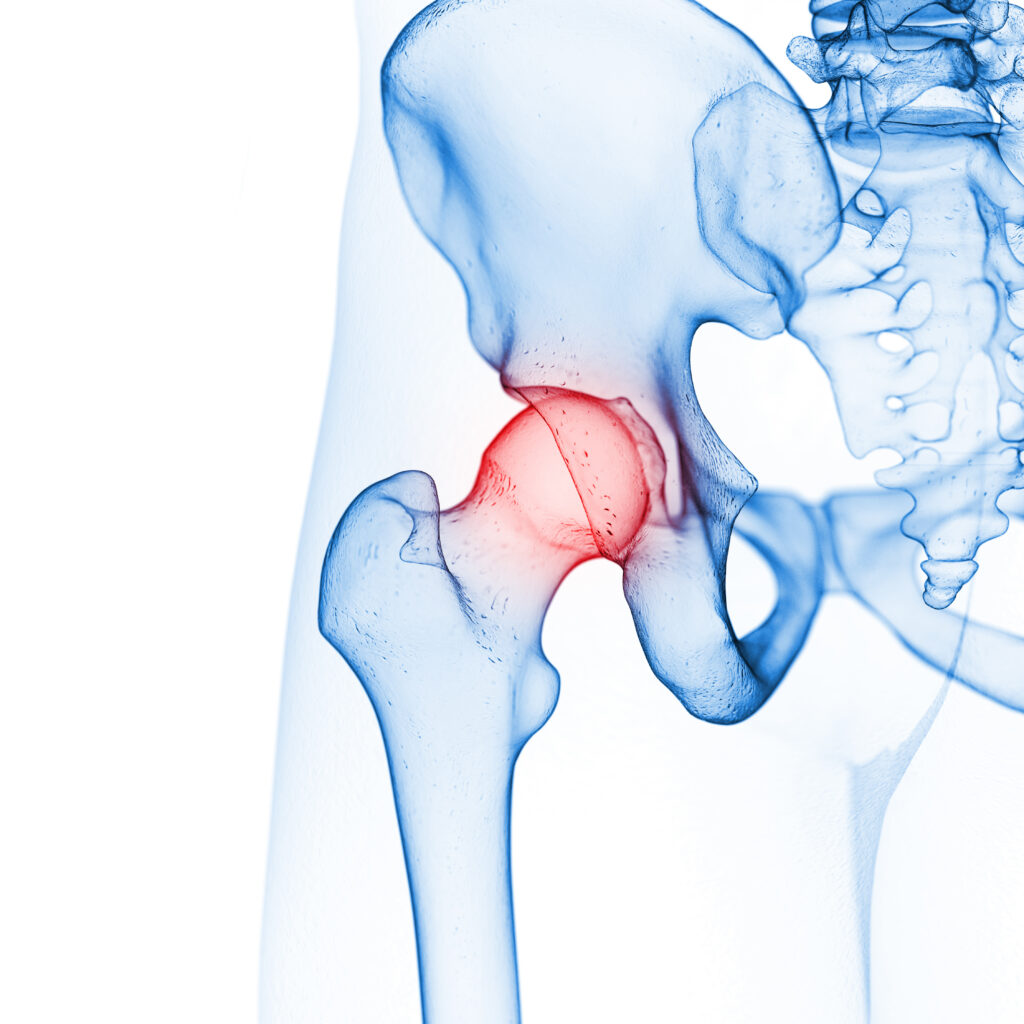
When you externally rotate the hip, the head of the femur should rotate anteriorly like this:
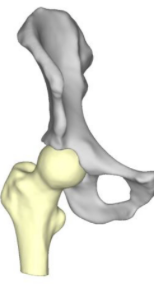
As long as your hip joint starts in the proper neutral position, you can achieve that range of motion. But what if your hip starts in the position above? As you attempt to do FABER, your hip “bottoms out” as you run out of room and you feel a jam in your hip in end range.
If you try to push your hip further, you will notice you start to rotate your pelvis towards that side to compensate for motion that isn’t happening at the hip.
What causes this?
Chronic external rotation of the hip at rest (walking toed-out or walking supinated) creates tightness in one or more of the following muscles:
- Psoas major
- Piriformis (and the rest of the deep six hip ER’s)
- Posterior gluteus medius
- Vastus lateralis
- Adductor magnus
- Lateral gastrocnemius
That’s quite a list. But check those muscles for trigger points and fix what you find, then re-test the FABER. You just might find you have unlocked your hip.
Why does this matter?
The hip joint bottoming out in external rotation is a common cause of pelvic over rotation which can lead to things like lumbar radiculopathy, sciatica, meniscal tears of the knee and even plantar fasciitis or Achilles tendonitis. Trying to “stretch” the hip when it doesn’t feel like a stretch doesn’t solve the problem.
Instead, if your hip “jams” in FABER, figure out why it is bottoming out, and fix what you find. The solution lies in restoring proper neutral positioning of the joint at rest.
Stay tuned for two more installments of the “bottoming out” series. Next up, the shoulder. In the meantime, remember, only stretch if it feels like a stretch.
Because nobody has time to be in pain.
Until next time…

Kind Regards,
MoveWell Academy
[email protected]