
Muscle Minute TUESDAY – Windswept (Part 5 – Innominate Position)
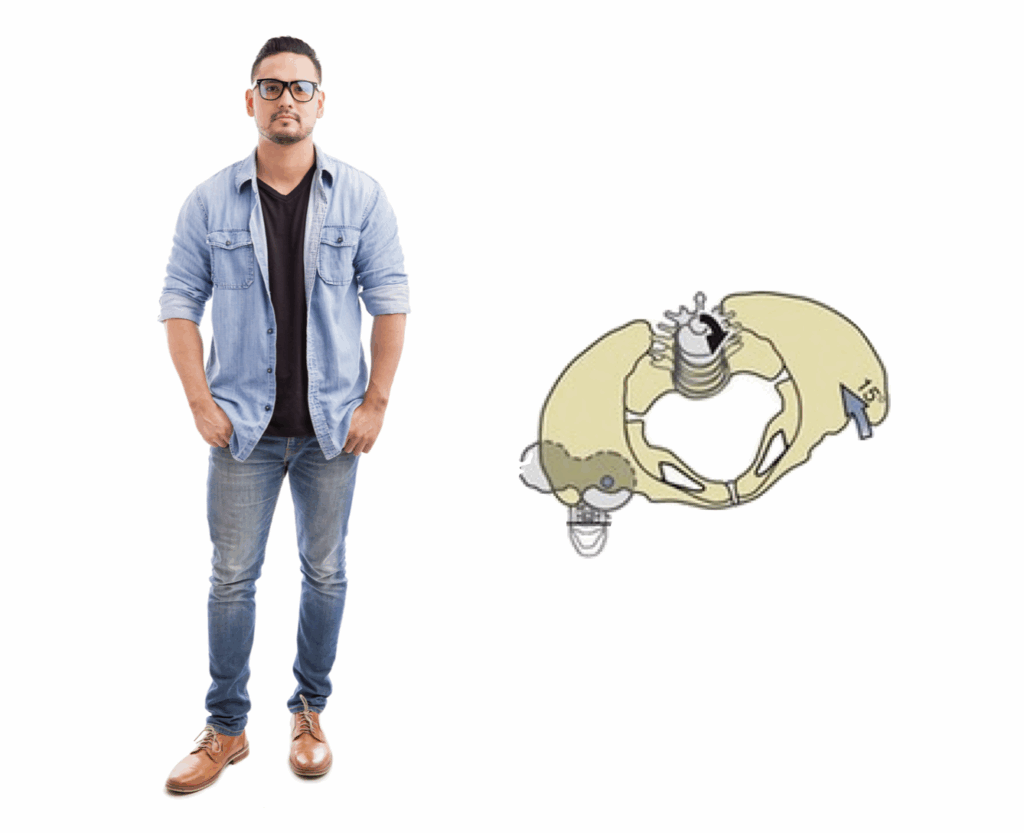
It’s been a couple of weeks, so let’s review where we are in the study of the windswept posture. We will reference the posture above that we call Windswept Left. The left side will function over supinated and the right side over pronated. A primary cause of this posture is a left rotated pelvis as pictured above. What does this do to the innominate position?
| Over Pronation | Innominate Position | Over Supination |
| Inflare | Flares | Outflare |
| Anterior rotation | Rotation | Posterior rotation |
| n/a | Slips | May be upslipped |
Inflare/anterior rotation is often associated with over pronation. Outflare/posterior rotation is often associated with over supination. The over pronated limb functions long causing a compensatory collapse of the limb (hip flexion, knee flexion/adduction/IR, STJ eversion) during weight bearing. The supinated limb functions short, decreasing the shock absorbing capabilities of the limb and predisposing one to an upslip.
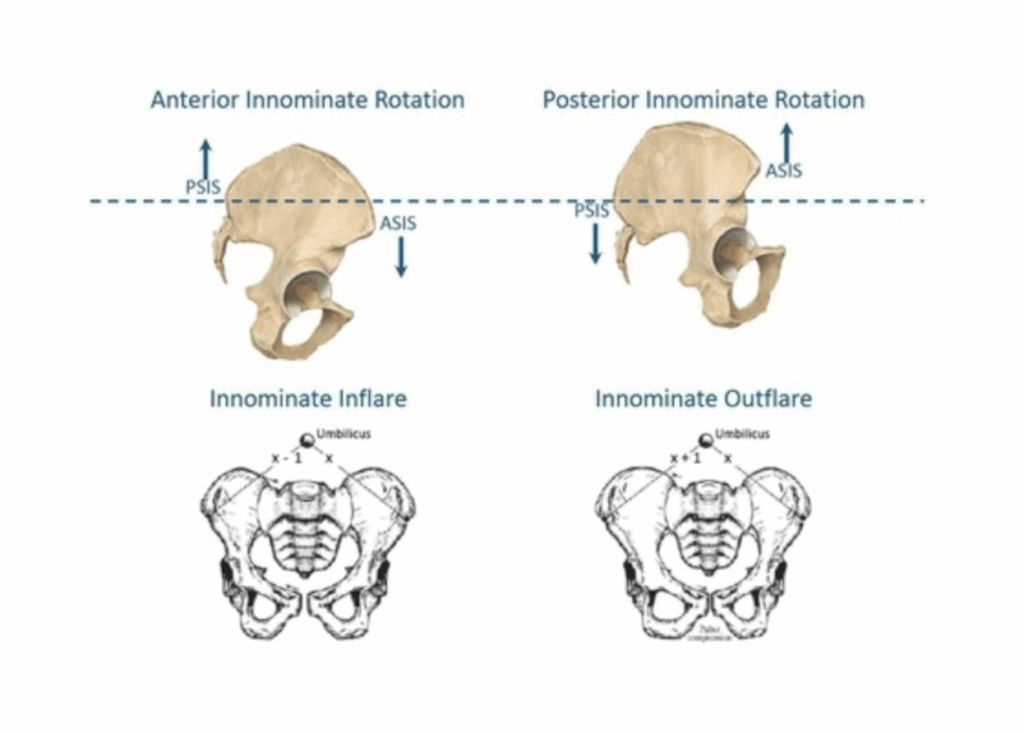
Here is how to assess inflare/outflares:
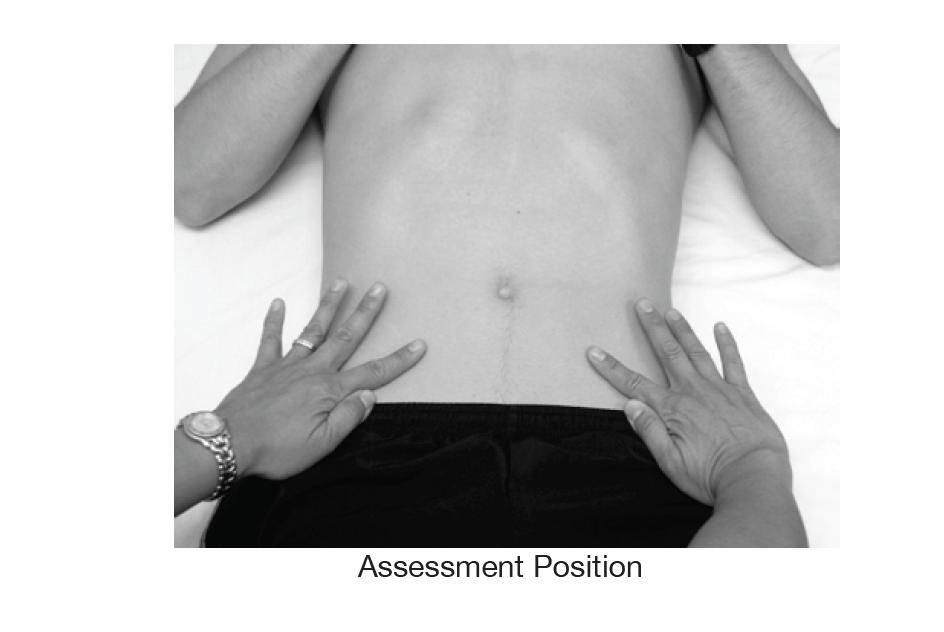
Assess the distance between the medial side of the ASIS and the umbilicus. If the involved side is closer to the umbilicus, it is classified as an inflare; if farther away, an outflare.
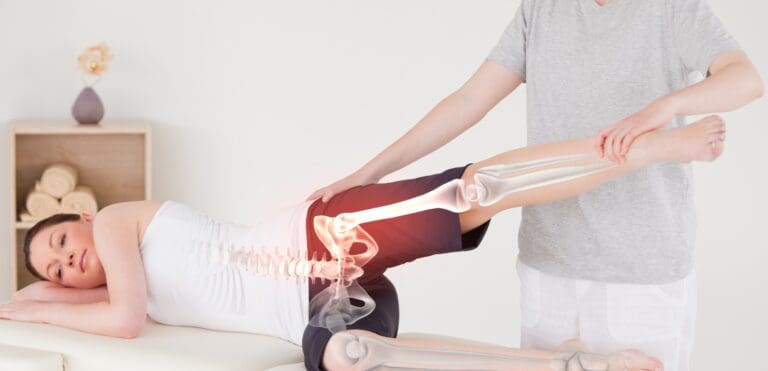
Here is the correction position for an inflare:
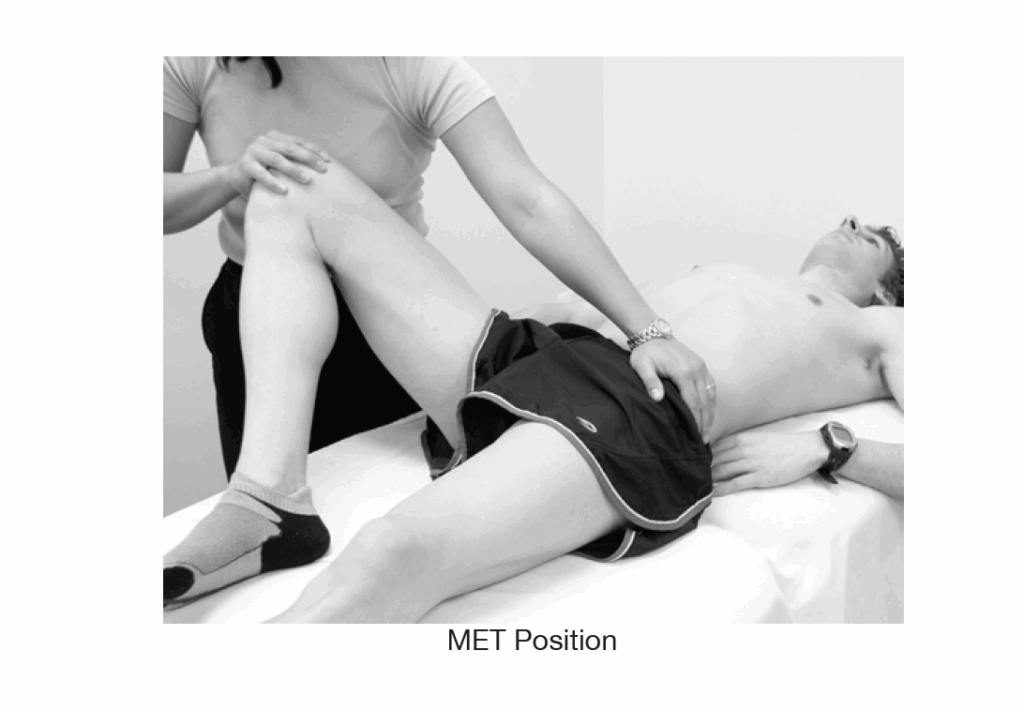
- Palpate movement barrier at the opposite ASIS
- Passively abduct the hip to the movement barrier
- Have patient perform isometric hip adduction for 5-8 seconds
- Relax 2-3 seconds
- Take up the slack and repeat 3-5 times
- Passively return limb to neutral
Here is the correction position for an outflare:
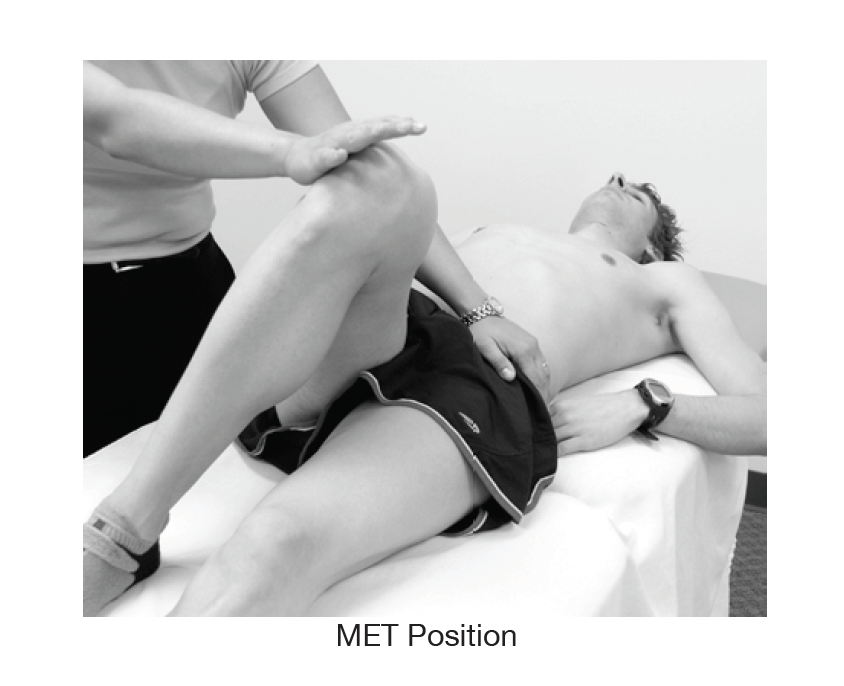
Why does this matter?
Correction of innominate position is a simple fix with muscle energy techniques (MET). Left unchecked, innominate malpositioning may be the cause of functional leg length discrepancies and sacroiliac (SI) joint dyfunction. A leg that over pronates may function longer, causing medial ankle, medial knee and lateral hip soft tissue stresses. A leg that over supinates may function shorter, causing lateral ankle, lateral knee and medial hip soft tissue stresses.
If you are having a hard time solving a pain problem, look to the pelvic position first. Fix what you find at the core and the rest just may fall into line.
Because nobody has time to be in pain.
Until next time…