Kinesiology THURSDAY – Unsticking a Painful Knee After Sitting
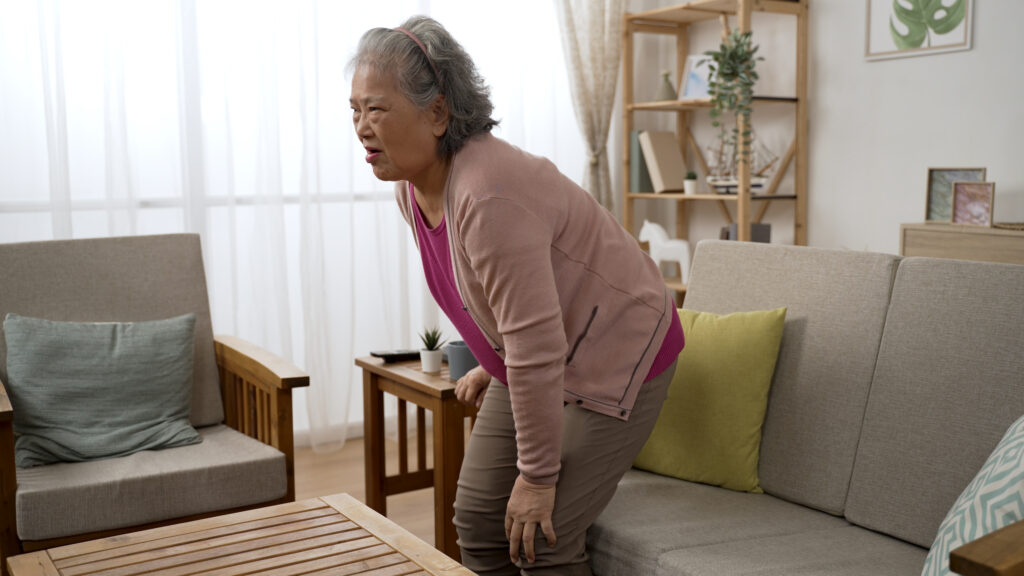
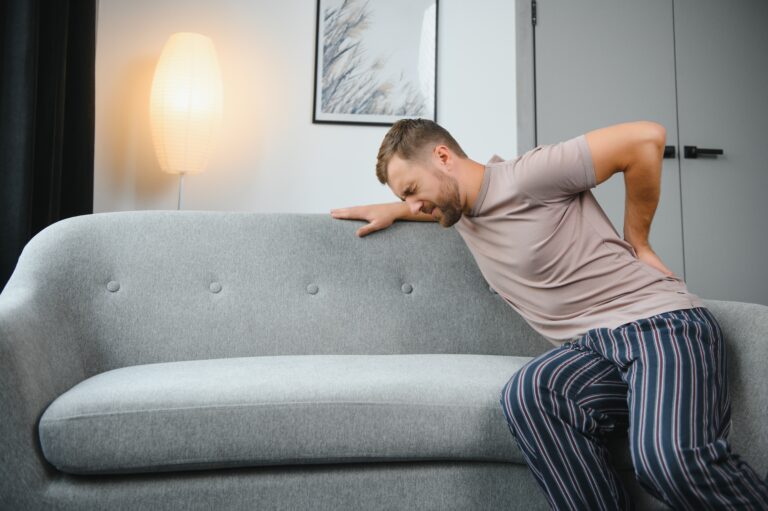
I wanted to come up with a more creative title than that, but I figured I should just get to writing about this quick solution to a very common problem: the painful, stiff knees that occur when trying to stand up after prolonged sitting. Sometimes it exhibits as pain, other times it feels like you have to stand for a few seconds before you can get your legs working underneath you to take a step. Here’s the video to show you how:
If you have been sitting for awhile, before you stand up, squeeze your knees together and roll your feet to the inside edge (pronate). Squeeze tight and then relax for six repetitions. Make sure your feet are hip width apart and toes are pointed straight ahead and make sure you roll your feet as well as moving your knees. Then stand up.
Why does this work?
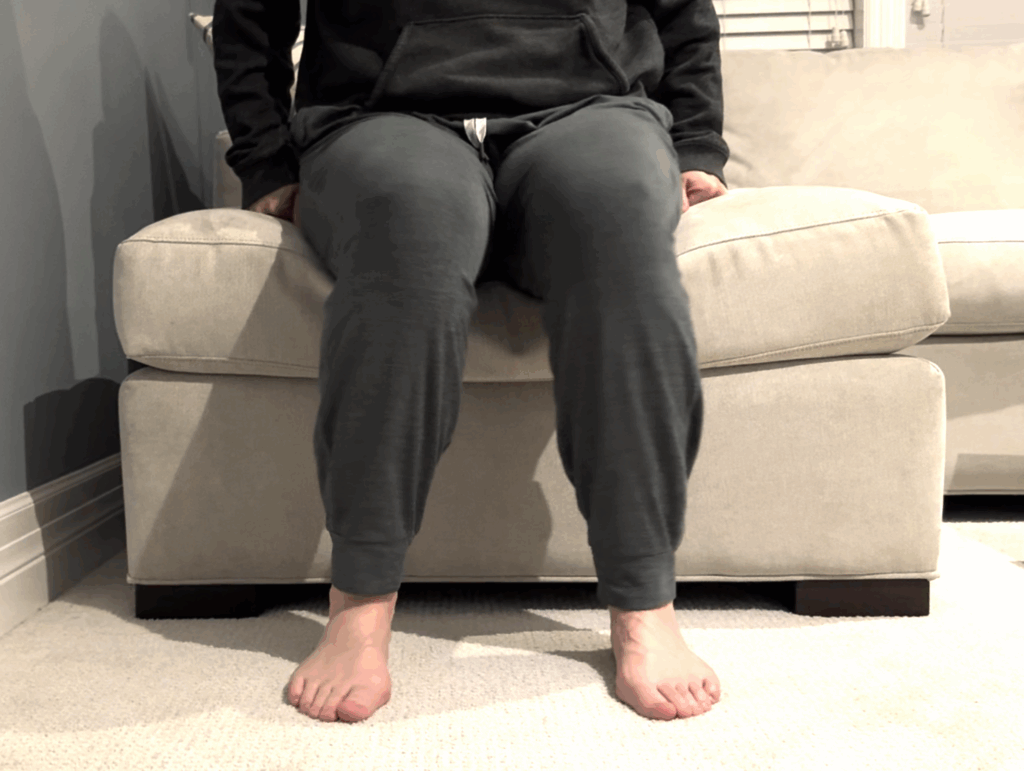
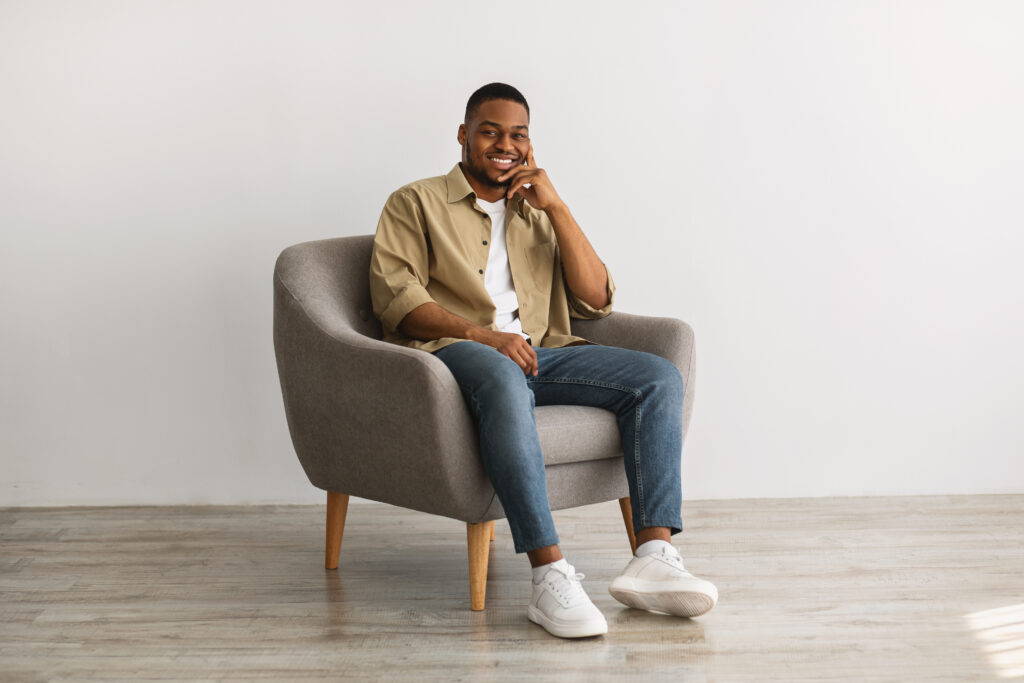
Most people sit with their hips externally rotated (knees apart). This creates shortening of the hip external rotators (piriformis, obturators, gemelli, quadratus femoris) and lateral hamstring (bicep femoris). If the hips are externally rotated in sitting, the feet will naturally supinate causing tightness of the medial gastrocnemius. This is a great example of the sitting posture that can cause the muscle imbalances:
There are lots of basic biomechanical principles in play here:
- Optimal length tension – A muscle activates best when placed on a slight stretch. With your hips externally rotated, the main muscles you use to stand (glute max and quads) are in a shortened position and not able to activate, thereby causing increased joint pressure.
- Arthrokinematics of knee extension – Standing involves internal rotation of the femur and the tibia. This “pronation” of the limb is what eccentrically loads the large muscles of your legs to help you stand.
- Agonist/antagonist relationship – If you want to dynamically lengthen a muscle, activate its antagonist. Sherrington’s reciprocal innervation states activating a muscle will neurologically relax its opposite. Therefore, if the external rotators are tight, activate the internal rotators. If the abductors are tight, activate the adductors. If the supinators are tight, activate the pronators. All of this happens when you actively squeeze your knees together and roll your feet to the inside.
So give this quick solution a try. You can even do it without anyone knowing before you stand up from a restaurant table. It will only take a few seconds and it just might save you a limp or two. Hope it works!
Because nobody has time to be in pain.
Until next time…

Kind Regards,
MoveWell Academy
[email protected]