Kinesiology THURSDAY – Caitlin Clark’s Chain Reaction
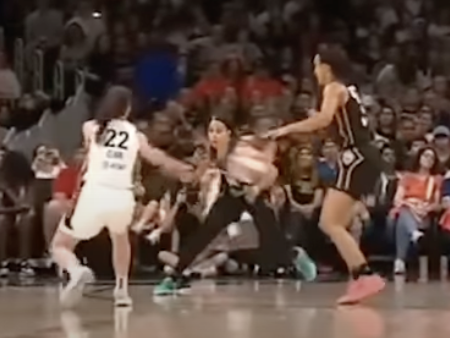
That move right there, the planting of the right foot to throw a bounce pass, is the non-contact event that caused Caitlin Clark to grab her right adductor in pain just seconds later. But that isn’t where the story begins. Clark, who has never missed a college or pro game due to injury prior to this season has been plagued with one injury after another. The game is rough, no doubt, but it is interesting to follow the timeline of her recent injuires:
- In the preseason, she sat out a game due to left quad tightness, though she played the next day in an exhibition match
- She was sidelined for five games in May/June due to a left quad strain that was said to be separate from the initial issue
- Then she was out for two weeks in June/July due to a left groin injury
- And then two days ago, she sustained a right groin injury while planting her foot to pass. Her MRI results caused her injury to be downgraded from “out of the game” to “day-to-day” which probably indicates there was no tear discovered
The Quad-Groin Connection
I wish I had the opportunity to evaluate Caitlin Clark, because I have a hunch at what I might find. Still, I think its worth it to talk through biomechanical scenarios of why this might happen. Let’s break it down:
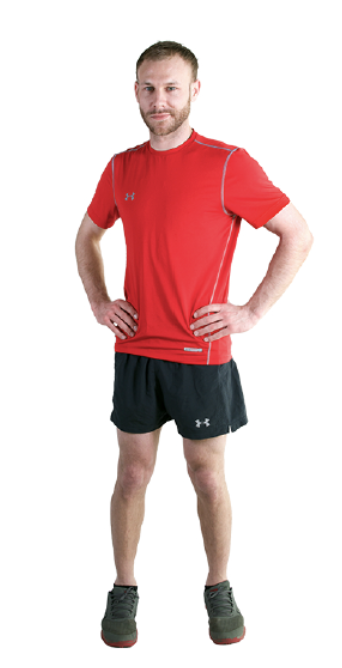
Left quad strain – Usually a quad strain occurs when the muscle is in a chronically long/weak position. One of the most common scenarios is a pelvis that is rotated to the opposite side. The picture below demonstrates a pelvis that is rotated to the right. (I’m not suggesting she always stands like this. Maybe she just did this to pose for the picture. But it is a great visual). People adopt this stance if the left leg feels functionally longer and will compensate by placing the leg in front or toed-out.

From Instagram Post
The toed-out position places the gluteus maximus in an inhibited short position. The pelvic rotation to the right (picture it as if her feet were hip width apart and toes pointed straight ahead) places the left quad in a long/weak position and thereby prone to injury. Like this:
There are two main ways to pull an adductor (groin) muscle:
- Deceleration of hip abduction
- Deceleration of hip flexion
In my experience, the second one is more common. There are three muscles designed to decelerate hip flexion when you plant your foot: adductor magnus, gluteus maximus and hamstrings. If one of those is inhibited, the other two are more prone to injury.
A Supinated Pronator
Following an injury, it is common for a limb to adopt a compensatory supination posture, usually by inverting the subtalar joint. This is a way our bodies prevent the muscles of the legs from having to work so hard. Think of the antalgic gait pattern, where one “hobbles” around after a surgery or injury. In a much less obvious way, an athlete will supinate at the foot to prevent overloading of an injured muscle and even after the pain of an injury subsides, this compensation will continue.
The Right Groin
And then weeks after the left quad and groin injury, comes the right groin injury after just planting the foot. Look at the photo at the top of the blog. There was no rapid abduction force to be decelerated. It was a rapid deceleration of hip flexion that caused the latest groin injury. Only now it’s on the opposite side.
A possible scenario is that compensatory supination of the left foot has now cased the right side to over pronate.
WWID? (What Would I Do?)
- Correct pelvic alignment. Pelvic rotation often results in sacral torsions and innominate flares
- Determine cause of pelvic rotation. Using the side sit test and core testing. These two tests will yield a lot of information about what is happening (I will write about these in upcoming blogs)
- Fix what I find. Is it a stuck subtalar joint? A weak glute max or med? Is it on the right or left?
Let’s help Caitlin!
This is all speculation as I have never had the opportunity to even meet Caitlin Clark. But I have enjoyed the excitement she has brought to the WNBA. And I have seen these type of chain reaction injuries occur in many others. Maybe someone out there could pass this on to someone who does get to work with her.
Why does this matter?
Groin pulls rarely occur from rapid deceleration of abduction. Usually they occur from planting a foot on a side where the glute max is inhibited for one reason or another and pelvic rotation is a common cause. Adductor strengthening doesn’t help the adductor. It isn’t usually weak. It’s crying out in pain because it’s over worked. And it helps to think about it this way.
Because nobody has time to be in pain.
Until next time…
Kind Regards,
MoveWell Academy
[email protected]