
Anatomy TUESDAY – L5 Nerve Root
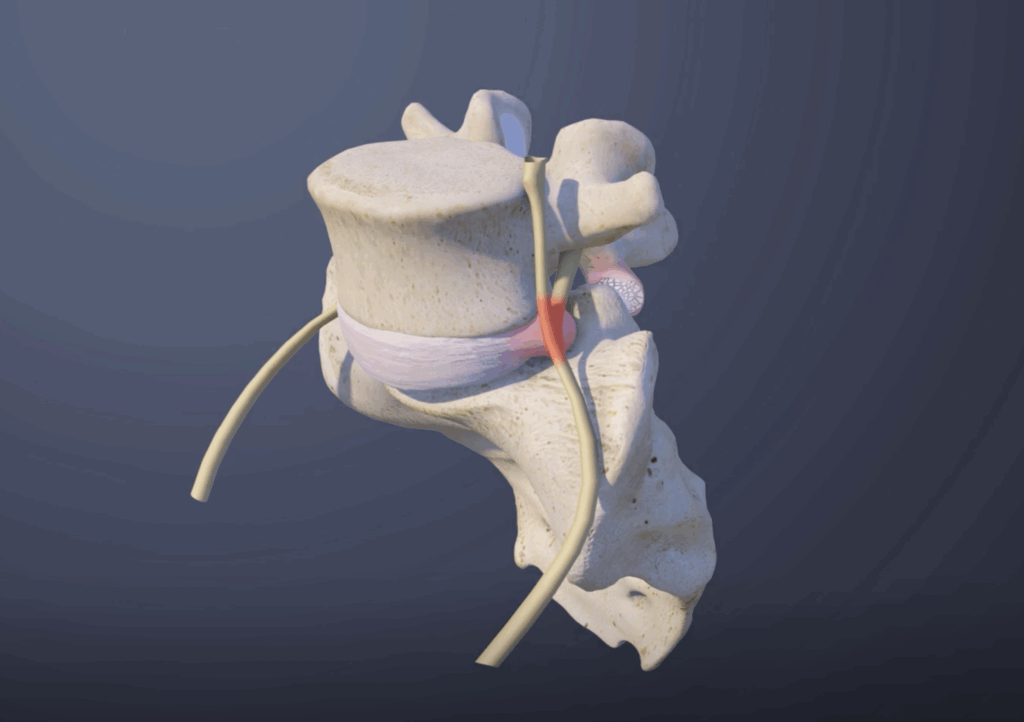
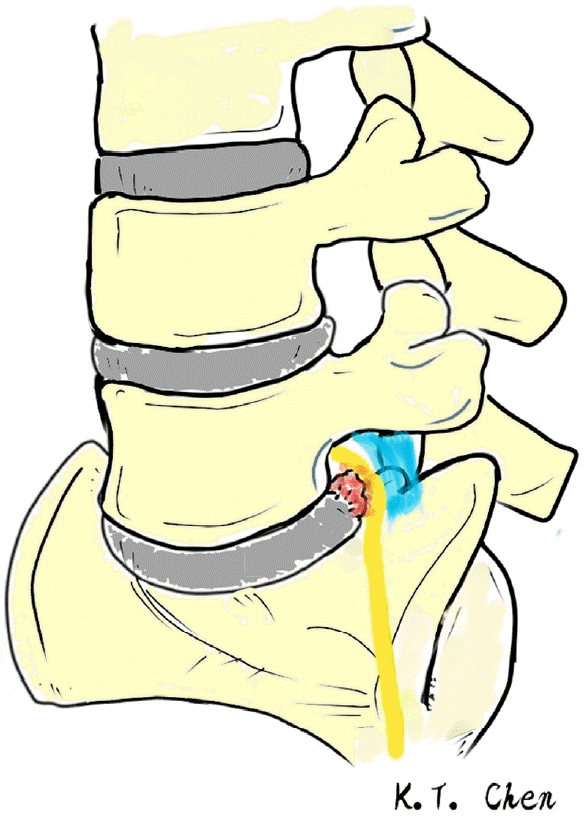
The L5 nerve root is the most commonly compressed lumbar nerve despite the fact that the L5-S1 foramen is the largest in the lumbar spine. It’s path from the spinal cord traverses through the intervertebral foramen and in front of the iliolumbar ligament (pictured in blue below) as it makes its way to the anterior sacrum.
There are several things that may cause compression of the L5 nerve:
- Herniated disc – posterior lateral protrusion of the disc may impinge the nerve causing pain into the buttocks, lateral thigh and lower leg, dorsum of the foot and toes
- Facet joint arthritis – enlargement of the bones forming the posterior wall of the intervertebral foramen. May occur with repetitive or prolonged extension caused by things like trigger points in the quadratus lumborum or psoas major. Remember, bone is laid down along lines of stress.
- Swelling of the lumbar nerve root – caused by the above as well as trauma (hyperextension injury and/or falling on your butt)
I had two patients yesterday exhibiting symptoms of L5 nerve root compression that worsened with lumbar extension. One had a traumatic incident two months ago, landing on her right buttocks (non-radicular pain). The other had gradual onset lower extremity weakness with pain radiating into the bilateral posterior lower extremities. Here’s some interesting facts about them:
- Both had a severe quadratus lumborum trigger points on the involved side
- In the case of the one with bilateral lower extremity pain, pain was lessened if she stood with her right foot in front (creating relative lumbar flexion on that side and opening up the foraminal space). No change noted with left foot in front.
- The one with non-radicular pain noted aggravation with running, stating she didn’t feel like she could take a long stride
- Both had pin-pointed pain with palpation of the L5 nerve root just above the sacrum
Two things I like to do in cases like this:
- Release the quadratus lumborum with deep tissue massage
- Ice cup massage to the L5 nerve root region followed by ultrasound to the same area. This contrast therapy seems to give my patients immediate relief
- Perform standing exercises to promote thoracic mobility and hip mobility, biasing lumbar position by placing one foot in front. For instance, wall washing or alternating tubing rows in right stride stance for the patient mentioned above.
Why does this matter?
The L5 nerve root traverses a path of potential compression from all sides. Understanding potential causes of compression will lead to real world solutions in treating this commonly injured nerve root. Consider the L5 path.
Because nobody has time to be in pain.
Until next time…

Kind Regards,
MoveWell Academy
[email protected]