Anatomy TUESDAY – Heal Me (Part 3) – Muscles
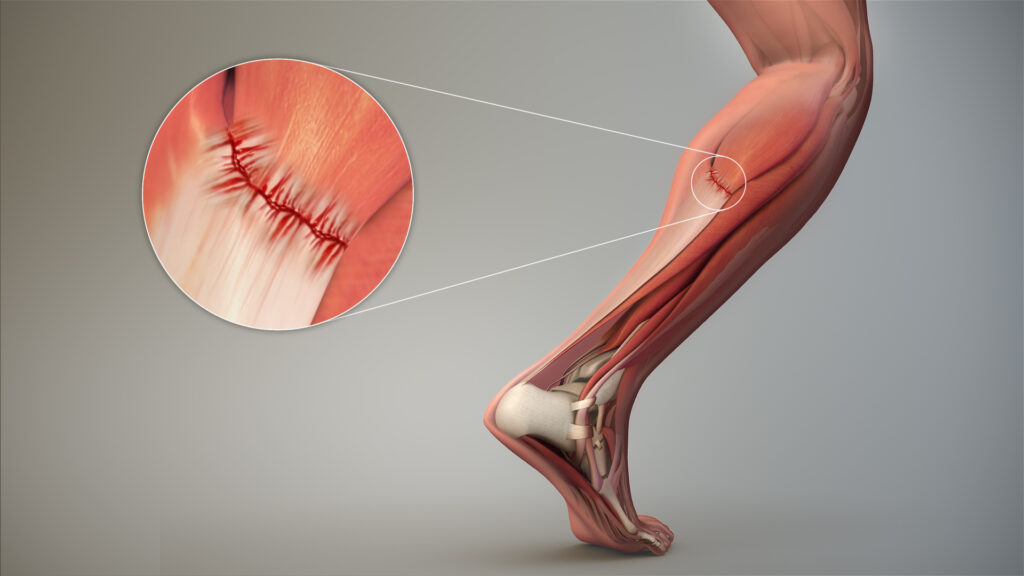
Muscle injuries, including strains and tears, are among the most common musculoskeletal conditions. Unlike ligaments and tendons, skeletal muscle has a strong regenerative capacity due to the presence of specialized stem cells and rich blood supply. Understanding the nature of muscle injuries can help guide efficient rehab practices.
How much time does it take?
Muscle healing occurs in three overlapping phases, but the total recovery time depends on the severity of the injury.
- Grade 1 (mild strain) – small number of muscle fibers damage. Mild pain and minimal strength loss. Healing time: 1-3 weeks
- Grade 2 (moderate strain) – larger number of fibers torn. Pain, swelling and weakness noted. Healing time: 4-8 weeks
- Grade 3 (complete tear) – Significant loss of function. Sometimes requires surgical repair. Healing time: 3-6+ months
Phases of Muscle Healing
- Inflammatory Phase (0–5 days) The body responds with swelling and inflammation. This phase is necessary to begin the repair process. During this phase, RICE is key. Rest. Ice. Compression. Elevation.
- Proliferation Phase (1–3 weeks) Muscle stem cells multiply and fuse to form new muscle fibers. At the same time, the body forms scar tissue to quickly stabilize the area and fill in the gap where tissue was damaged.
- Remodeling Phase (3 weeks-months) Muscle fibers grow (hypertrophy) and strengthen and become more organized and functional.
Real World Movement Strategies for Muscle Healing
- Early controlled motion following a muscle tear is key in limiting scar tissue formation and enhancing muscle regeneration. Muscles are essentially triplanar (they work in all three planes of motion). An excellent strategy is to initially work in a non-dominant plane of motion for a muscle. For example, the quadriceps is primarily sagittal plane dominant as it’s major role is deceleration of knee flexion when the foot hits the ground. Incorporating frontal plane movements first (lateral stepping, lateral lunging, etc.) will help stimulate muscle growth without aggravating the injury site. Then progress to the dominant plane of motion (anterior lunging, anterior reach with the leg, etc.)
- Work for functional integration early and then functional isolation later in rehab. Easier exercises are ones where functional synergists are called into action. In the case of the quadricep muscle, a sumo squat would be easier than a regular squat would be easier than an anterior reach with the leg.
- When a muscle contracts, it doesn’t only get shorter, it gets wider. Often scar tissue formation prevents the latter from happening and can cause muscle pain with contraction. Using transverse friction massage with the muscle in a shortened position will enhance the muscles ability to get wider (fatten).
- Muscles are 20-60% stronger eccentrically than concentrically. In the inflammation phase, using isometrics and light concentric muscle activity is recommended. But eccentric contractions are essential in muscle regeneration remodeling. Slow eccentric work first (ex: slow lowering in a squat) and then progressing to fast eccentric work (plyometrics) is recommended. Then gradually increase beyond concentric capacity in advanced phases. For example, once a movement is exhausted concentrically, assist a patient in performing the concentric move and then have them perform several more eccentric reps.
- Set/Reps Prescription:
- Endurance – 2-4 sets x 15-25 reps; rest 30-60 seconds
- Strength – 3-5 sets x 6-12 reps; rest 1-3 minutes
- Max strength – 3-6 sets x 3-5 reps; rest 2-5 minutes
- If a muscle injury persists, check the boney connections of the muscle to determine if alignment is placing the muscle in a long/weak position. For example, a posteriorly rotated innominate will place the rectus femoris in a chronically weak position.
That’s a lot to think about, but understanding muscle injury and regeneration will help healing take place faster. Your patients will thank you.
Because nobody has time to be in pain.
Until next time…

Kind Regards,
MoveWell Academy
[email protected]