Muscle Minute TUESDAY – Tibialis Anterior (and posterior)
EVER HAVE SHIN SPLINTS? Meet the TIBIALIS ANTERIOR
One muscle? You’re only going to talk about one muscle a week? That’s right. Maybe two.
But why?
The secret to understanding human movement design is to understand some basic principles about muscles. Here’s a short list to get you started:
- Trigger points set up in muscles that are chronically short OR neurologically over facilitated.
- Muscles that cry out in pain are long and weak OR neurologically inhibited
- Every muscle has a functional antagonist or two (or three) and they aren’t always named in the anatomy books
- Synergistic dominance is when two muscles are lined up to do the same thing for a different purpose and one overrides the other. (More about this as the series progresses)
- Reciprocal innervation is when one muscle is over facilitated (tight), it’s antagonist is under facilitated (weak) and prone to injury.
- Optimal length tension is the ideal length that a muscle most readily activates. This is often considered to be 1.2x normal resting length.
- Muscles are often injured during eccentric loading in a long/weak position
Understanding how to successfully evaluate musculoskeletal injury and overuse injuries lies in you understanding of these five principles.
Let’s get started…
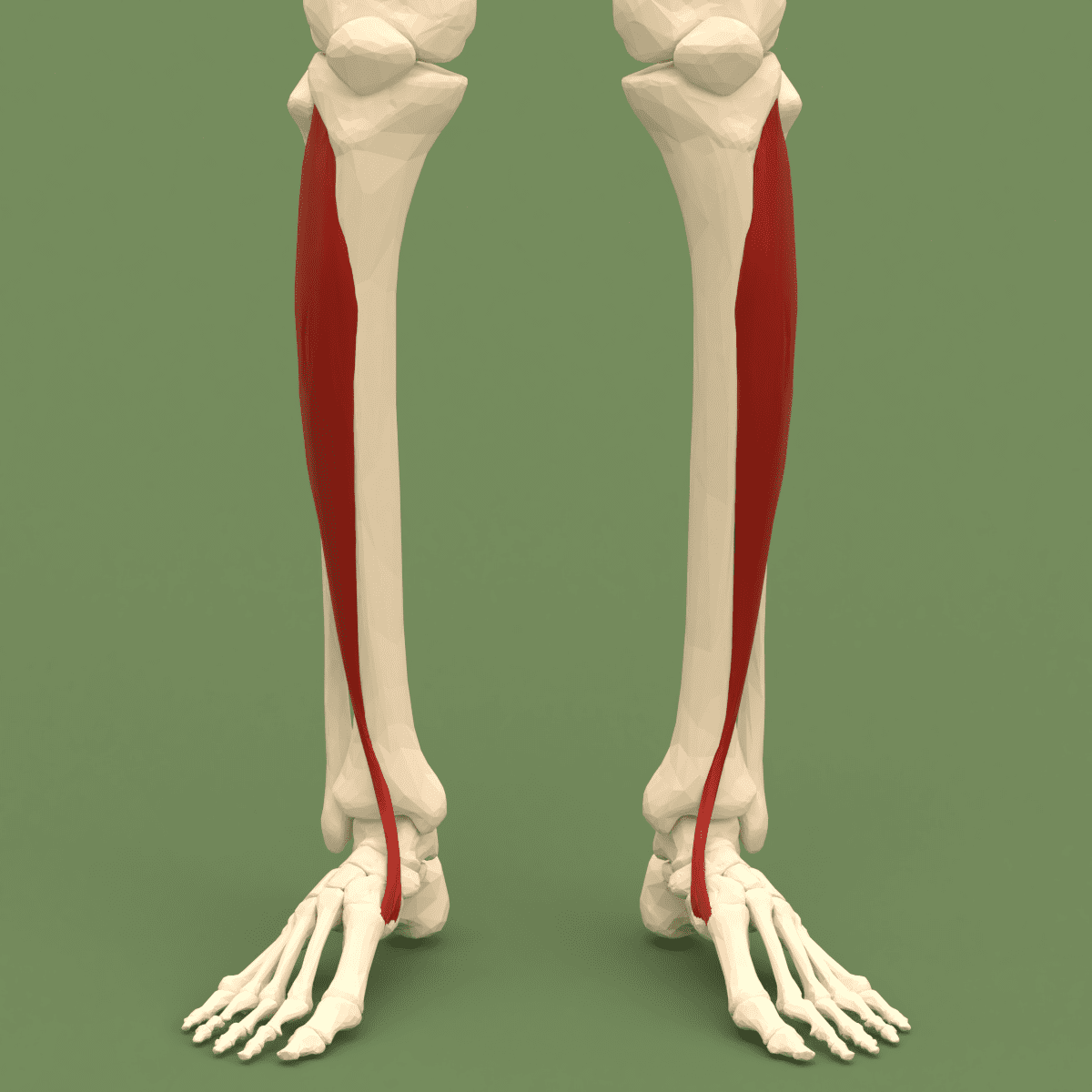
I thought I’d kick off the Muscle Minute Tuesday series with the TIBIALIS ANTERIOR.
Here’s what we know:
| Origin | upper portion of tibia |
| Insertion | medial cuneiform; base of the first metatarsal |
| Action | dorsiflexion, inversion and adduction of the foot AND/OR deceleration of plantarflexion and eversion |
| Innervation | deep peroneal n. (L4, 5) |
| Antagonist | gastrocnemius |
TIBIALIS ANTERIOR
Why does this matter?
We often hear about this muscle when our patients complain of shin splints, a common overuse injury often occurring in running athletes. Remember, if a muscle is crying out in pain, it is long and weak. Here’s a short list of what makes this muscle long and weak:
- Over pronation (this places this muscle in a long/weak position)
- Tight gastrocnemius (the antagonist to this muscle)
- Walking toed-out (this causes over pronation and is often a result of tight a gastrocnemius limiting dorsiflexion)
Understanding these facts leads you to a very different solution than conventional thinking. Conventional thinking says, “This muscle is injured because it is weak. We need to strengthen it. (cue: tubing resisted ankle dorsiflexion and heel walking)
Real World Thinking says, “This muscle is overworked OR in a long weak position. I need to find what is making it long and weak or neurologically inhibited and fix those things. (cue: stretch gastrocnemius and strengthen gluteus medius/maximus to minimize over pronation)
What if it’s short and tight? If this is the case, they don’t come in complaining of pain in this shin muscle. They come in complaining of other things, like an ankle jam or chronic lateral ankle sprains. How do you know if it’s short and tight?
- They can’t sit back on their heels (thunderbolt pose)
- Trigger points and/or fascial tightness will be present
- They may get an ankle jam that limits dorsiflexion (Ankle Jam seminar)
I’ll keep it at that. If you want to get rid of shin splints or help someone else, download the Wipe Out Shin Splints exercise program.
See? One muscle has a lot to teach us. Thanks for reading to the end. Sign up for our newsletter to make sure you don’t miss out on next week’s Muscle Minute Tuesday.
Until next time…