
Muscle Minute TUESDAY – Bicep Brachii Long Head
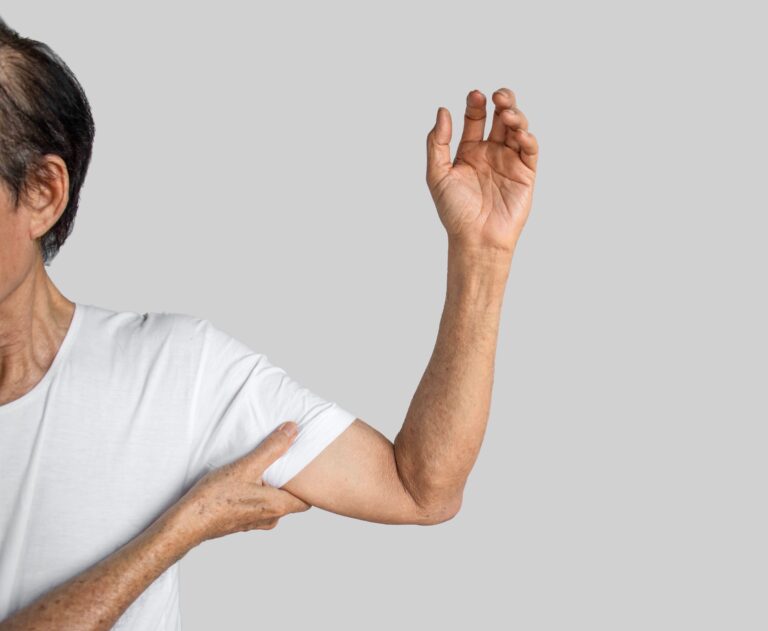
Have you ever experienced pain with reaching overhead or across your body? Does your shoulder ever hurt when you reach behind you?
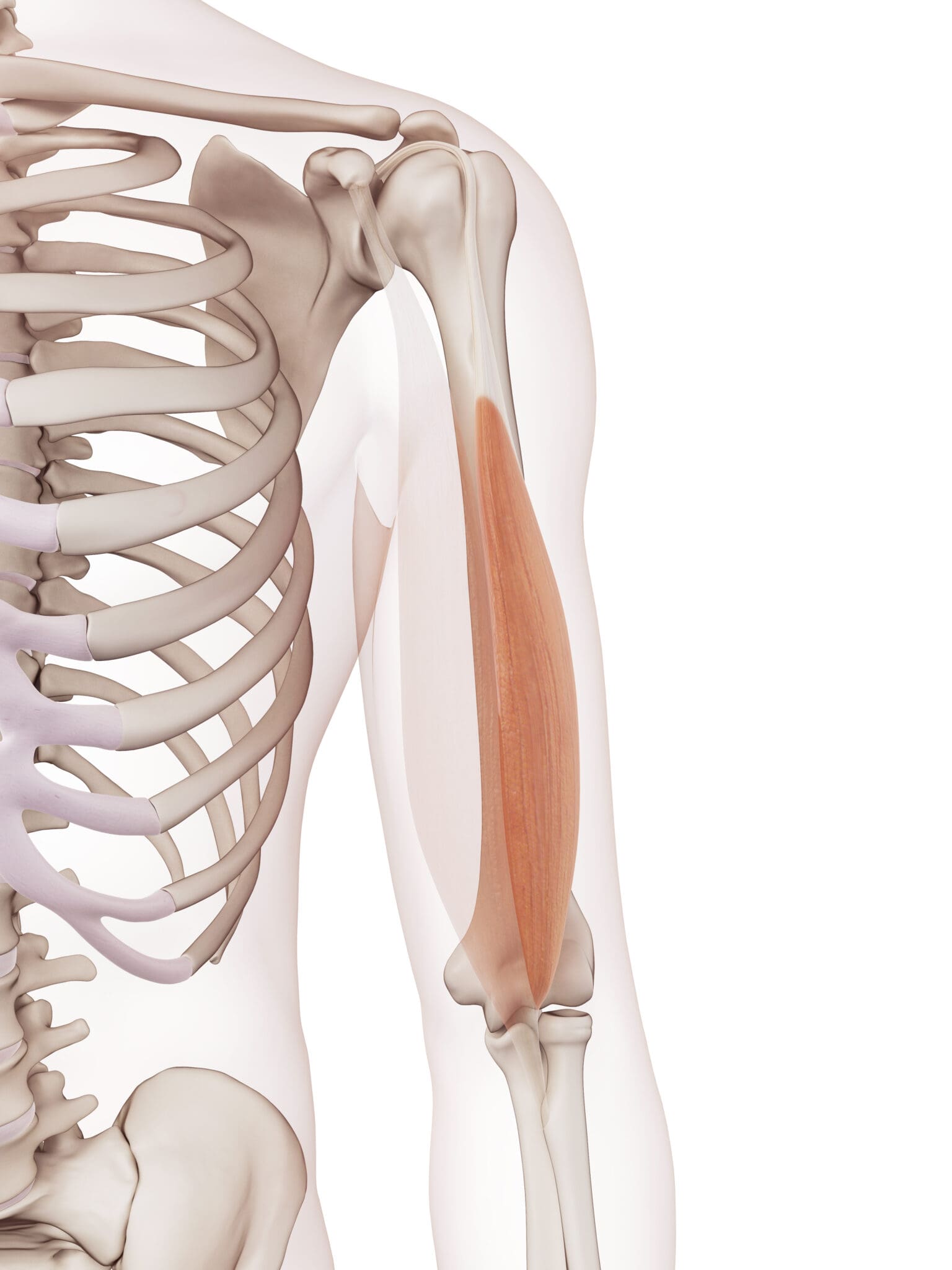
Chances are your bicep brachii long head is letting you know it isn’t happy. This tendon is the second most impinged shoulder muscle, after the supraspinatus tendon and its clinical significance lies in its unique path. Let’s take a deeper dive.
| Origin | supraglenoid tubercle (scapula) |
| Insertion | radial tuberosity (radius) |
| Action | shoulder flexion and abduction elbow flexion forearm supination |
| Innervation | musculocutaneous n. (C5, C6, C7) |
| Antagonists | tricep |
The Real World Biceps Long Head
Follow the path. If you take a closer look at the path of the biceps long head tendon, several things stand out:
- It bends as it passes from the scapula into the groove of the humerus
- It sits in the bicipital groove
- It passes underneath the boney bridge of the acromion
- It is dependent on scapular position for optimal length tension
Straining a muscle or tendon usually involves eccentrically loading a muscle in a long, weak position. If everything was perfect, even if you strained a muscle or tendon, in 3 weeks the structure should have regained 80% of its normal tensile strength. That isn’t usually the case in my patients who end in physical therapy after months of suffering with this problem. In fact, the muscle often tests weak not because it is unable to generate force, but because it hurts to do so.
Here’s a short list of things that create chronic tension on the biceps long head:
- Scapular elevation: trigger points in the upper trapezius and levator scapula. Also, and elevated pelvis will cause compensatory elevation of the scapula so check for trigger points in quadratus lumborum.
- Scapular upward rotation: check for trigger points in upper trapezius and the inferior angle of the infraspinatus
- Scapular retraction: check for trigger points in the rhomboid (this is less common)
- Trigger points in the antagonist: triceps brachii
Some other interesting facts about the biceps long head:
- Chronic internal rotation of the humerus sometimes causes a “dumping” of the tendon out of the groove, causing pain and irritation.
- The bend of the tendon around the humeral head creates a zone of less vascularity, making this tendon harder to heal. Rolling up a towel roll and placing it in your arm pit will assist in getting blood flow to this tendon
- When a tendon is irritated, it swells and when this tendon swells it will get impinged as it rides underneath the boney bridge of the acromion with arm elevation, creating a scenario for chronic pain.
Conventional thinking says: Stretch the bicep if your shoulder hurts. And then strengthen it by doing shoulder flexion and elbow flexion.
Real World Thinking says: The bicep is strained because it is in a long/weak position. Correct scapular position by addressing key trigger points to stop the tendon swelling and impingement. Sometimes it pays to follow the path.
Because nobody has time to be in pain.
Until next time…

Want to learn more?
Let me help you solve your problem
Earn some CEU’s