Kinesiology THURSDAY – A Look at the Push-Up: A Plank with Ambition

When you think the muscles you work during a push-up, the pec muscles and triceps probably come to mind.
But here’s something interesting: a push-up is actually a full-body exercise.
While your arms are doing the obvious work, your shoulder blades, abdominal muscles, spinal stabilizers, hips and even your legs are all contributing to the movement.
Let’s take a closer look at the kinesiology behind this familiar exercise.
Closing the Chain
One of the most interesting features of a push-up is that your hands remain fixed against the ground while the rest of your body moves. This makes it a closed kinetic chain exercise.
Unlike a bench press, where your hands move freely through space, a push-up requires your body to move relative to your planted hands. This changes the mechanical demands on the shoulder complex and requires coordinated movement across multiple joints.
Phase I – Lowering yourself to the floor
During the lowering phase of a push-up, gravity pulls your body toward the floor. This requires eccentric loading of the following muscles:
- Shoulder horizontal abduction – pectoralis major, anterior deltoid
- Scapular retraction – serratus anterior
- Elbow flexion – triceps
(Notice how the muscles that are working actually perform (concentrically) the opposite actions that are listed. This is what occurs when a muscle is eccentrically loaded in preparation for a movement.)
The push-up doesn’t stop there. The following muscles work isometrically, stabilizing other joints to allow this movement to happen:
- Stabilization against trunk extension – rectus abdominus, internal/external oblique and transverse abdominus
- Stabilization against hip extension – iliopsoas and rectus femoris
- Stabilization against knee extension – quadriceps
- Stabilization against ankle dorsiflexion – gastrocnemius
- Stabilization against toe extension – flexor hallucis and flexor digitorum
Phase II – Pushing back up
Now the movement reverses.
All of the muscles of the arms and scapula that were eccentrically loaded now work to push you back to the starting position. The stabilizers continue to stabilize the trunk and lower extremities.
The Serratus Anterior: The push-ups unsung hero
The serratus anterior is located along the lateral rib cage and attaches to the anterior surface of the medial border of the scapula. Its primary functions include scapular protraction, upward rotation and helping maintain the scapula against the thoracic wall.
During a push-up, the serratus anterior helps control scapular movement as the trunk moves relative to the arms.
At the top of the movement, you can emphasize serratus anterior activity by pushing a little farther away from the floor, allowing the shoulder blades to move around the rib cage. This additional movement is commonly called a push-up plus.
The push-up plus is frequently used in rehabilitation programs targeting scapular control and serratus anterior strengthening.
The hard working abs
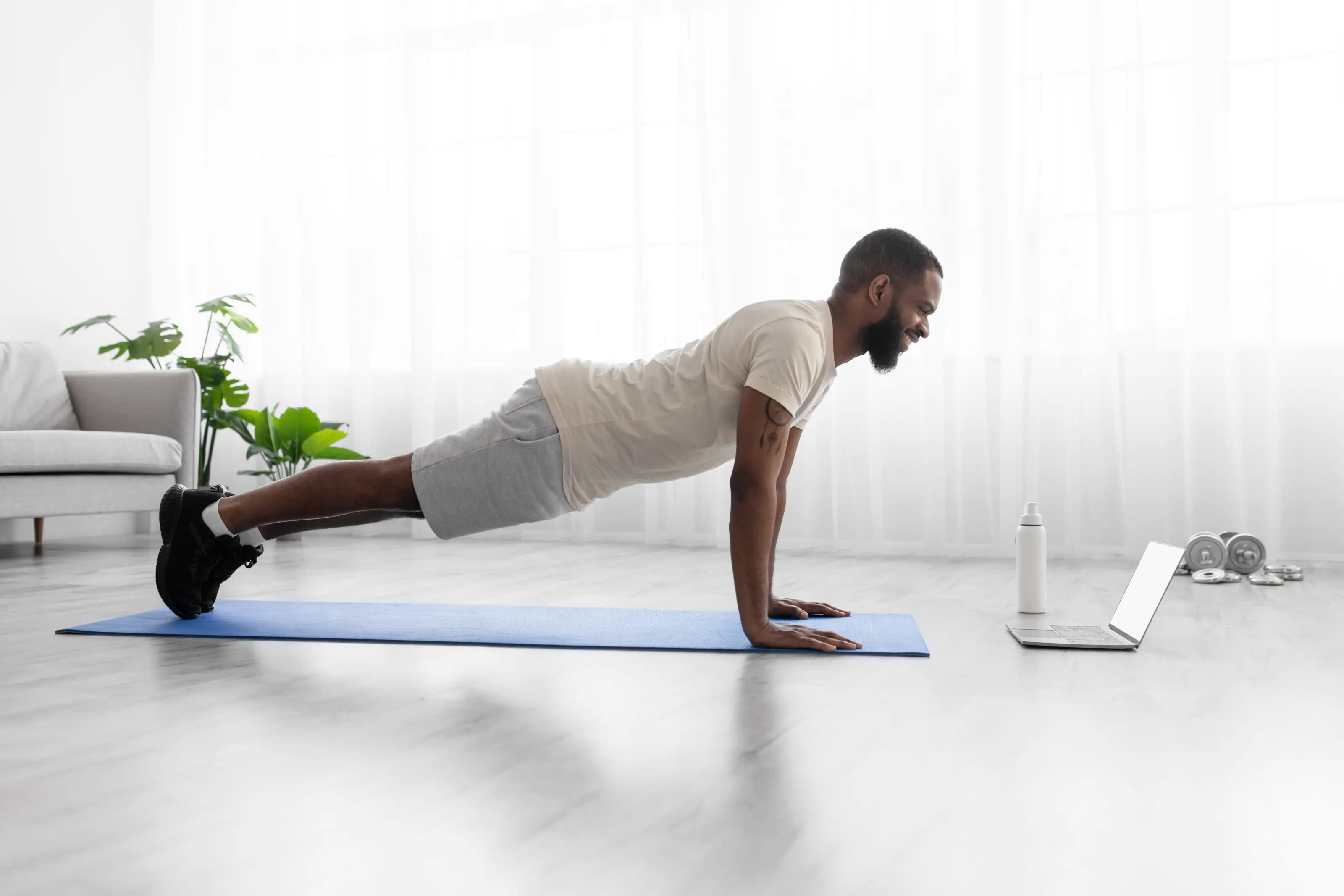
A well-controlled push-up is essentially a moving plank.
The rectus abdominis, internal and external obliques, and deeper abdominal musculature work together to resist excessive lumbar extension.
Think about what happens when someone becomes fatigued during push-ups. Often, the hips begin to sag before the arms completely give out.
This doesn’t necessarily mean the pectoral muscles are weak. It may indicate that the trunk and pelvis can no longer maintain the desired position under load.
A push-up challenges your ability to stabilize the spine while generating force through the upper extremities.
That’s an important functional skill.
The pivoting wrists
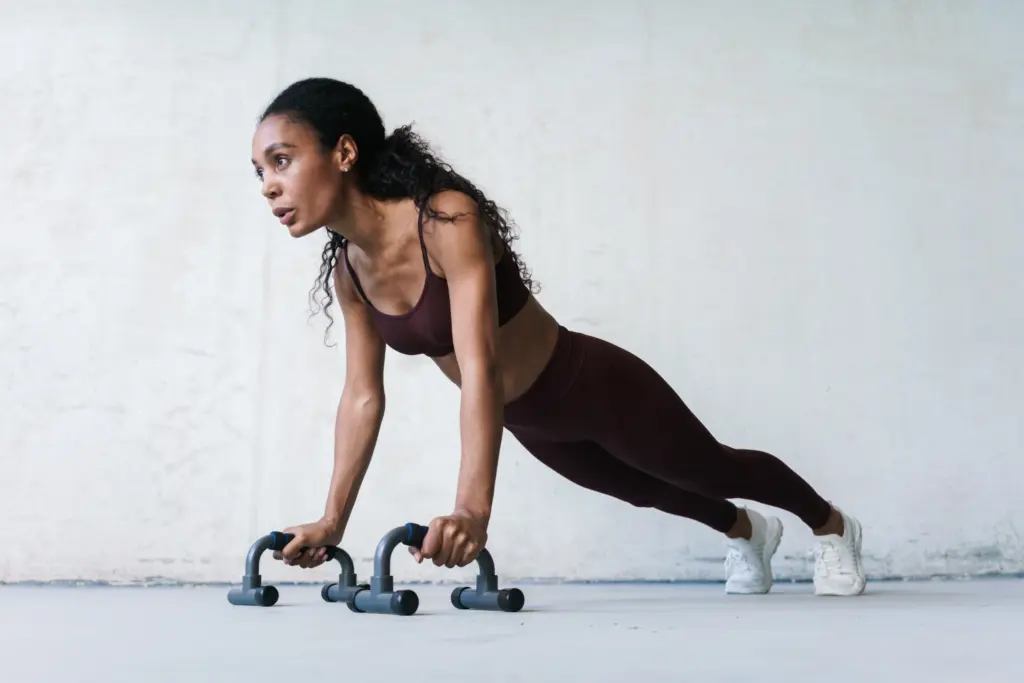
Traditional push-ups require considerable wrist extension. With the palms flat against the floor, the wrists are typically positioned near 90 degrees of extension, depending on hand placement and individual mobility. For someone with limited wrist extension or wrist discomfort, this position may be challenging.
As you perform the push-up, the wrist and finger flexors help stabilize the hand while force is transferred through the upper extremity.
Push-up handles, dumbbells with secure flat bases, or an elevated surface can sometimes provide a more comfortable wrist position.
Why does hand position matter?
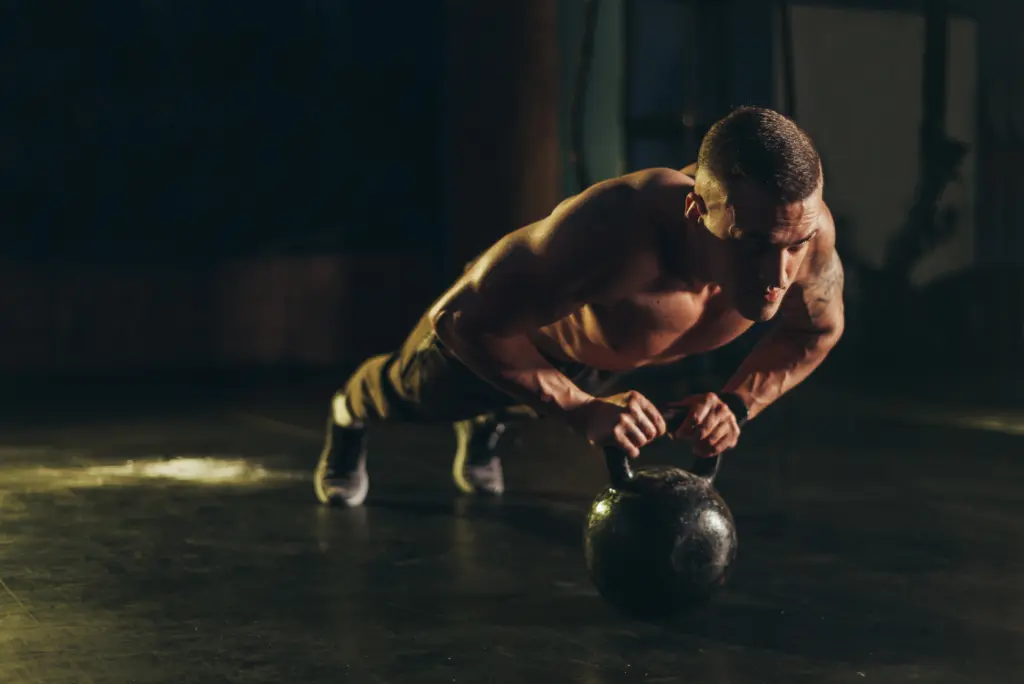
Changing hand position alters the mechanical demands of the exercise.
A narrower hand position generally increases the demand on the triceps, while a wider position emphasizes the pectoralis major.
For most people, starting with the hands approximately shoulder-width apart, or slightly wider, provides a reasonable balance between comfort and muscular demand.
Anyone can (and should) do push-ups
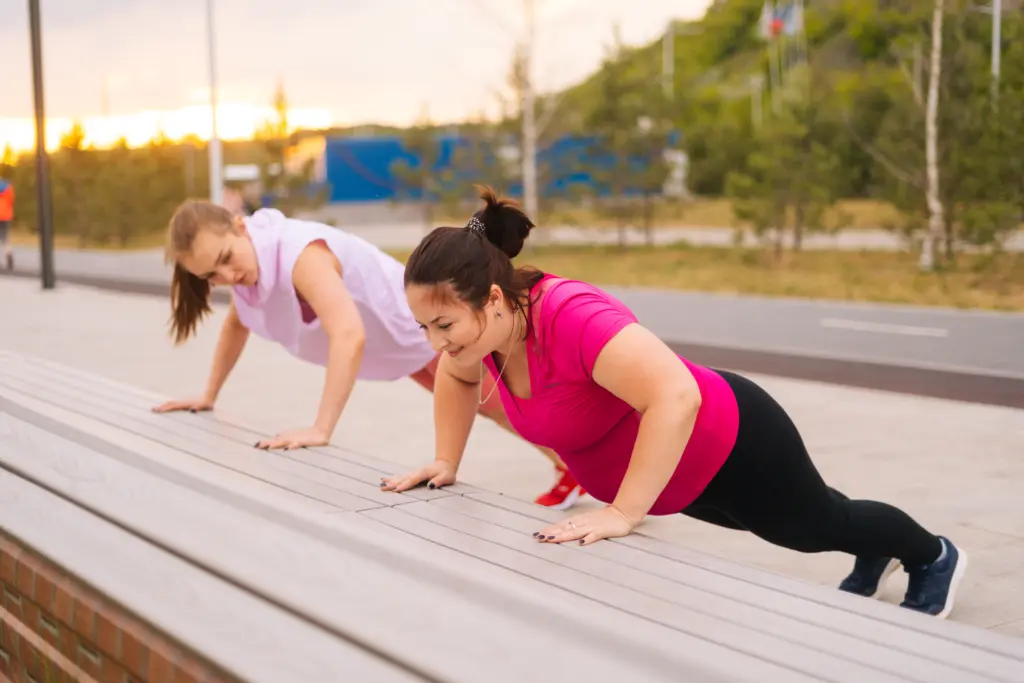
Push-ups can be modified, allowing most everyone to benefit from this movement pattern.
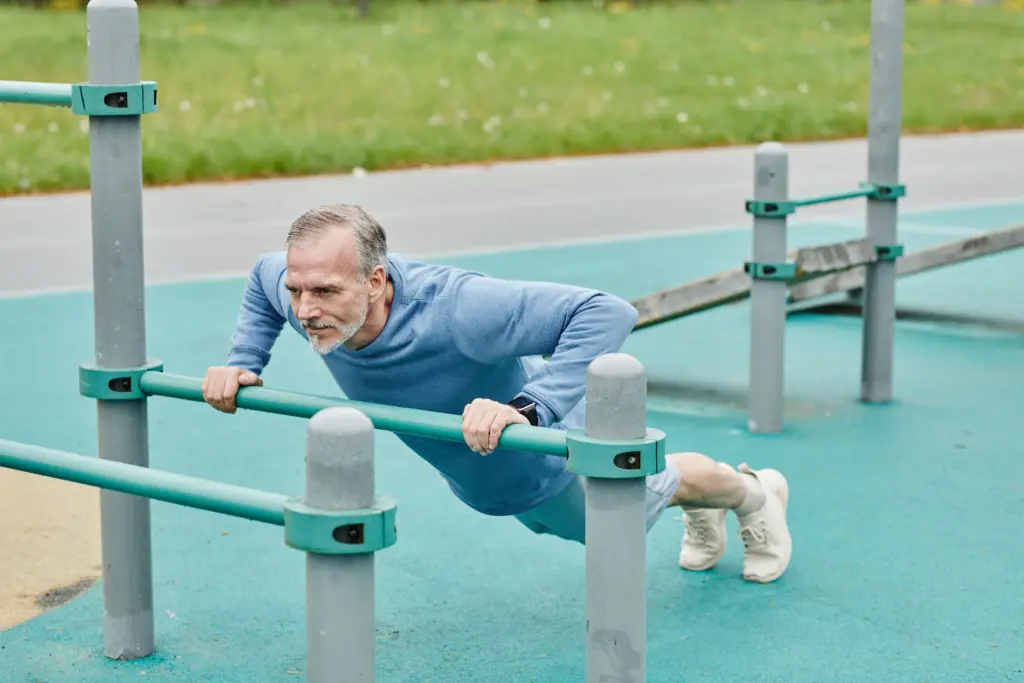
One of the best ways to modify a push-up is to elevate your hands. Performing push-ups against a wall, countertop or sturdy bench reduces the proportion of body weight supported by the upper extremities.
As the hands move closer to floor level, the exercise generally becomes more demanding. This is because gravity places a larger force on the body (making it feel heavier) the closer your body is to horizontal.
Here is a natural progression for doing push-up:
Wall push-up → Countertop push-up → Bench push-up → Floor push-up
The beauty of this progression is that the basic movement pattern remains similar while the loading changes.
Why does this matter?
A push-up is much more than a chest and triceps exercise.
It combines elbow extension, shoulder movement, scapular control, wrist stability and trunk/hip stabilization into one coordinated movement.
The upper extremities generate and control force while the trunk and lower extremities help maintain alignment. And because the hands remain fixed against the ground, the shoulder complex must coordinate movement differently than it does during many open-chain exercises.
So the next time you perform a push-up, remember: You’re not just working your pecs. You’re coordinating force and stability from your hands all the way to your feet.
That’s kinesiology in action.
Now go grab a friend and try some push-ups.
Because nobody has time to be in pain.
Until next time…
Kind Regards,
MoveWell Academy
[email protected]