Kinesiology THURSDAY – Amiya’s Recurrent Right Ankle Sprain

Amiya is an 11 year-old girl who injured her right ankle playing kickball two years ago when she sustained a lateral ankle sprain. She presents with complaints of recurring right lateral ankle pain that limits her ability to play soccer (goalie) and perform Indian cultural dances which require her to perform deep squatting while up on her toes.
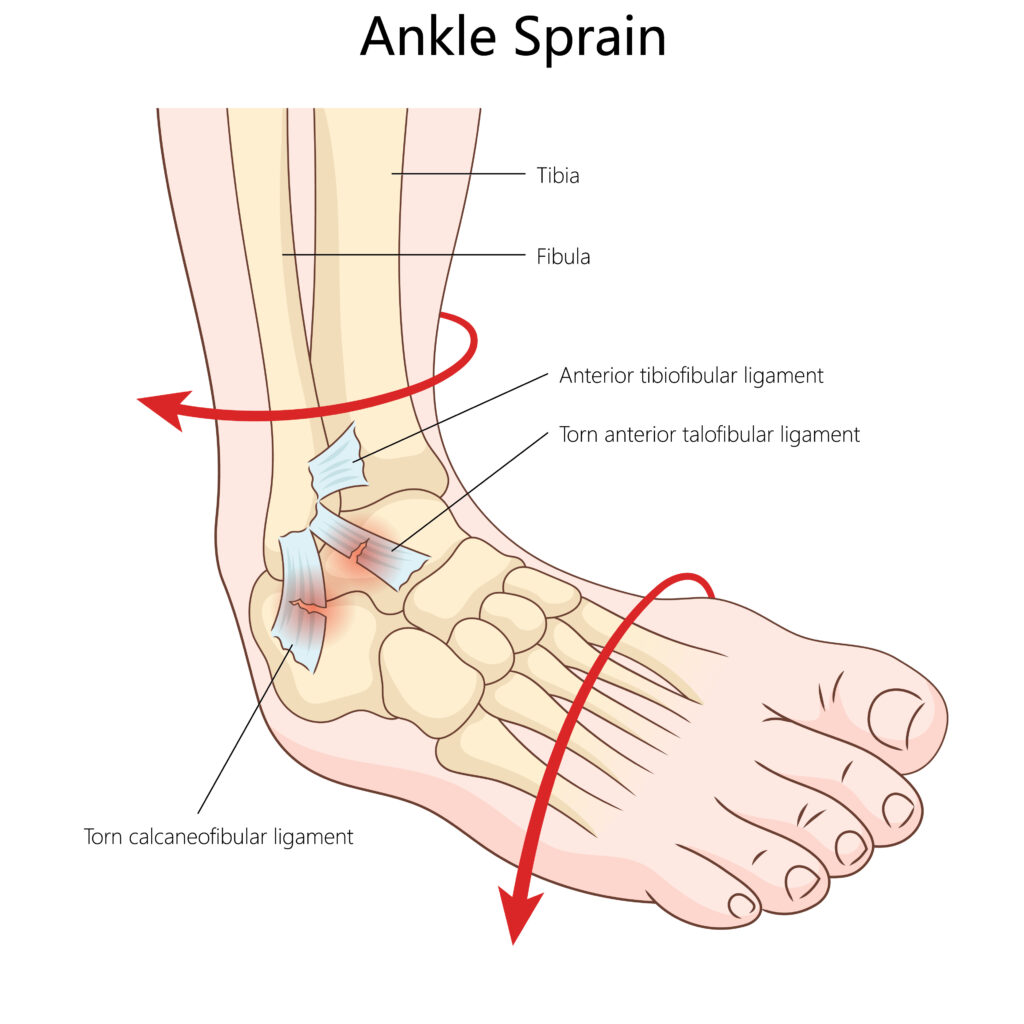
Her original injury was most likely to the anterior talofibular ligament (tenderness still noted in this area) and also involved the peroneus longus tendon (also still tender with palpation).
Here’s what I found…
MMT 4- plantarflexion and 4- eversion with mild pain elicited (peroneal weakness). She presented with negative varus stress testing of the right ankle. But here is what else I found:
- Squat test – Performed deep squat with increased left knee valgus
- Weakness of the left gluteus medius with modified side plank test with hip abduction
- Weaker right Paloff squat test (indicating R gluteus maximus weakness)
- Tight right>left hamstring (90/90 hamstring test R=-45; L=-25)
- Tight left gastrocnemius (gravity drop test)
What does this mean?
It appears Amiya’s recurrent right lateral ankle pain was due in part to compensatory right ankle over supination from an over pronated left leg.
The solution:
In biomechanical evaluations, many times the test becomes the intervention. I sent Amiya home with the following exercises:
- Downward dog, triangle and revolving triangle to address hamstring and gastrocnemius flexibility
- Left side plank with hip abduction to address the weak L gluteus medius
- Right Paloff squat to address the right gluteus maximus weakness
Why does this matter?
In recurrent ankle sprains, usually the cause is a lack of subtalar joint eversion causing over supination on the involved side. But in this case, it appears over pronation of the left side was causing compensatory over supination on the right, resulting in persistent right lateral ankle pain.
It might seem like a lot to check for a simple ankle sprain, but two years is plenty of time for an ankle ligament to fully heal and a tendon should be healed in 3-6 weeks. Recurrent or persistent pain alludes to other biomechanical factors that may be contributing to chronic tension on soft tissue structures.
By adding a few key tests to your evaluation, you will discover the root cause of a persistent problem and be able to design a customized solution for the patient that works. Remember take your ears and listen to the problem. And then take your eyeballs and look somewhere else for the cause.
Because nobody has time to be in pain.
Until next time…

Kind Regards,
MoveWell Academy
[email protected]