Kinesiology THURSDAY – Fix the FABER
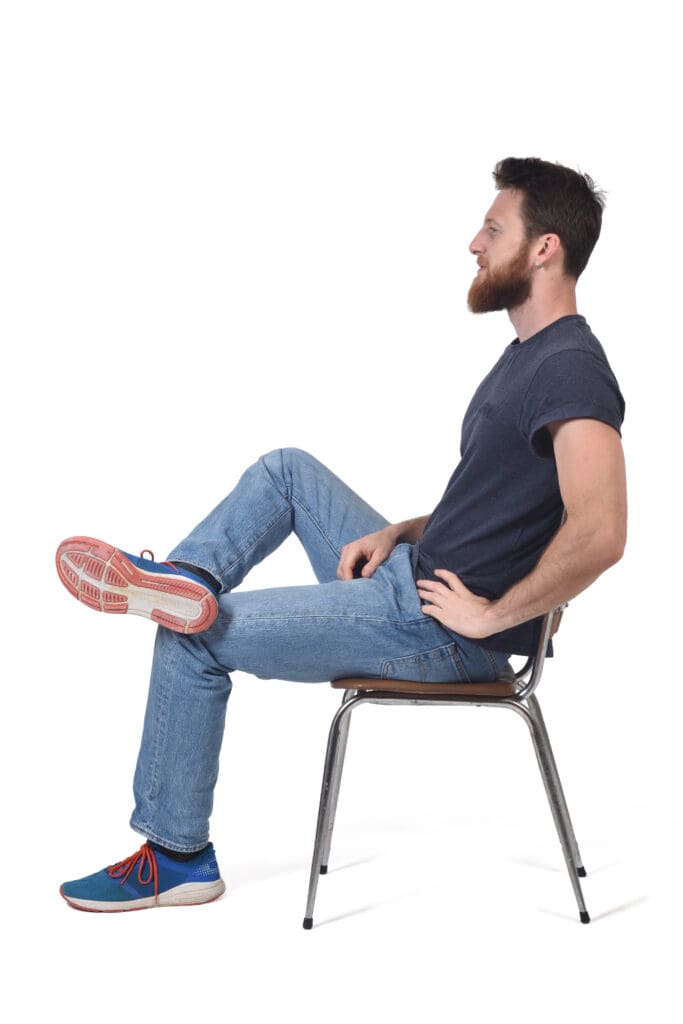
“I can’t sit and put my shoes and socks on,” she said, attempting to demonstrate a figure-4 cross-legged position. Clinically, this is known as the FABER test (flexion, abduction, external rotation) of the hip. She pinpointed pain in the posterior hip region that felt like an impingement, not a stretch.
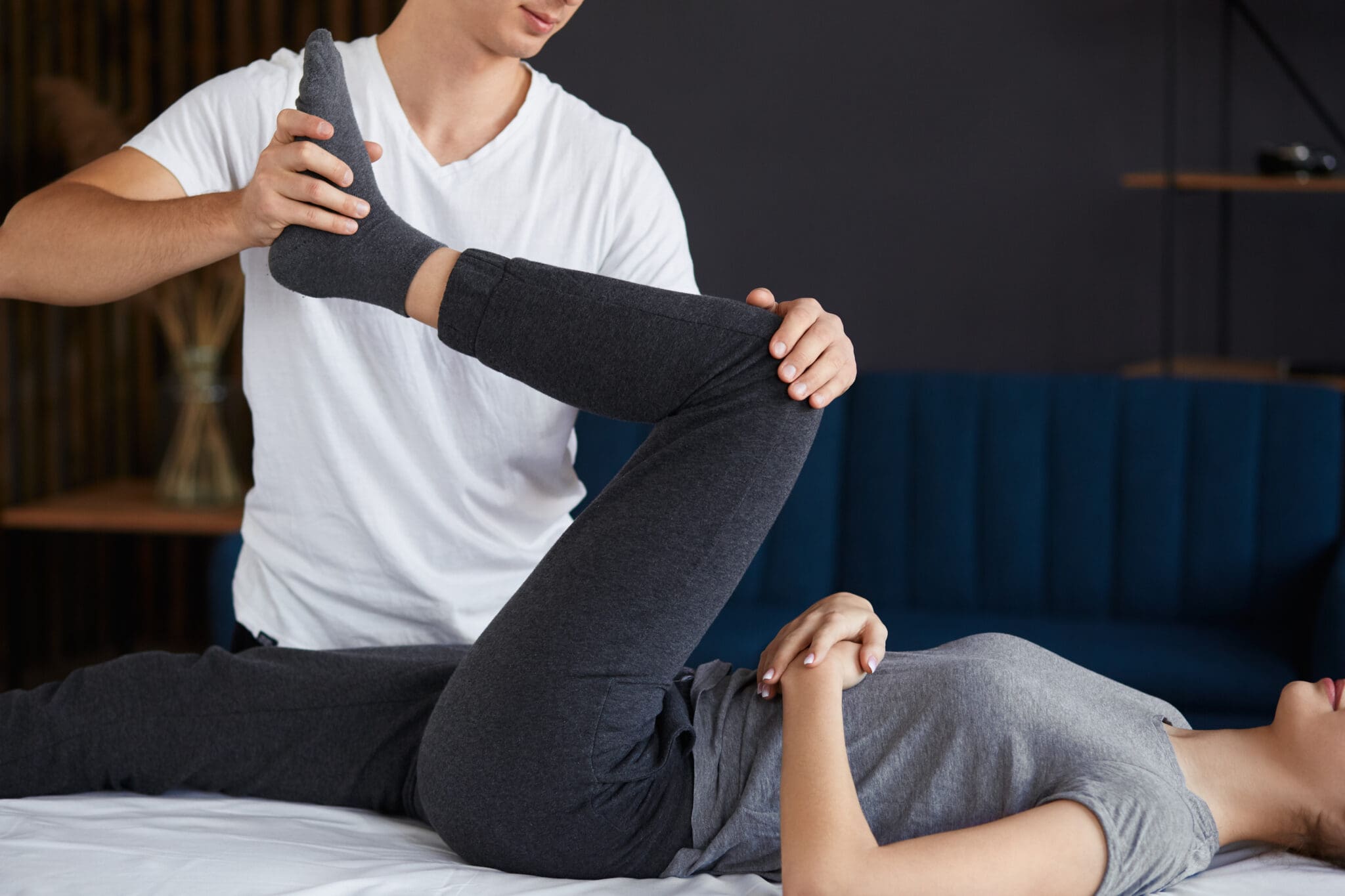
I reproduced the pain with the FABER test in supine (like this):
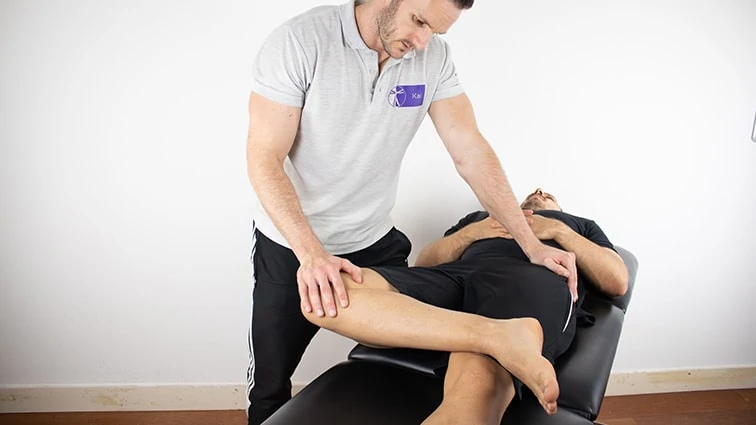
A normal test would allow the tibia to be parallel to the table and an endfeel, if any, would be a stretch in the adductor. In school, we were taught if low back pain was elicited with this test, it indicated a sacroiliac (SI) joint problem. And if pain was elicited in the groin, it indicated a hip joint problem. But for most of my patients, the restriction is felt in the posterior hip.
Interestingly enough, she was able to do FABER this way without restriction:
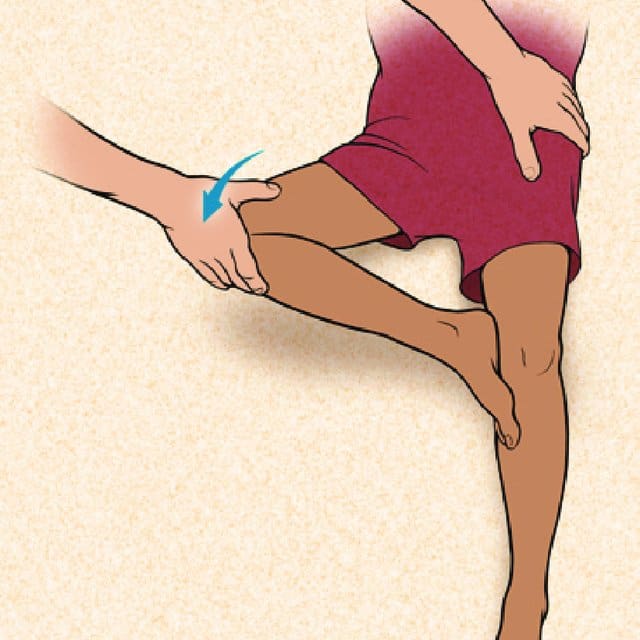
Why?!
With the foot placed beside the leg versus on top of the opposite thigh, requires less external rotation of the hip.
What I did to fix it…
Evaluation revealed severe posterior gluteus medius trigger point
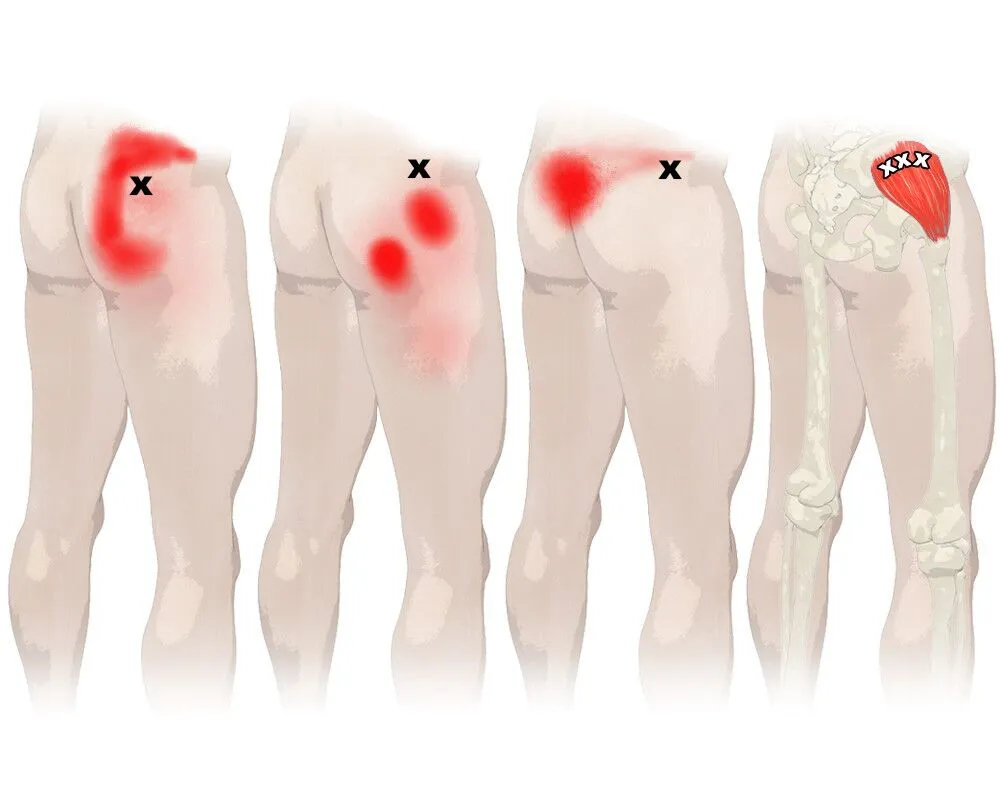
I also found trigger points in the adductor magnus and lateral gastrocnemius:
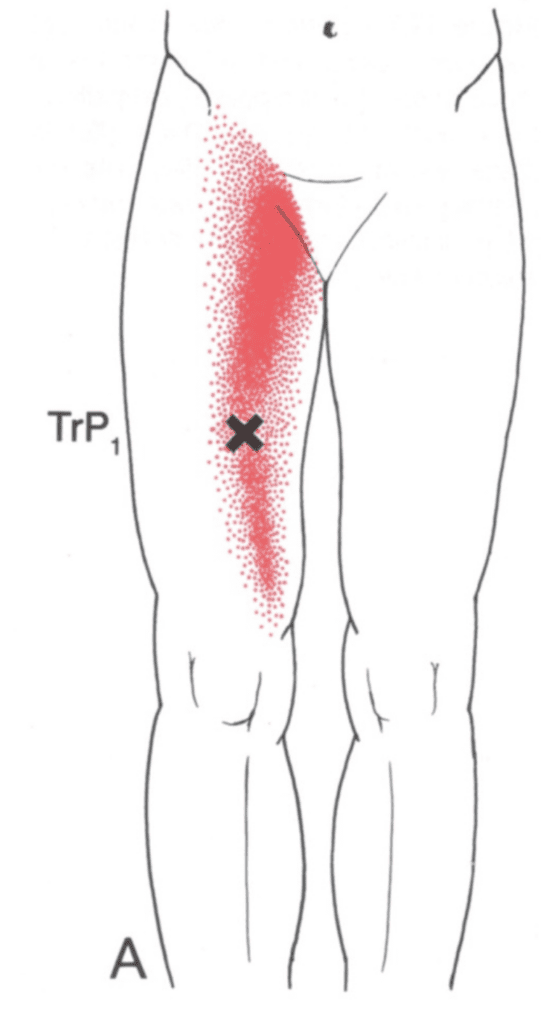
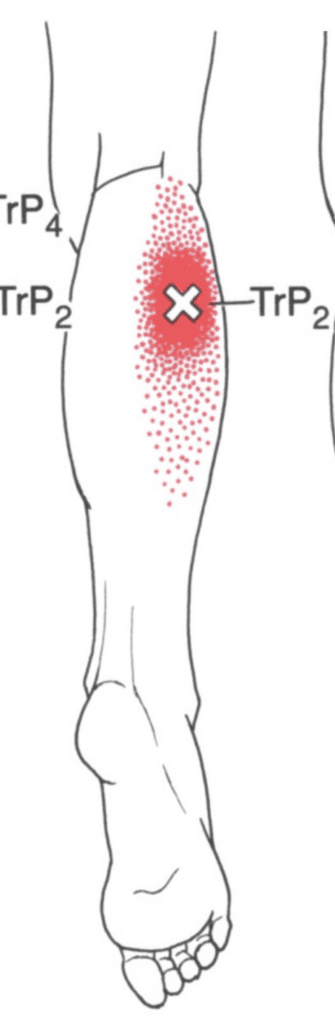
I released all three trigger points with soft tissue mobilization (deep trigger point massage). Then I re-tested the FABER in both supine and sitting and pain and hip impingement were eliminated.
Why did that work?!
- The FABER requires anterior glide of the femoral head in the acetabulum. If, at rest, the femoral head is already sitting slightly anterior, then the joint “bottoms out” before hitting end range external rotation and a posterior hip impingement is felt.
- The posterior gluteus medius, adductor magnus and lateral gastrocnemius are all femoral external rotators. Tightness (trigger points) in these muscles may cause the femoral head to sit slightly anterior at rest.
- All of these trigger points indicate a limb that is functionally over supinated.
So, next time you do a FABER test on someone and it is limited, don’t just write it down and shrug your shoulders. Assess these trigger points and fix what you find.
Because nobody has time to be in pain.
Until next time…

Kind Regards,
MoveWell Academy
[email protected]