Kinesiology THURSDAY – Biomechanics of a Sled Push (and why you should do it)
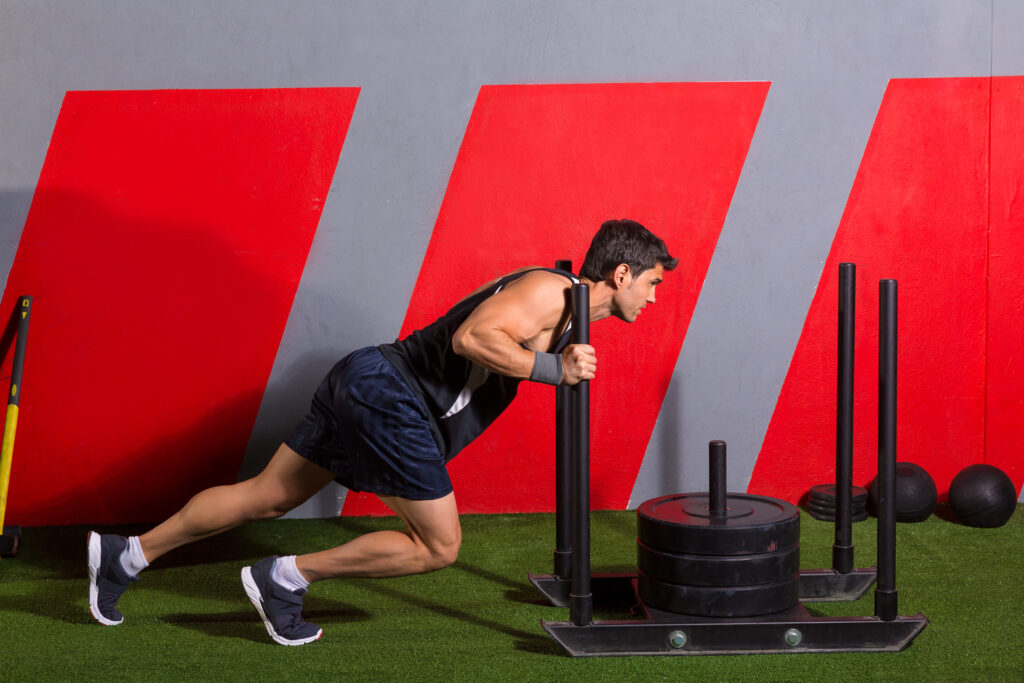
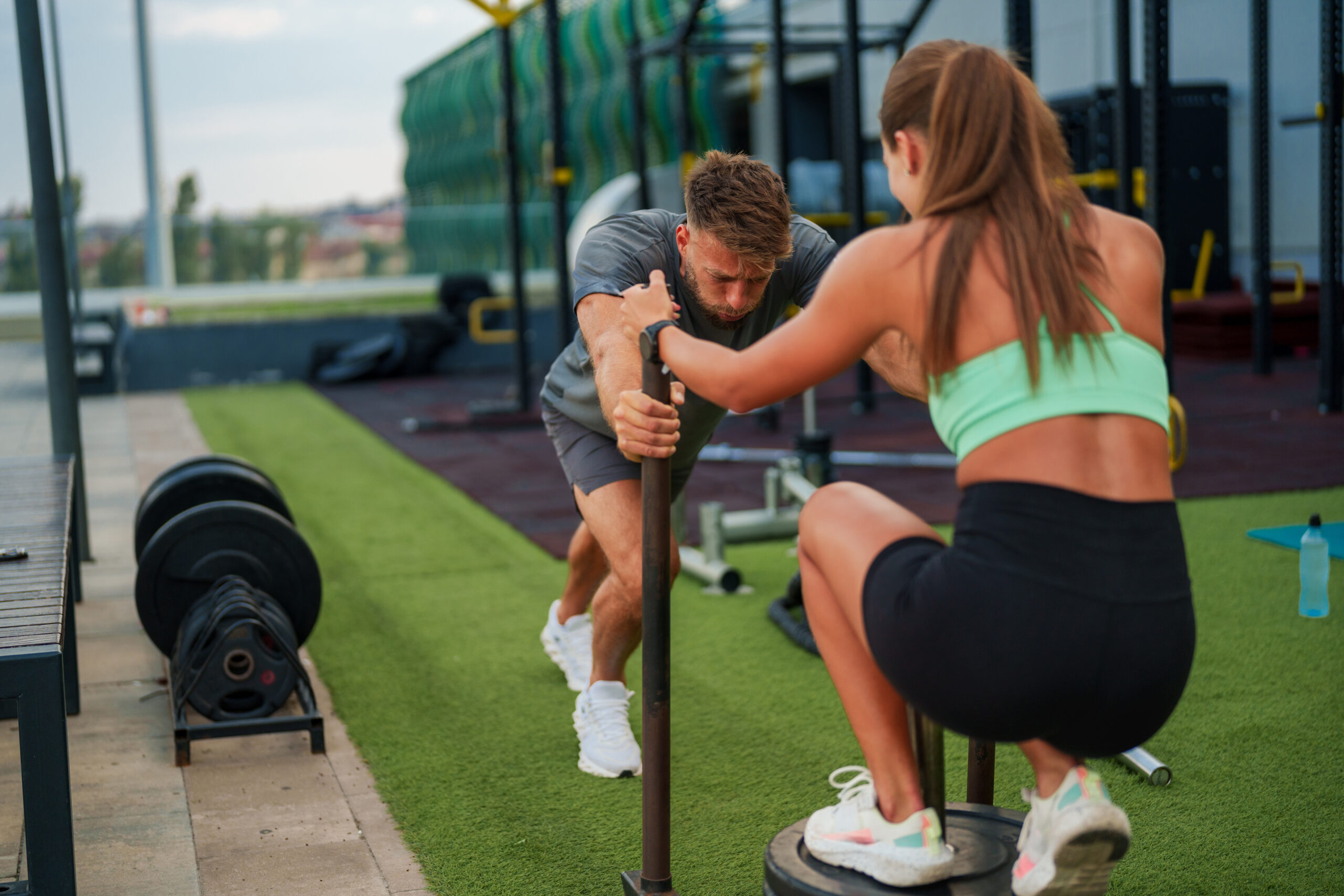
I’m fortunate enough to belong to a gym that has one of these sleds and pushing and pulling it from one end of the artificial turf to the other has become one of my favorite activities. It is a full body, compound movement that works the following:
- Toe flexors (flexor hallucis longus, flexor digitorum) and intrinsic muscles of the foot
- Ankle plantarflexors (gastrocnemius, soleus)
- Knee extensors (quadriceps)
- Hip extensors (gluteus maximus, hamstrings)
- Trunk extensors (erector spinae)
- Scapular protractors (pec minor, serratus anterior)
- Shoulder flexors (anterior deltoid, pec major)
- Elbow extensors (triceps)
- Wrist flexors (flexor carpi radialis, flexor carpi ulnaris)
- Finger flexors (flexor digitorum profundus)
That’s a lot of activity packed into one move. If you do this variation with your elbows extended, you activate the lower trapezius muscle, a muscle that ensures proper arm elevation and gets rid of a slouch:
Why does this matter?
Here’s the main reason to do the sled push. Not only does it activate muscles up the entire biomechanical chain, it is a move that requires minimal high-speed eccentric work of the muscles involved which means minimal delayed onset muscle soreness (DOMS) the following day.
Squats, lunges and leg presses require high speed eccentric work that creates microtears in a muscle. This type of workout is very functional and beneficial but can leave you sore for a couple of days.
If you want to do a leg workout but have to run the next day, performing activities like the sled push will allow you to do activate the large muscles of your legs without experiencing DOMS. Your legs will be activated and strong AND able to complete the run. Give it a try.
Because nobody has time to be in pain.
Until next time…
Kind Regards,
MoveWell Academy
[email protected]