
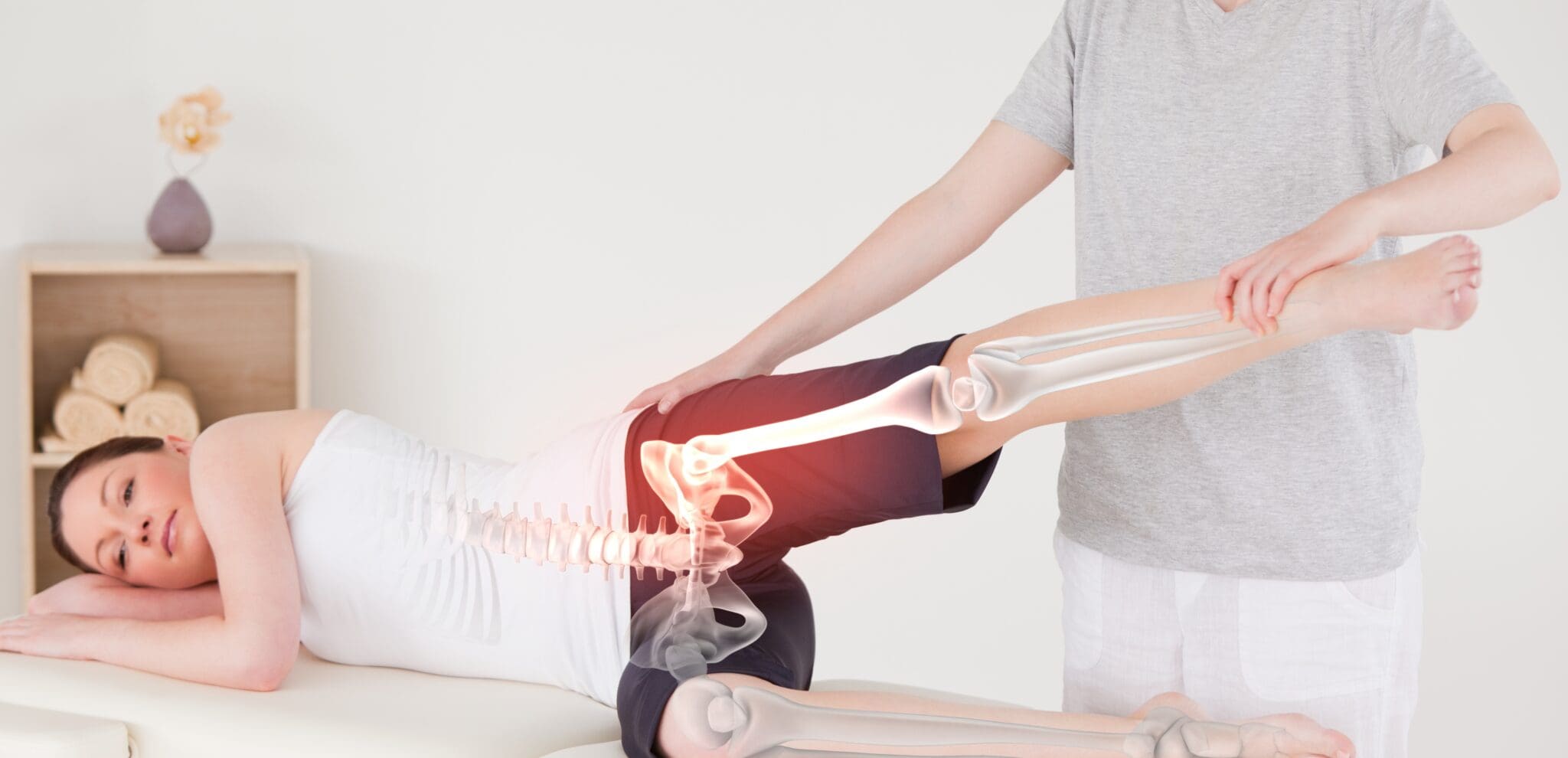
Muscle Minute TUESDAY – Meet the Gluteus Medius
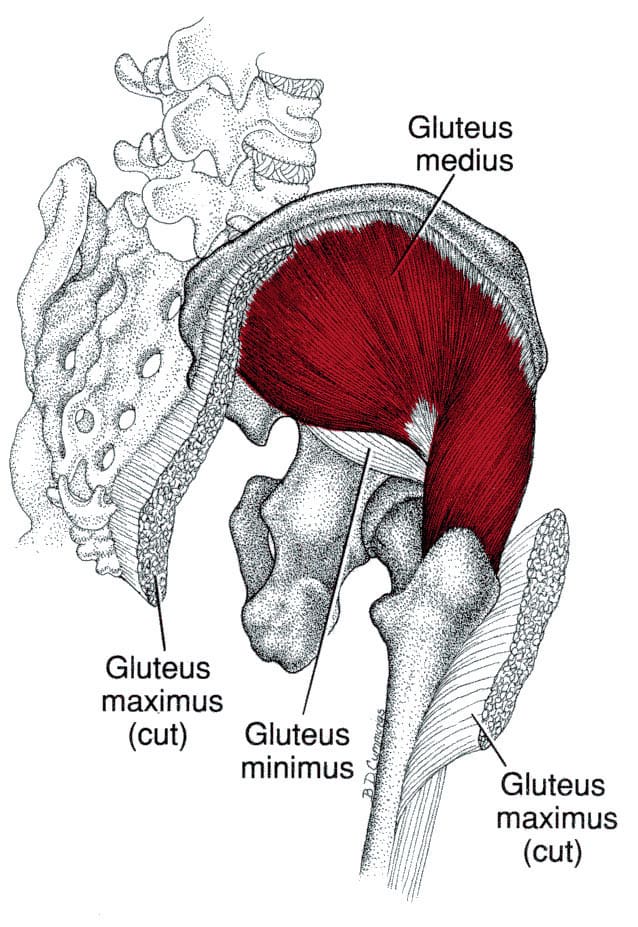
The gluteus medius is often considered to be a pure frontal plane hip muscle, performing abduction, but a quick glance at the fiber orientation would lead one to believe it is so much more than that. Let’s take a deeper dive…
| Origin | gluteal surface of ilium (beneath gluteus maximus) |
| Insertion | greater trochanter |
| Action | anterior fibers – IR of hip (deceleration of ER) posterior fibers – Extension and ER of hip (deceleration of flexion/IR) all fibers – abduction of hip (deceleration of adduction) |
| Innervation | superior gluteal n. (L4, L5, S1) |
| Antagonists | adductors, quadratus lumborum |
The Real World Gluteus Medius
There are some interesting things to note about this muscle:
- The anterior gluteus medius along with the anterior fibers of TFL are the only two muscles that decelerate ER of the hip. This is because when the foot hits the ground the primary force that needs to be decelerated is IR.
- The posterior gluteus medius is functionally synergistic with the gluteus maximus and the deep six external rotators of the hip.
- The maximal contraction of the gluteus medius during gait is in midstance, decelerating adduction of the hip as the opposite pelvis drops resulting in 10˚ of hip adduction. It was weakest when tested in 40˚ of abduction (which is sometimes the position used for manual muscle testing).
- Studies show that weight loading (1% of body weight versus 2%) and walking on an incline (5˚ incline versus 10˚) maximized gluteus medius activation, but increasing walking speed exerted no effect on selective gluteus medius strengthening. More is not always better.
And the secret to understanding it is to understand the relationship is has with other key muscles. Here’s a short list:
- Gluteus maximus – in order for the gluteus maximus to powerfully externally rotate the hip, the gluteus medius must activate to stabilize the hip in abduction. Gluteus maximus contraction in the absence of a gluteus medius contraction results inadduction of the hip.
- Quadratus lumborum (QL) – If the QL has a trigger point (meaning it is tight), it will elevate the pelvis on one side, resulting in a lengthened and weakened gluteus medius.
- Adductor magnus – A trigger point in the adductor magnus could signal inhibition of the gluteus medius.
So how do we know what’s going on? Test and touch. Try these things:
- Palpate posterior gluteus medius (PGM) and anterior gluteus medius (AGM). A trigger point in the PGM is often found in someone who over supinates. A trigger point in the AGM is often found in someone who over pronates.
- Palpate adductor magnus. A trigger point is usually found in the middle of the muscle belly
- Test for functional gluteus medius strength with the modified side plank test or standing single leg balance test
That’s it. Three easy things to determine if the gluteus medius is activating. Here is a quick palpation video to help you get started. It is a muscle that should be evaluated with every patient as it holds the key to solving a lot of orthopedic injuries.
Conventional thinking says: The gluteus medius abducts the hip. Strengthen it by lying on your side and lifting your leg towards the ceiling.
Real World Thinking says: This muscle activates best not in abduction, but in the deceleration of adduction with your foot on the ground. Standing on one leg is a better activator than lying on your side and lifting it. A gluteus medius doesn’t just become weak. There are often trigger points in functional antagonists that shut it down. Taking a little time to evaluate the function of this muscle can yield a lot.
That was a lot of information, but your patient’s will thank you for reading.
Because nobody has time to be in pain.
(Before I close, would you please consider subscribing to our YouTube channel? It would help us out a lot. Thank you!)
Until next time…

Kind Regards,
MoveWell Academy
[email protected]