Muscle Minute TUESDAY – 3 Facts About The Upper Trapezius
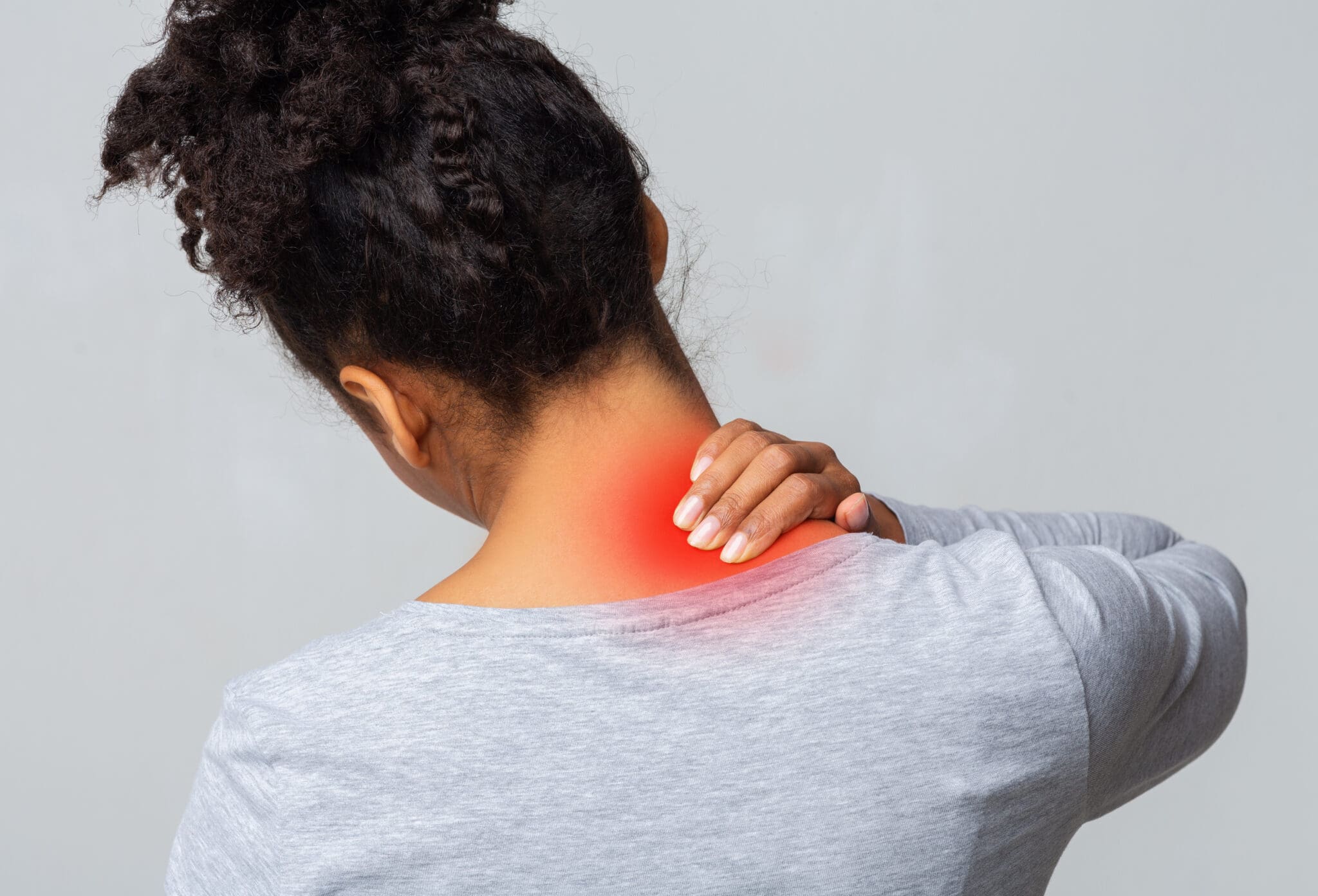
A pain in the neck
The upper trapezius is often implicated as a cause for cervical and shoulder pain, as trigger points (or “knots”) are commonly found in this muscle, indicating it is short and tight. You may have this trigger point if you get a pain in the top of your shoulder as you reach overhead or behind you, if one shoulder is higher than the other or if you routinely get tension headaches one side of your head.
But just trying to stretch this muscle or massage out the trigger point is often a temporary solution. This is because the head and neck are at the very end of a long biomechanical chain, stemming from the feet on up. How your feet hit the ground, if your pelvis is tilted or turned and even how well your thoracic spine rotates affects the position of your head and neck.
A better solution lies in understanding the most common biomechanical causes of upper trapezius tightness and intervening at the heart of the dysfunction. Here are the top three things that make this muscle “knot” up
Here are 3 things that make this muscle “knot” up:
1. Increased thoracic kyphosis – The more rounded your upper back is the more forward your head is, causing this muscle to have to hold your head on your shoulders even in stationary positions. Thoracic mobility exercises like wall washing and alternating foam roll shoulder flexion will help.
2. A weak or inhibited lower trapezius: The lower trapezius is more active with arm elevation past 90˚. Wake the lower trapezius up with this exercise that encourages overhead reaching and pressing. Grab a dumbbell and press it over head while you shift your weight to the same side.
3. A weak gluteus medius: Wait…that’s a hip muscle! That’s right. A weak gluteus medius often causes a trigger point in the quadratus lumborum, a muscle that if tight can lift your pelvis higher, causing your shoulder on the same side to also sit higher and THIS will put a knot in your upper trapezius muscle.
Test your glute med by doing a modified side plank. Is this weaker on one side? Is it the same side as your trapezius trigger point? Hmm…