

Muscle Minute TUESDAY – The Vastus Medialis Oblique
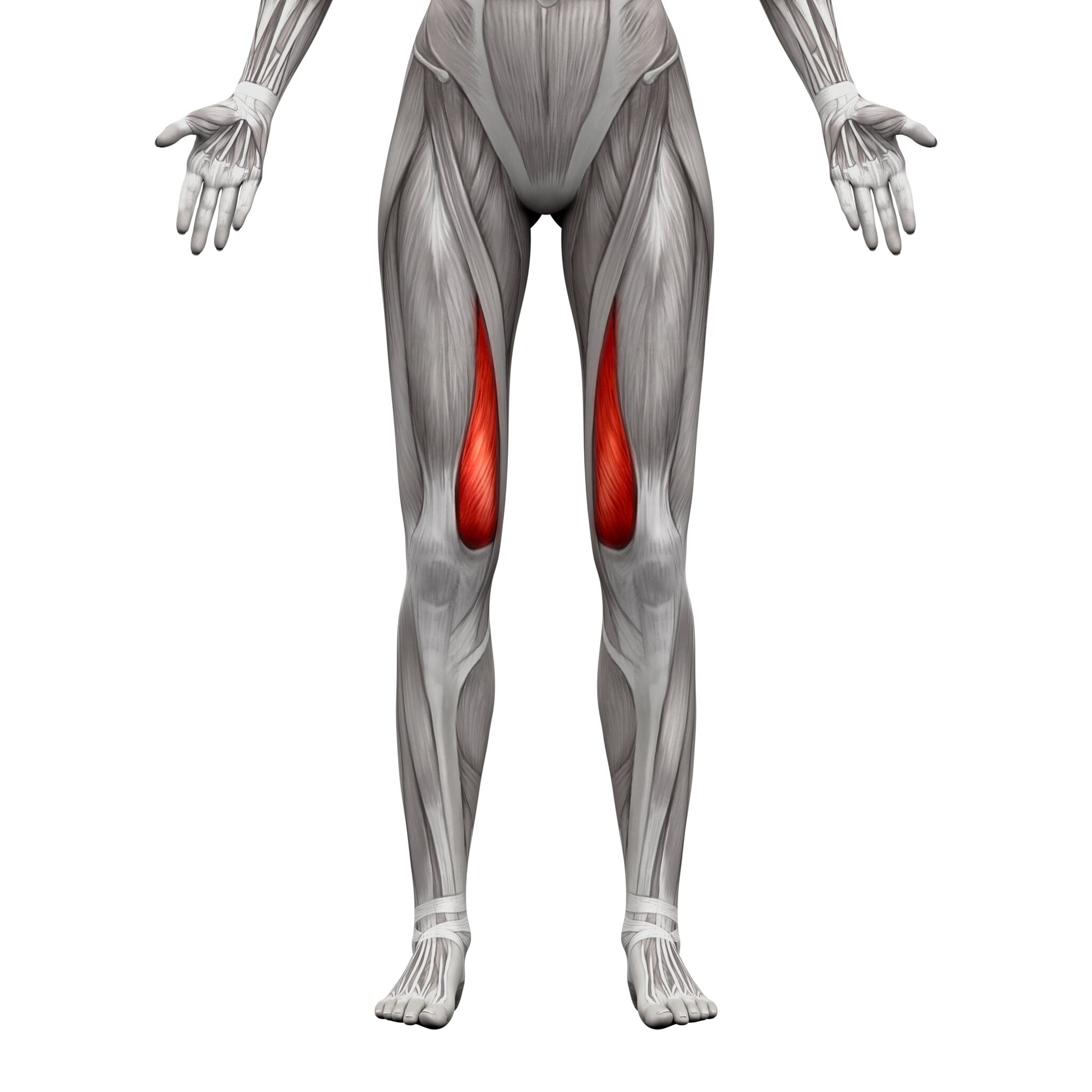
Wait one second. Now we’re just going to talk about one portion of a muscle?
That’s right. The vastus medialis is one of four parts of the quadricep muscle. It is divided into two portions: oblique (VMO) and lateralis (VML), with a fiber angle of 5˚ and 52˚ respectively, making the VMO responsible for medial tracking of the patella. It gets a lot of press as inhibition or atrophy of the VMO is often associated with patellofemoral pain (pain under the knee cap). Let’s get started.
| Origin | medial side of femur |
| Insertion | medial patella, medial patellofemoral ligament, adductor magnus tendon |
| Action | extends the knee, medial patellar tracking |
| Innervation | femoral n. (L2, 3, 4) |
| Antagonists | hamstrings, vastus lateralis |
The Real World Vastus Medialis Obliques
VMO inhibition is a common problem post-surgically, often attributed to increased edema (swelling) in the knee. If the lateral pull of the vastus lateralis is not counteracted with the VMO, lateral patellar tracking may occur causing irritation under the lateral patellar facet.
What activates the VMO v. VL?
Studies show the VMO and vastus lateralis (VL) are activated with squatting. Squeezing something between your knees (hip adduction) has been thought to increase VMO contraction over VL, however, this study noted no difference. After a quick review of the literature, there were two exercises that activated VMO over VL:
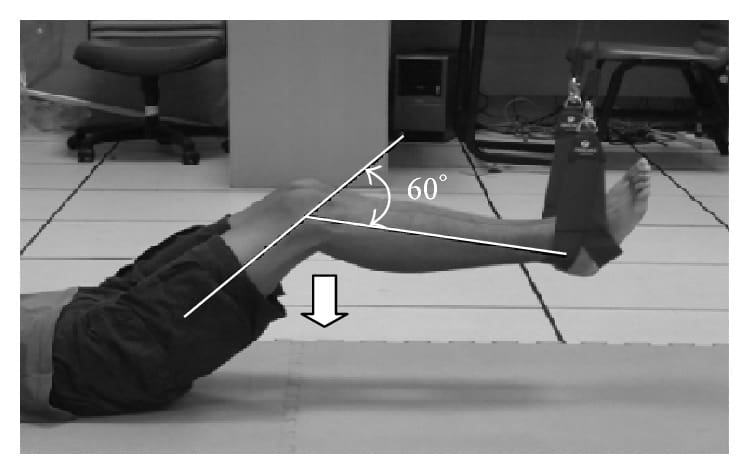
- Closed kinetic chain sling exercise – this is like performing a bridge with your ankles in a sling (like the TRX).
- Wall sit 1/4 squat which activated VMO and rectus femoris over the other portions of the quadriceps muscle. It’s interesting to note that the VMO was not more active as the squat depth increased.
It is also important to consider functional agonist/antagonist relationships. If the much larger VL is tight, it may neurologically weaken the VMO. Ever try foam rolling your ITB and finding it extremely painful? What you are feeling probably isn’t trigger points in the ITB, but rather trigger points signaling tightness of VL. Here’s a short list of why this matters:
- If the knee is swollen, VMO will be inhibited. Get rid of swelling to re-activate this portion of the quad
- The VMO is activated with mini-squats. No need to do deep squats to activate this muscle, which means activation can begin safely in early portions of rehab
- Performing a bridge exercise with your feet on an unstable surface activates VMO more than doing open chain knee extension
- Releasing vastus lateralis (VL) may be key to allowing VMO to activate
- A weak VMO can lead to lateral patellar tracking and patellofemoral pain, one of the most common causes of knee pain
Conventional thinking says: Strengthen the VMO with knee extension or squatting with a ball between your knes
Real World Thinking says: The VMO has a distinct fiber orientation which allows it to control patellar tracking. It is activated with mini-squats and co-contraction of the quadriceps with the hip extensors (gluteus maximus). It is antagonistic to the vastus lateralis and releasing the commonly tight VL may improve VMO activation. This small muscle is something to consider.
Because nobody has time to be in pain.
Until next time…

Kind Regards,
MoveWell Academy
[email protected]