

Muscle Minute TUESDAY – Meet the Peroneus Longus
A Chronic Ankle Sprainer Culprit – Meet the Peroneus Longus
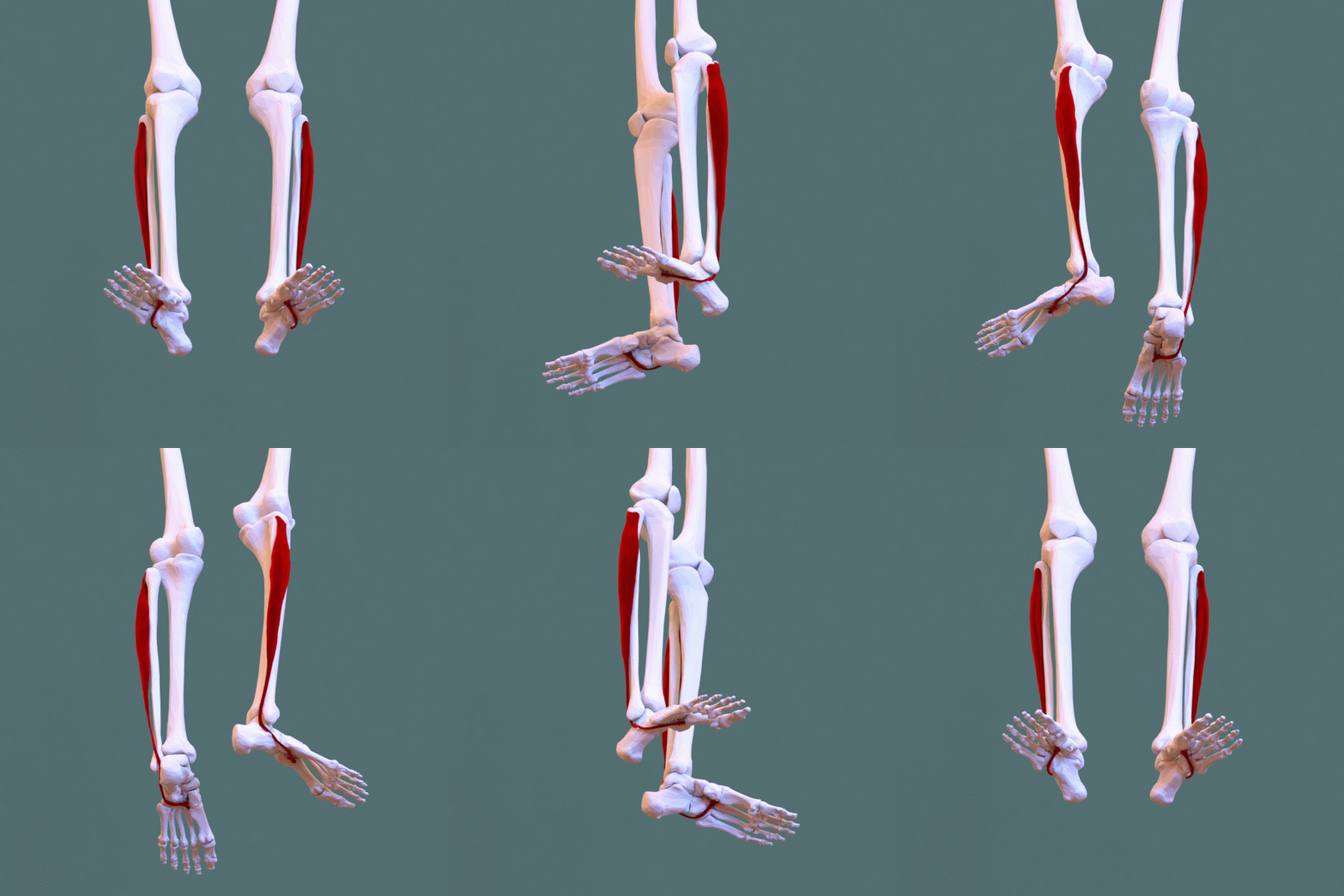
That tiny muscle is responsible for chronic lateral ankle sprains?! Well, kind of. The peroneus longus (PL) takes a lot of flack because its primary job is to decelerate and prevent excessive ankle inversion, the most common mechanism of lateral ankle sprain. Most people who have sprained an ankle will tend to sprain the same ankle multiple times, signaling weakness of this muscle. But PL shouldn’t be the only one to blame. Let’s take a closer look at this muscle, but more importantly what factors can make it chronically weak.
| Origin | proximal fibula, lateral condyle of tibia, intermuscular septa |
| Insertion | base of first metatarsal and medial cuneiform |
| Action | ankle eversion and plantar flexion; stabilizes first ray |
| Innervation | superficial peroneal n. (L5, S1, S2) |
| Antagonists | tibialis posterior, tibialis anterior |
The Real World Peroneus Longus
So, does strengthening my peroneus longus prevent recurrent ankle sprains? The most common exercise used to activate PL involves wrapping an exercise band around the lateral border of the foot while the patient performs active eversion. But when the foot hits the ground, the action looks quite different. It’s job is to stabilize the first ray on the ground. In short, keep the ball of your big toe planted.
3 things that could prevent PL from doing its job?
- Lack of subtalar joint eversion – hypomobility of the rear foot may cause an ankle to remain inverted through toe off
- Lack of ankle dorsiflexion – full ankle dorsiflexion requires eversion. If dorsiflexion is limited either by tight gastroc/soleus or lack of eversion (see #1), the PL will be charged with stabilizing against inversion through the entire stance phase, something it was not designed to do.
- Tight bicep femoris – this muscle doesn’t even cross the ankle, but its insertional point just superior to the PL on the fibular head makes it a functional antagonist of the PL. A tight bicep femoris may cause posterior/superior migration of the fibula, resulting in a lengthened PL at rest. If one muscle is short/tight, it’s antagonist is long/weak.
Conventional thinking says: Strengthening the peroneus longus will prevent recurrent ankle sprains.
Real World Thinking says: Recurrent ankle sprains happen when the peroneus longus is asked to do more than it is designed to do. It is designed to decelerate ankle inversion at heel strike and anchor the first ray to the ground prior to the foot pronating in mid to late stance phase. Restoring normal load to the peroneus longus involves insuring normal ankle dorsiflexion/eversion and flexibility to the bicep femoris (lateral hamstring).
Here’s some ideas on how to combat this common problem.
Because nobody has time to be in pain.
Until next time…

Kind Regards,
MoveWell Academy
[email protected]