Kinesiology THURSDAY – The Subtalar Joint Connection (Part I)
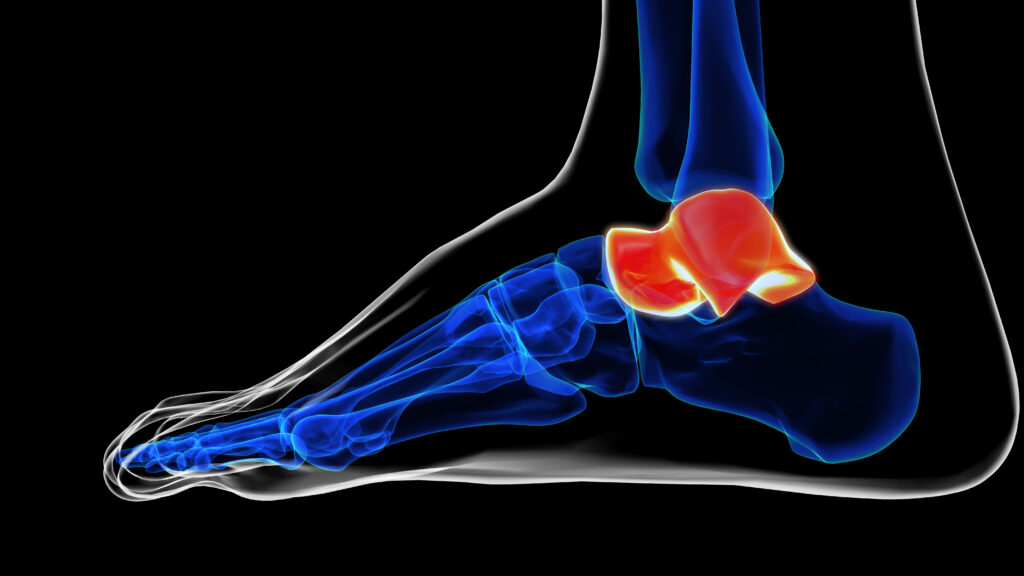
How many muscles attach to the talus? Zero. I missed that question on my state licensing exam 35 years ago and I’ve never forgotten it. But the talus is something I think about all day long as I treat overuse injuries of the lower extremity. It articulates with the calcaneus below (subtalar joint) and the tibia above (talocrural joint), acting as a ball-bearing as it facilitates tri-planar motion distally in the foot and proximally with the tibia.
The subtalar joint provides upwards of 25˚-30˚ inversion and 5˚-10˚ of eversion. Inversion/eversion is what we clinically measure, but in reality the subtalar joint everts/abducts/externally rotates, resulting in pronation and then subtalar joint then inverts/adducts/internally rotates resulting in supination.
5˚-10˚ of pronation doesn’t sound like a lot of motion, but this is perhaps the most important range of motion of the lower extremity as it initiates a series of joint motions resulting in eccentric loading of the biggest muscle of your body, the gluteus maximus.
This is Part 1 of a four part series discussing subtalar joint motion and its effect on the lower extremity. Let’s start at the foot.
When the foot hits the ground…
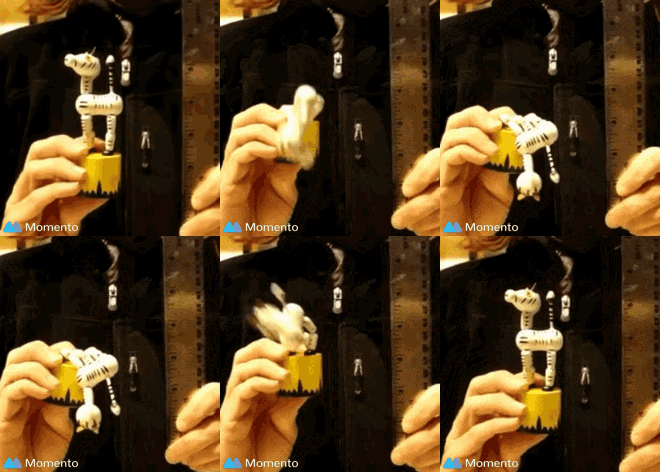
Remember the collapsing spring toy where you pushed a button and the whole thing collapsed? The subtalar joint acts in a similar fashion when it comes to the foot. Eversion unlocks the foot and inversion locks up the foot.
When you walk, you are designed to hit on the lateral heel and your subtalar joint everts, facilitating pronation at the subtalar joint and splaying of the foot bones, allowing for shock absorption and conforming to uneven surfaces.
As you reach midstance, the subtalar joint inverts, bringing the foot bones into closed pack position, locking them up to provide a stable surface for you to push off your big toe. That statement sometimes confuses people. If the subtalar joint inverts, wouldn’t that roll you to the outside of your foot and cause you to push off your 5th toe? No. Your foot twists in the middle allowing for the weight bearing line to move medially even as the subtalar joint locks up the foot bones by inverting.
When things go wrong…
Your foot is designed to roll to the inside when it hits the ground. Remember that important 5˚-10˚? A lack of subtalar joint eversion will cause your weight bearing line to stay laterally and keep the foot bones locked up, decreasing shock-absorption and placing excessive stress on the lateral foot and ankle. Possible foot/ankle injuries include:
- Chronic lateral ankle sprains
- Cuboid subluxation
- Peroneal tendonitis/tears
Excessive or early subtalar joint pronation causes the foot bones to be in a splayed position as you transition to toe-off. Possible over pronation foot/ankle injuries include:
- Plantar fasciitis
- Tarsal tunnel syndrome
- Achilles tendonitis
- Posterior tibialis tendonitis
Check your shoes…
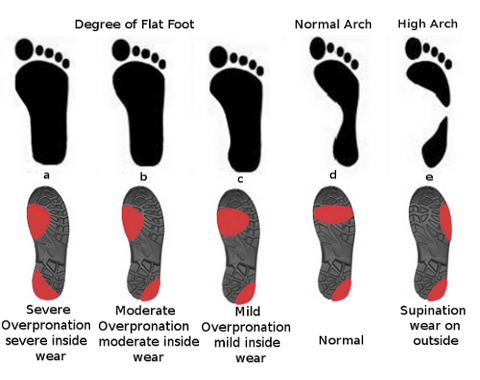
You should be wearing your shoes out on the lateral heel and then the metatarsal heads. Excessive wear on the medial or lateral side may indicate over pronation or supination respectively.
Why does this matter?
The subtalar joint is small in size and range of motion, but mighty in its impact on the lower extremity. Too much or too little range of motion at this joint has huge ramifications up the biomechanical chain. So this week, check your shoes. And stay tuned for next week’s blog when we discuss the subtalar joint’s effect on the tibia. When it comes to lower extremity injury, don’t forget this little joint.
Because nobody has time to be in pain.
Until next time…

Kind Regards,
MoveWell Academy
[email protected]