Kinesiology THURSDAY – Bottoming Out (Part 3 – Lumbar Spine)
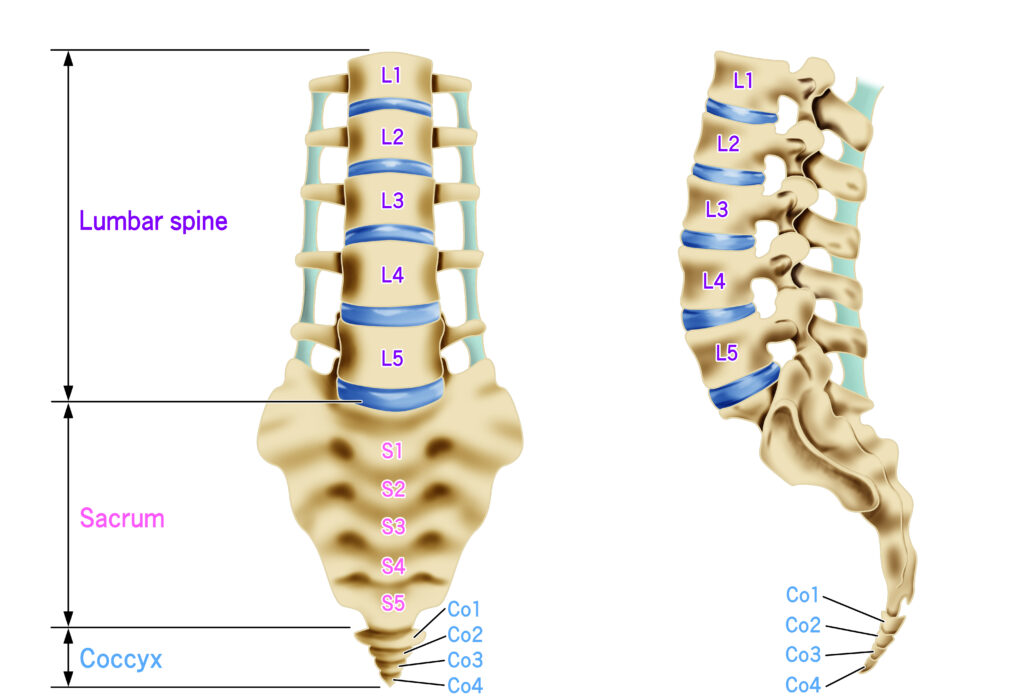
The spine is designed with natural curves to give it a “spring-like” function. Cervical and lumbar lordosis (extension) is counteracted by thoracic and sacral kyphosis (flexion). In the case of the cervical and lumbar regions, spinal extension requires inferior gliding of the facet joints, closing off the foraminal space.
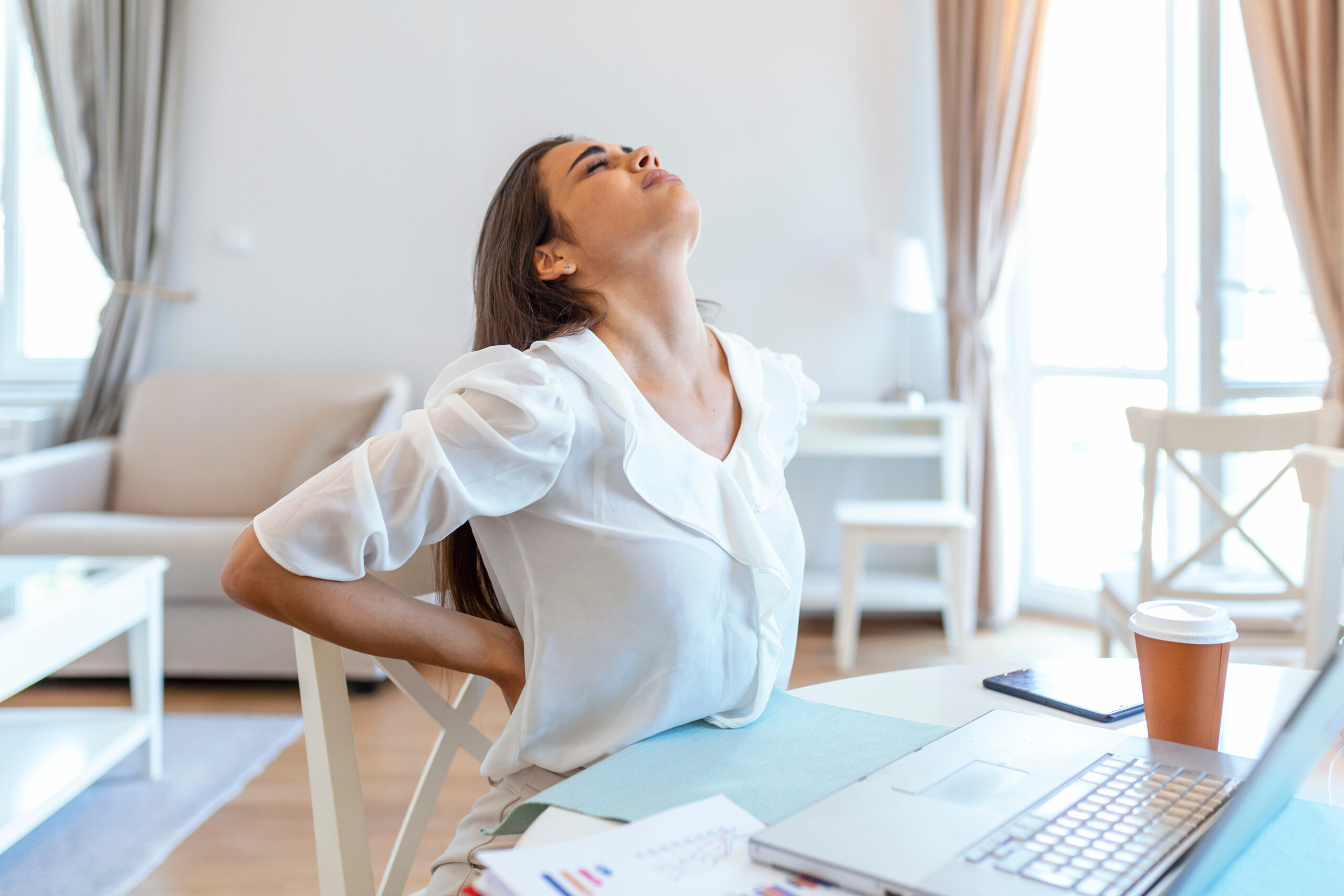
If you have ever experienced low back pain from prolonged standing or walking, chances are your lumbar spine is “bottoming out”. Try this:

The cobra pose requires lumbar hyperextension. It is a stretch that one should feel in the front muscles of the trunk. If you feel it in the your lower back, you aren’t feeling a stretch. You are feeling the “jam” that occurs when the lumbar spine has surpassed its normal extension range. This happens if, at rest, your lumbar spine is already in extension.
What would cause this?
The main culprit of excessive lumbar spine extension at rest is tightness of the psoas major, a key hip flexor.
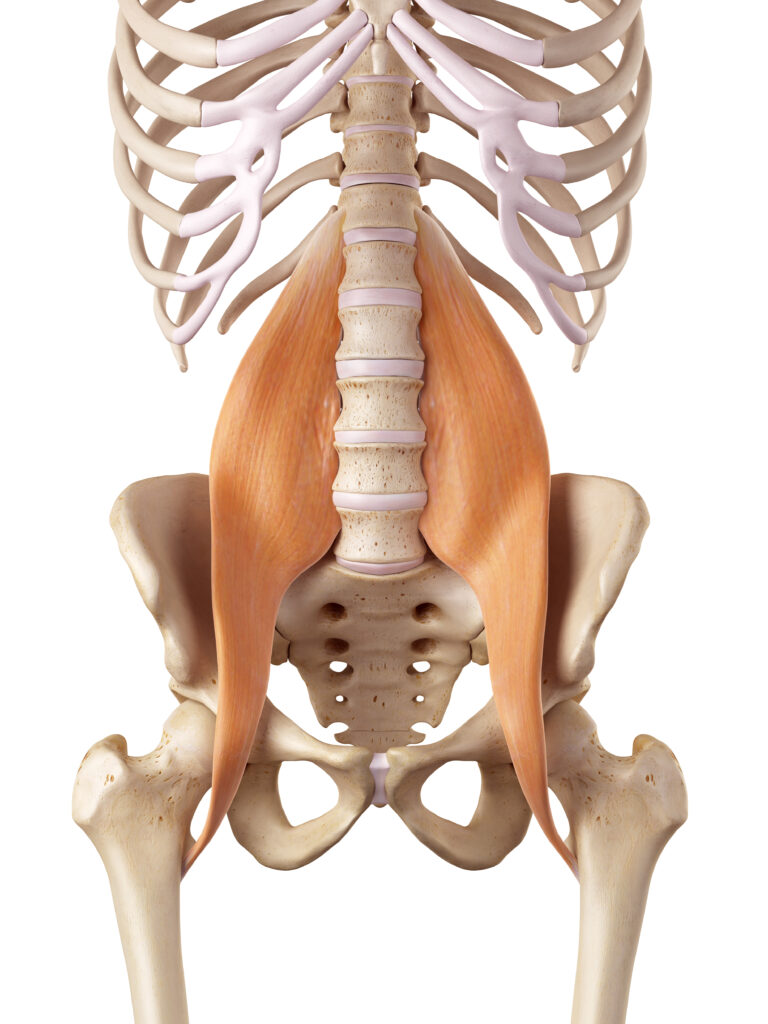
This is the only hip flexor that originates from the lumbar spine. Acting as two guy-wires to stabilize the spine, if one becomes short/tight, it will exert an extension force on the spine. And as is usually the case, if only one side becomes tight, it exerts an extension and rotational force on the spine at rest. Any movement into extension then results in a jamming of the facet joints and closing off of the interforaminal space.
What do we do about this?
The best way to counteract this is to move the spine out of hyperextension at rest. Inhibition of the psoas major is best achieved by activating its antagonists:
- Activate rectus abdominus with a power posterior pelvic tilt. This is a posterior tilt with a strong abodminal contraction
- Activate transverse abdominus (TA) with a rapid supine 90/90 rotation. The TA is a stabilizing muscle and is most active if there is inherent instability. So performing this exercise with short/quick repetitions is better to inhibit the psoas major than doing long range slow movements
- Activate gluteus maximus with versions of lunges or squats where the lumbar spine is placed in a bit of flexion, like lunging and reaching towards the floor
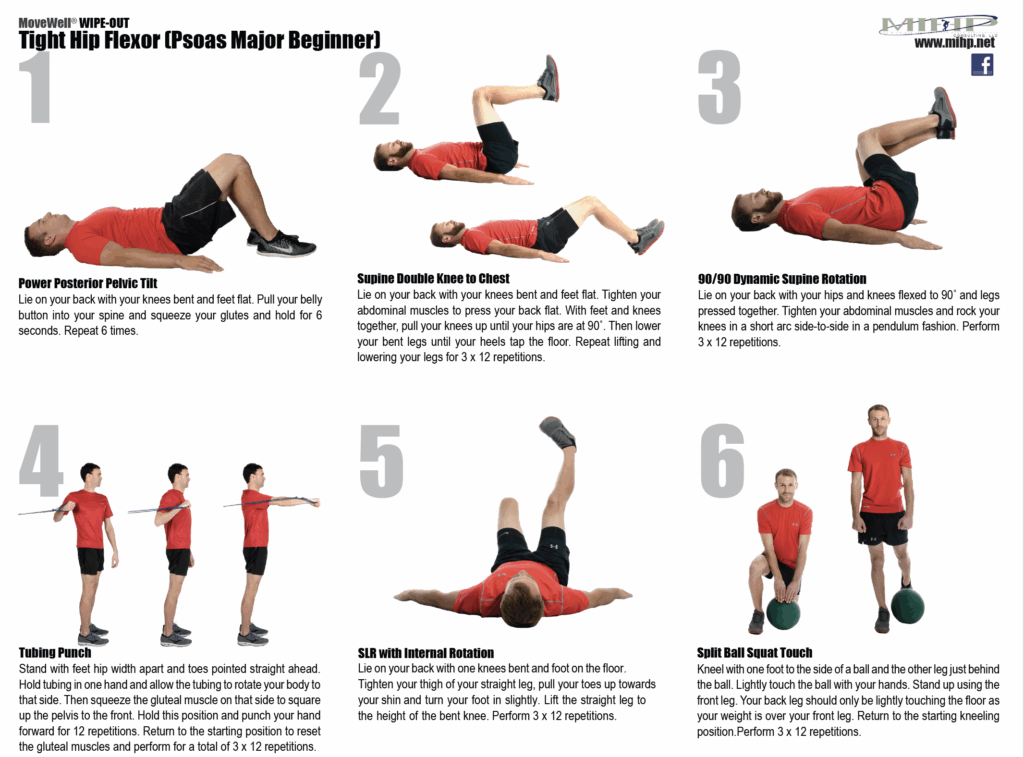
If you want a downloadable copy of the exercises above, you can find it here.
Why does this matter?
Lumbar spine “bottoming out” is a major cause of low back pain that occurs with prolonged walking or standing. If you’ve ever felt like you just want to bend over after a long day of standing to relieve your back pain, chances are your lumbar spine is in too much extension at rest. This is easily corrected with activating the right muscles, the antagonists to the psoas major. It is not corrected by just resting as often our resting positions place the psoas major in a shortened position.
Pass this information along to someone you know who suffers from lumbar spine bottoming out.
Because nobody has time to be in pain.
Until next time…

Kind Regards,
MoveWell Academy
[email protected]