
Kinesiology THURSDAY – The Golf Swing and Fryette’s First Law
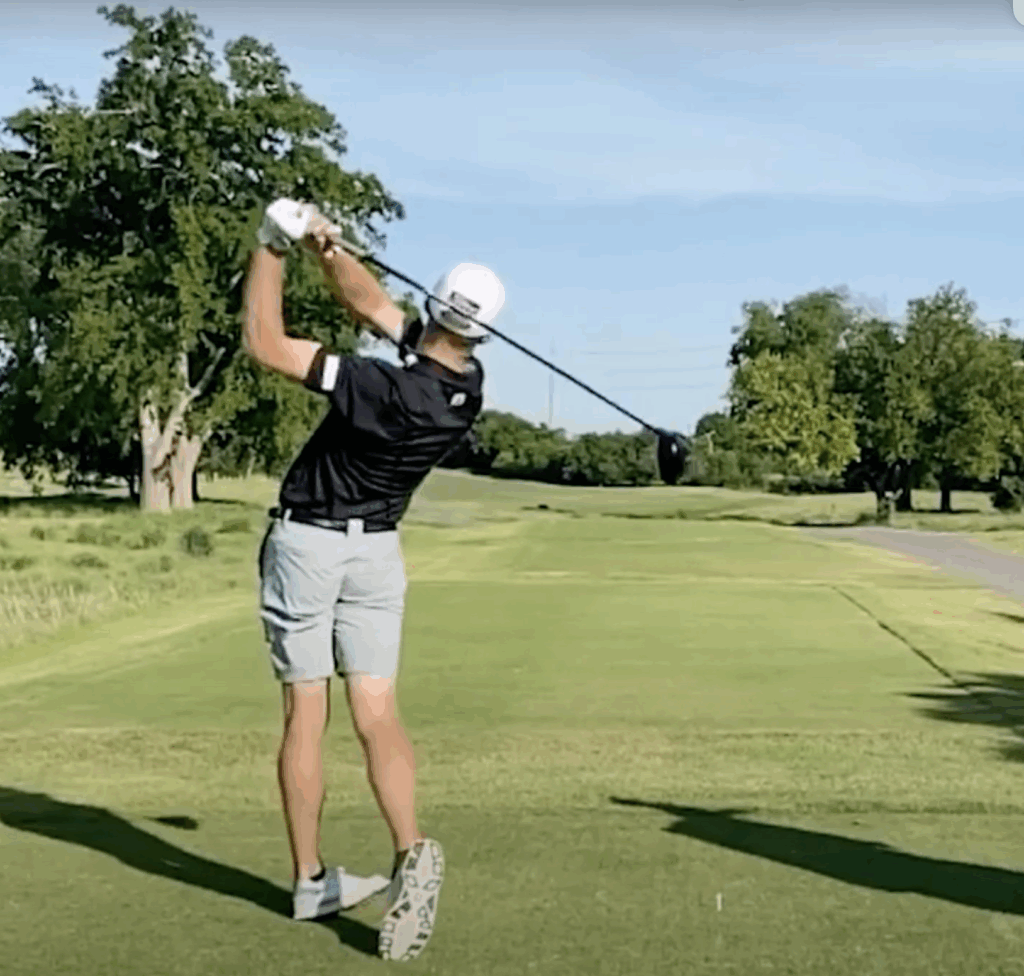
That is a picture of Will Zalatoris, 28-year old professional golfer who recently underwent his second back surgery in two years (microdisectomy) to repair two herniated discs. There is a great video discussing the rebuilding of his swing in 2024 in order to reduce pressure on his lower back. Despite his best efforts, re-injury occurred.
I was going to make this blog just about him. But this week I had two amateur golfers, one with left hip pain and the other with right internal oblique pain that demonstrated limitations in their golf swing follow-through. I’m not a golf pro, but I know Fryette’s laws regarding coupled motion of the spine. Just in case you fell asleep during that part of the kinesiology lecture (easy thing to do), here’s a quick review:
- Law #1 – If the spine is neutral (neither flexed or extended), rotation to one side will be coupled with side bending opposite.
- Law #2 – If the spine is in non-neutral (either flexed or extended), rotation to one side will be coupled with side bending to the same side.
- Law #3 – Motion in one plane will reduce segmental motion in the other two planes.
We are going to focus on the golf swing and Fryette’s first law. Like I said, I’m not a golf pro. So how did I evaluate my patients swings? I simply asked them to show me their swing (without a club). What I saw in both cases was a great backswing with proper weight shift to the right and then a follow-through that seemed to be cut short. In the case of the follow-through of a right-handed golfer:
- The lumbar spine should be in neutral
- Rotation to the left should be coupled with side bending right
In both of my patients, there was as severe trigger point (shortening) in the left quadratus lumborum, which could limit lumbar right side bending. Neither one of them would have pointed this out to me. Trigger points set up in muscles that are chronically short. The things that cry out in pain are not the tight things but the long/weak things. Remember, one was complaining of left hip pain and the other complaining or right abdominal pain.
What did I do?
I spent a few minutes releasing the left quadratus lumborum. Using soft tissue mobilization techniques and gently massaging with my forearm/elbow, I released the trigger point. In one case, I used dynamic cupping in the area as well.
The result? An immediate opening up the follow-through of the swing. One patient even reported her left arm elevation improved which means I probably released the latissimus dorsi attachment on thoracolumbar fascia at the same time.
My favorite three exercises to remedy a tight quadratus lumborum:
- Tall kneel side bending – Kneel on both knees with trunk upright. Bend to one side. Perform 6-10 repetitions
- Half pancake stretch (video)
- Twisting bear (video)
What would I do with Will Zalatoris?
The biggest critique of his swing is excessive side bending in the spine. In the video of his swing rebuild, the coach said “side bending in the swing is like salt”. Too much and you ruin it. Just enough enhances the swing. When he rotates left he should side bend right. He side bends a little too much to the right. Fryette’s third law: too much side bending will limit rotation. I would check his left hip to see if he could rotate more there and stop some of the side bending in his follow through.
Maybe we an help Will. But I’m really glad I helped my patients.
You don’t have to be a golf pro to help a golfer. Just remember Fryette’s laws and the quadratus lumborum.
Because nobody has time to be in pain.
Until next time…
Kind Regards,
MoveWell Academy
[email protected]