
Kinesiology THURSDAY – Biomechanics of a Noisy Jaw
Try this test. Open your mouth as wide as you can. Do you hear crackling noises? Does your jaw “clunk”? Does your chin drop straight down or does it deviate to the left or right?
All of these are signs that your temporomandibular joint (TMJ) may not be functioning correctly. Just like any other synovial joint in your body, the TMJ requires a balance of muscle forces to keep it in alignment. Let’s take a closer look:
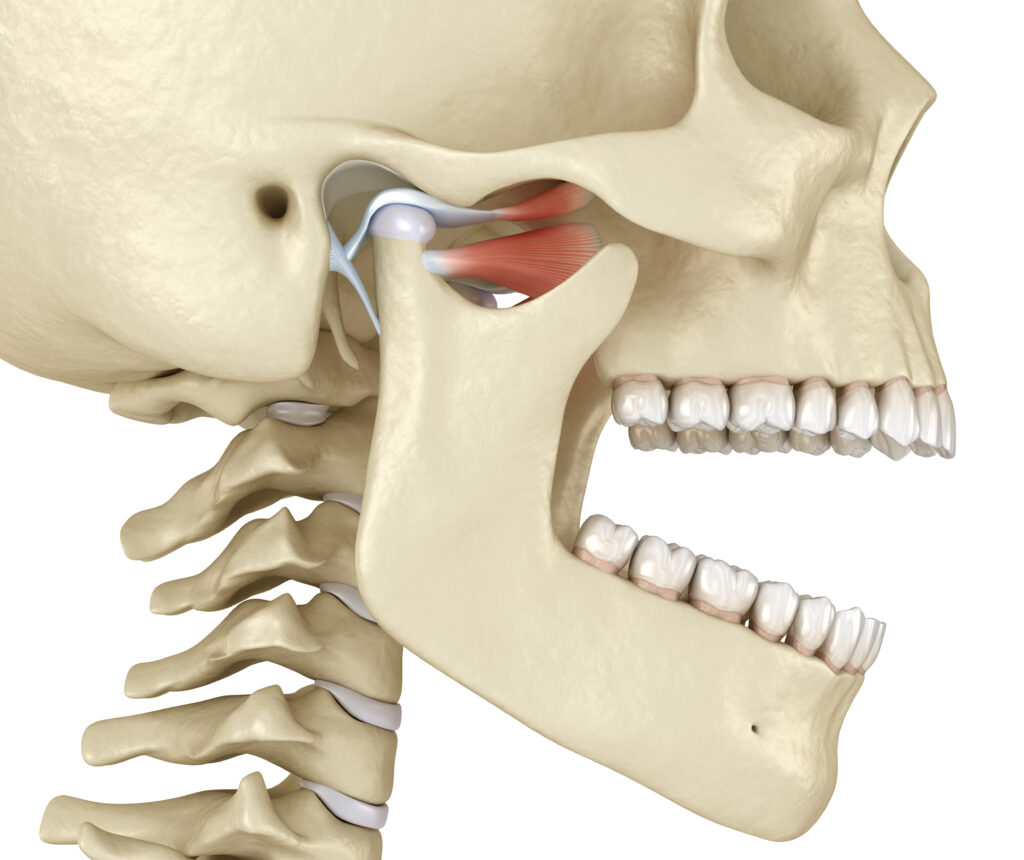
The TMJ is unique in that it functions as a two joint system. When you open your mouth:
- The mandibular condyle rotates anteriorly in the lower joint, the articulation between the mandicular condyle and the bi-concave articular disc. THEN
- The condyle and disc translate anteriorly on the articular eminence with the disc movement being controlled by the superior lateral pterygoid (the tiny muscle you see in the picture above)
You can feel this happening if you place your hands on the sides of your face just in front of your ears and open your mouth. You SHOULD be able to open your mouth wide enough to put four fingers positioned vertically between your teeth.
What makes my jaw clunk?
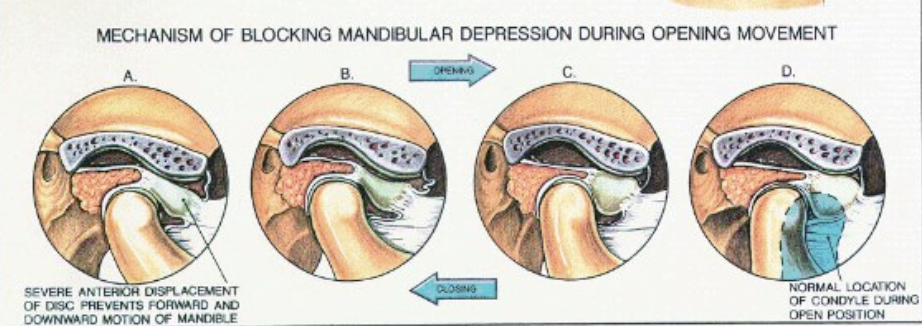
If there is a trigger point in the superior lateral pterygoid, it may cause the disc to sit anterior to the mandibular condyle. If this is the case, at rest, your mandibular condyle sits behind the disc and when you open your mouth it “clunks” as it repositions itself on the disc:
What makes my jaw crunch and crackle?
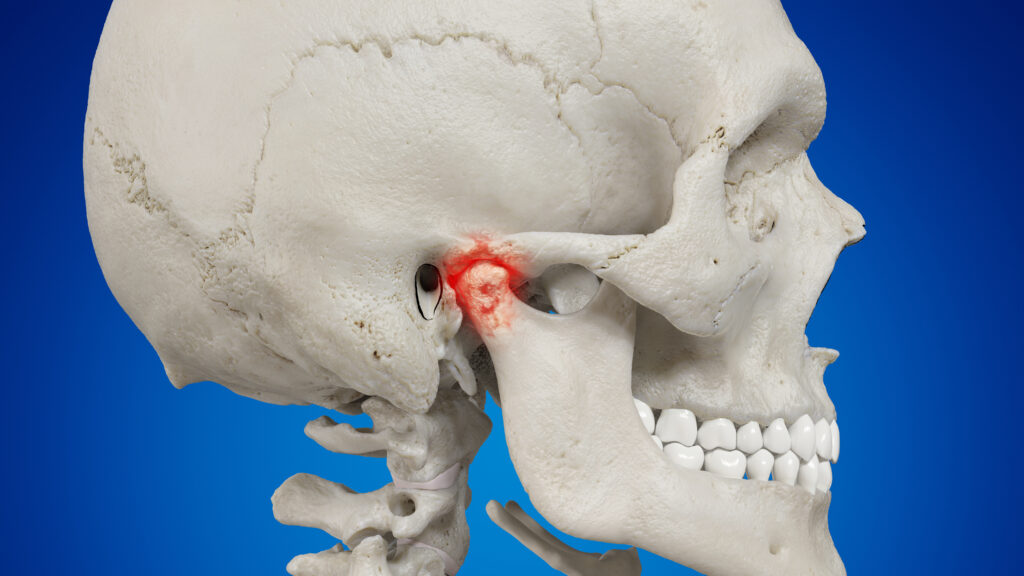
Just like any other synovial joint, the health of the articular cartilage is dependent on proper joint space. If surrounding muscles become tight, excessive joint compression occurs and over time osteoarthritis may form. Key muscles to consider:
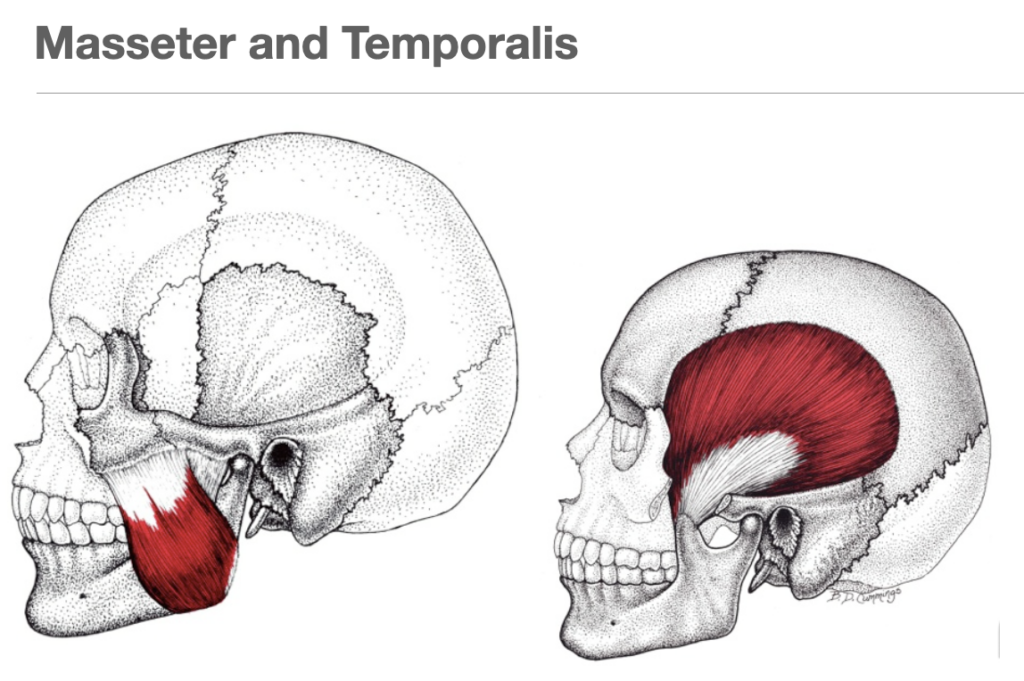
If you place your hands on your cheeks and bite down, you will feel the masseter muscle contract. If you place your hands on your temples (sides of your head) and bite down you will feel the temporalis muscle. These are the powerful muscles of mandibular elevation and are active when you chew or bite down. Trigger points in either one of these muscles will cause increased TMJ compression. Hint: if you grind your teeth at night, these muscles probably have trigger points.
Why does this matter?
A noisy jaw is a sign of increased TMJ compression or improper mechanics. TMJ pain may cause limitations in jaw opening, headache and face pain. But many TMJ problems don’t happen over night. So do the jaw opening test and fix what you find.
Because nobody has time to be in pain.
Until next time…
Kind Regards,
MoveWell Academy
[email protected]