
Kinesiology THURSDAY – Lumbar Radiculopathy from Opposite Hip Tightness
It’s easy for a clinician to get blinders on and focus just on the part of the body crying out in pain. If someone comes in with left knee pain, the assessment is largely on the left knee. If someone’s right shoulder hurts, we tend to test ROM and MMT of the rotator cuff and surrounding muscles.
But if you’ve been on this blog long enough, you realize the short-sightedness of that approach. For most cases, especially the ones with insidious onset, we should listen to where the pain is and then we should take our eyeballs and look somewhere else. The “why?” is usually nowhere near the “what?”.
Lumbar radiculopathy is a prime example. Pain on one side of the low back radiating into the leg is a result of nerve root compression. There are several potential sources of this:
- a herniated disk
- facet joint arthritis
- degenerative disc disease
- spinal stenosis
All of those contribute to a compromise of the tunnel the nerve root must pass through on its way down the leg.
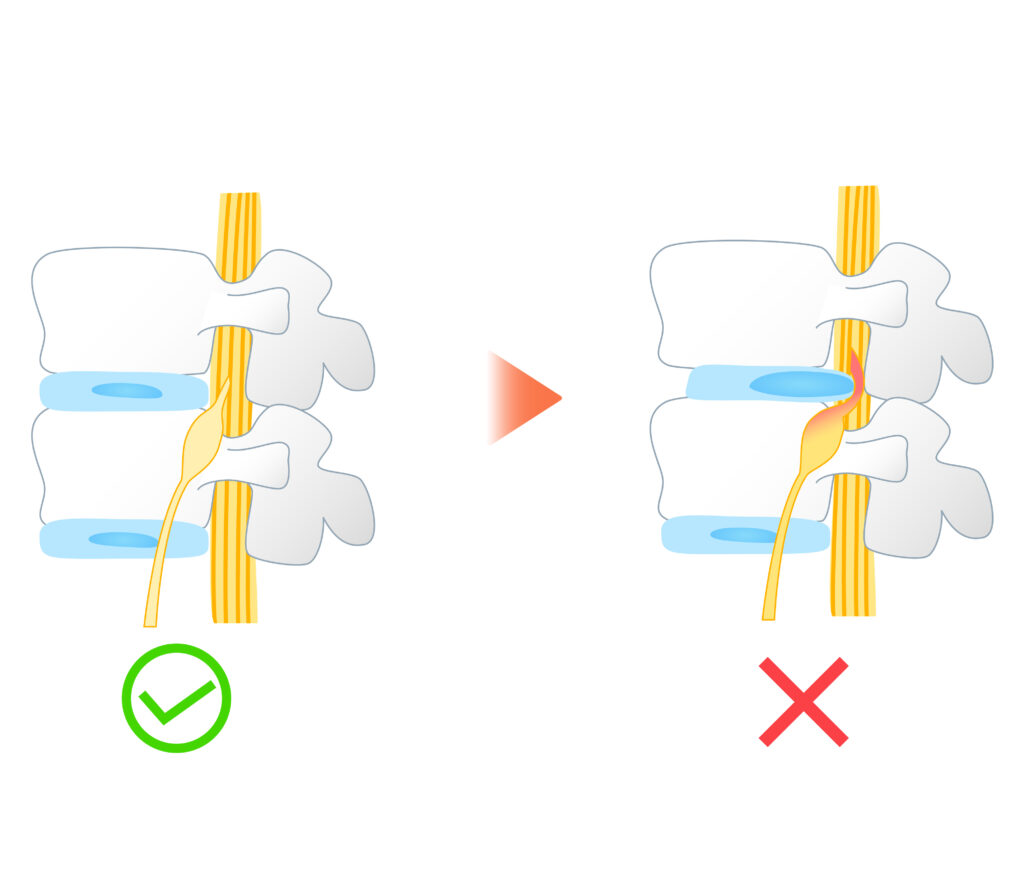
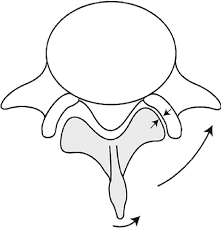
If you picture the motion segment at the top of the blog, you can envision how rotating to the left causes facet joint compression on the right. Take a look at this golfer:

He is rotating to the left, but you can see the compression on the right side of his low back. It wouldn’t be shocking if he came in with complaints or right lumbar pain and/or pain shooting down his right leg. But is this his right low back’s fault?
Look at his left leg. His left big toe is off the ground and his left knee is hyperextended. This prevents his left hip from fully rotating (which would load his gluteus maximus) and so you see his left hip adducting to try to make up for that. The result? Right lumbar compression.
A comprehensive evaluation would probably reveal:
- Decreased left subtalar joint eversion
- Decreased left hip internal rotation from tightness in the piriformis, posterior glute med, vastus lateralis, lateral gastrocnemius and adductor magnus
Why does this matter?
The golf swing is just an exaggeration of a rotational pattern used all throughout the day. Rotation to the left will naturally cause compression on the right lumbar region. Abnormal or limited rotation to the left will cause potential injury to the right lumbar nerve roots.
So, the next time someone comes in with lumbar radiculopathy, take your ears and listen to where the pain is and then take your eyeballs and look to the other side. You just might find the “why?’ behind the “what?”
Because nobody has time to be in pain.
Until next time…

Kind Regards,
MoveWell Academy
[email protected]