
Kinesiology THURSDAY – Clean Floors, Tired Backs: The Chore of Vacuuming
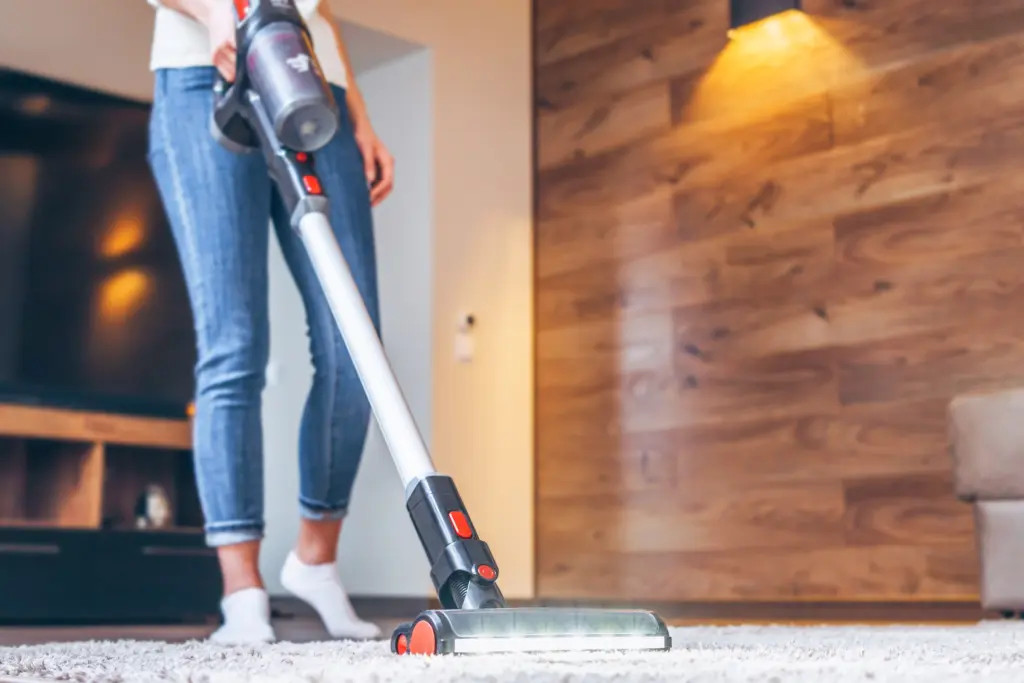
It seems like a simple task and the vacuums of today are much lighter than their predecessors, but vacuuming remains one of the most problematic movement patterns for people with lower back pain.
The repeated pushing, pulling, bending, and twisting involved in vacuuming create repetitive mechanical loading of the trunk, requiring continuous muscular stabilization. While the shoulders and arms perform most of the visible movement, the deep spinal stabilizers are quietly working behind the scenes. One of the most important of these muscles is the multifidus, which plays a key role in maintaining spinal stability during repetitive activities.
The Hidden Demands of Vacuuming
Every time you push a vacuum forward, your trunk must resist the tendency to bend forward. As you pull it backward, your muscles adjust to changing forces. Add in twisting around furniture, reaching under tables, and shifting your weight, and the spine experiences repeated loading in multiple directions.
These movements challenge the trunk through:
- Repetitive flexion and extension: Forward bending increases demand on the posterior spinal muscles.
- Trunk rotation: Twisting while vacuuming requires coordinated spinal stabilization.
- Asymmetrical loading: Using one arm repeatedly creates uneven muscular demands.
- Sustained postural control: Maintaining a working position requires ongoing muscular activity.
Although these forces may be relatively small, their repetition can contribute to muscular fatigue, especially during longer cleaning sessions.
Meet the Multifidus: Your Spine’s Deep Stabilizer
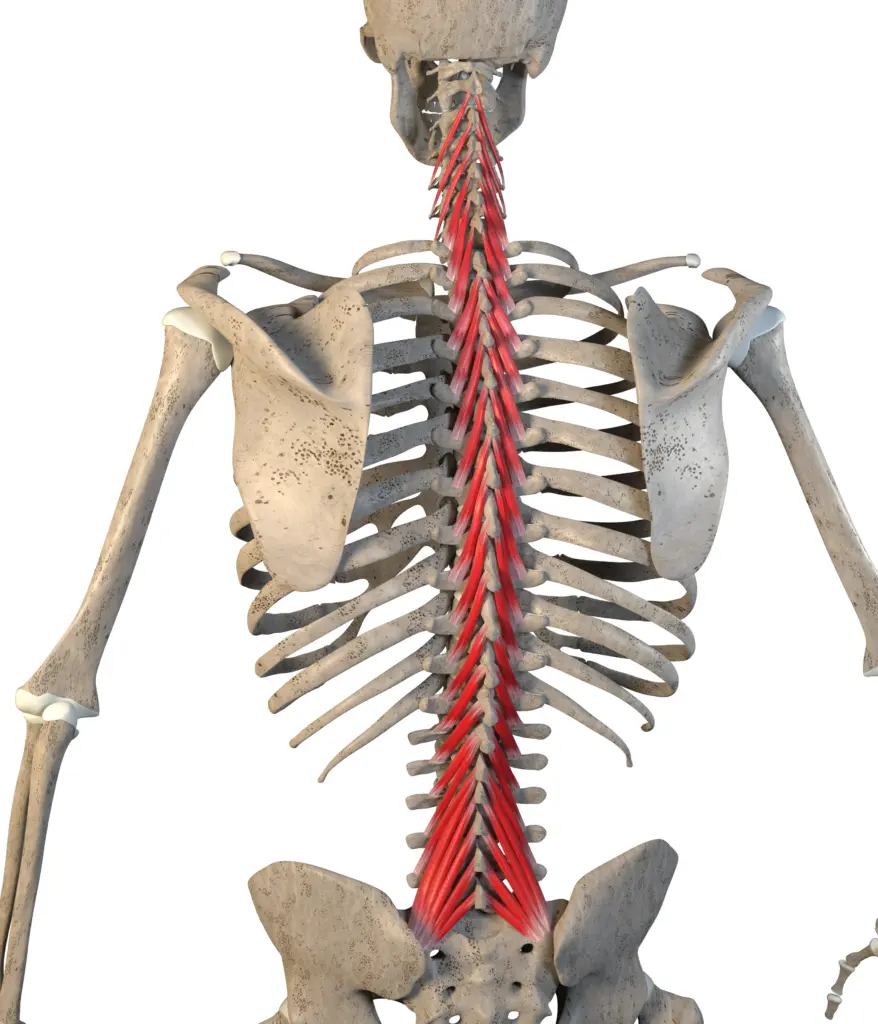
The multifidus is a deep muscle that runs along the spine and helps control movement between individual vertebrae. It is the only spinal stabilizer to extend to the sacrum. Unlike larger muscles that produce substantial trunk movement, the multifidus contributes to segmental stability, helping the spine respond to small changes in position and loading.
During vacuuming, the multifidus works alongside the transverse abdominis, obliques, erector spinae, and other trunk muscles to maintain spinal control while the larger muscles of the arms, hips and trunk produce the movement of the vacuum.
Let’s take a look at the functional synergists of the multifidus during vacuuming. Let’s say you hold the vacuum in your right hand. As you push the vacuum forward, that motion is decelerated by:
- Left hamstring (controls hip flexion)
- Left gluteus maximus (controls hip internal rotation)
- Right erector spinae (controls spinal rotation to the left)
- Left multifidus (controls spinal rotation to the left)
- Left external oblique (controls spinal rotation to the left)
- Right rhomboid (controls scapular protraction)
- Right triceps (controls shoulder flexion)
- Right biceps (controls elbow extension)
And once the vacuum is at its end point, all the muscles above work concentrically to pull the vacuum back. Their counterparts reverse the direction and it all starts over.
Push. Pull. Repeat.
Over time, repetitive loading may lead to muscular fatigue. But only if the larger muscles don’t come to play. When this occurs, movement patterns can change, potentially increasing reliance on smaller muscles like the multifidus or altering how forces are distributed through the spine.
Why Does This Matter for Lower-Back Pain?
Research has identified changes in multifidus muscle size, composition, and activation in some individuals with low-back pain. When the deep stabilizing system has reduced endurance or altered coordination, repetitive activities like vacuuming may become more challenging.
Research has also identified reduced hip extensor and gluteal weakness in person with chronic lower back pain.
Eliminating back pain with repetitive rotation involves a two-step approach:
- Increase spinal stabilization with multifidus strengthening
- Ensure ground reaction forces are being dissipated by the larger muscles of the hips and trunk to prevent overload to the smaller muscles
How Can You Reduce Trunk Strain While Vacuuming?
A few simple adjustments can help distribute the workload more efficiently:
- Keep the vacuum close. Avoid excessive reaching that increases the mechanical demand on your lower back.
- Use a staggered stance. Shift your weight through your legs rather than repeatedly bending through your spine.
- Change positions frequently. Movement variability can help prevent prolonged loading of the same tissues.
- Build trunk endurance. Exercises such as bird dogs, side planks, and controlled quadruped movements can help strengthen the spinal stabilizing system.
- Wake up your glutes. Squats, lunges, lateral low rows and step-ups can help activate the largest powerhouse of your body
Why does this matter?
Vacuuming is just one example of repetitive trunk loading in everyday life. Sweeping, mopping, gardening, and even certain occupational tasks place similar demands on the spine.
The multifidus may be small and largely hidden, but its role in segmental spinal control is significant.
The takeaway? Spinal health isn’t just about avoiding heavy lifting or maintaining perfect posture. It’s also about developing the strength, endurance, and coordination needed to manage the smaller, repetitive forces we encounter every day.
So the next time you vacuum, remember: you’re not just cleaning your floors—you’re giving your spinal stabilizers a workout!
Consider the multifidus and all its functional synergists. And maybe you’ll bring some joy to the chore. Wake up the muscles that might be weak.

Because nobody has time to be in pain.
Until next time…
Kind Regards,
MoveWell Academy
[email protected]