Anatomy TUESDAY – Palpation Series (Part 3) – Shoulder Palpation (continued)
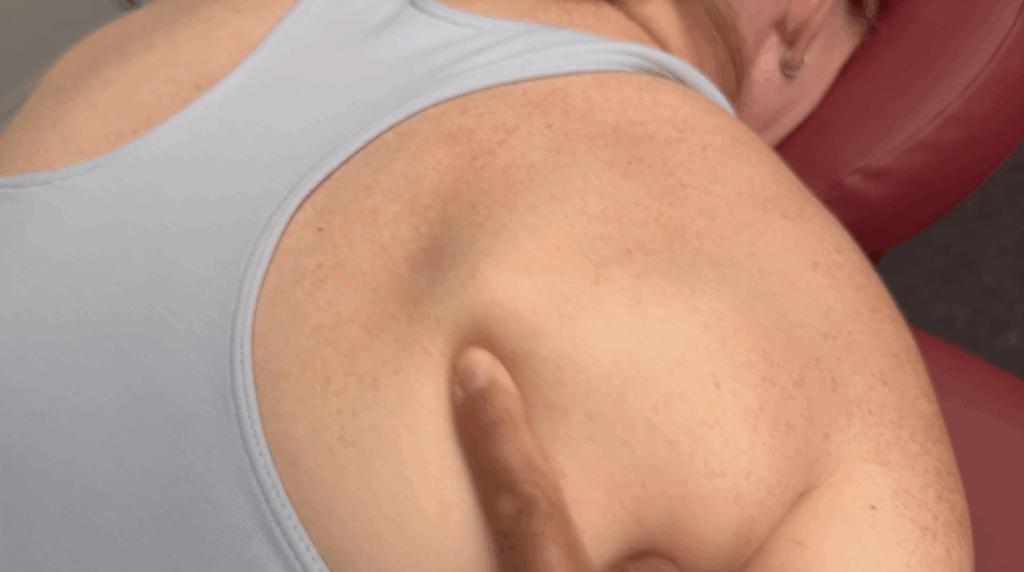
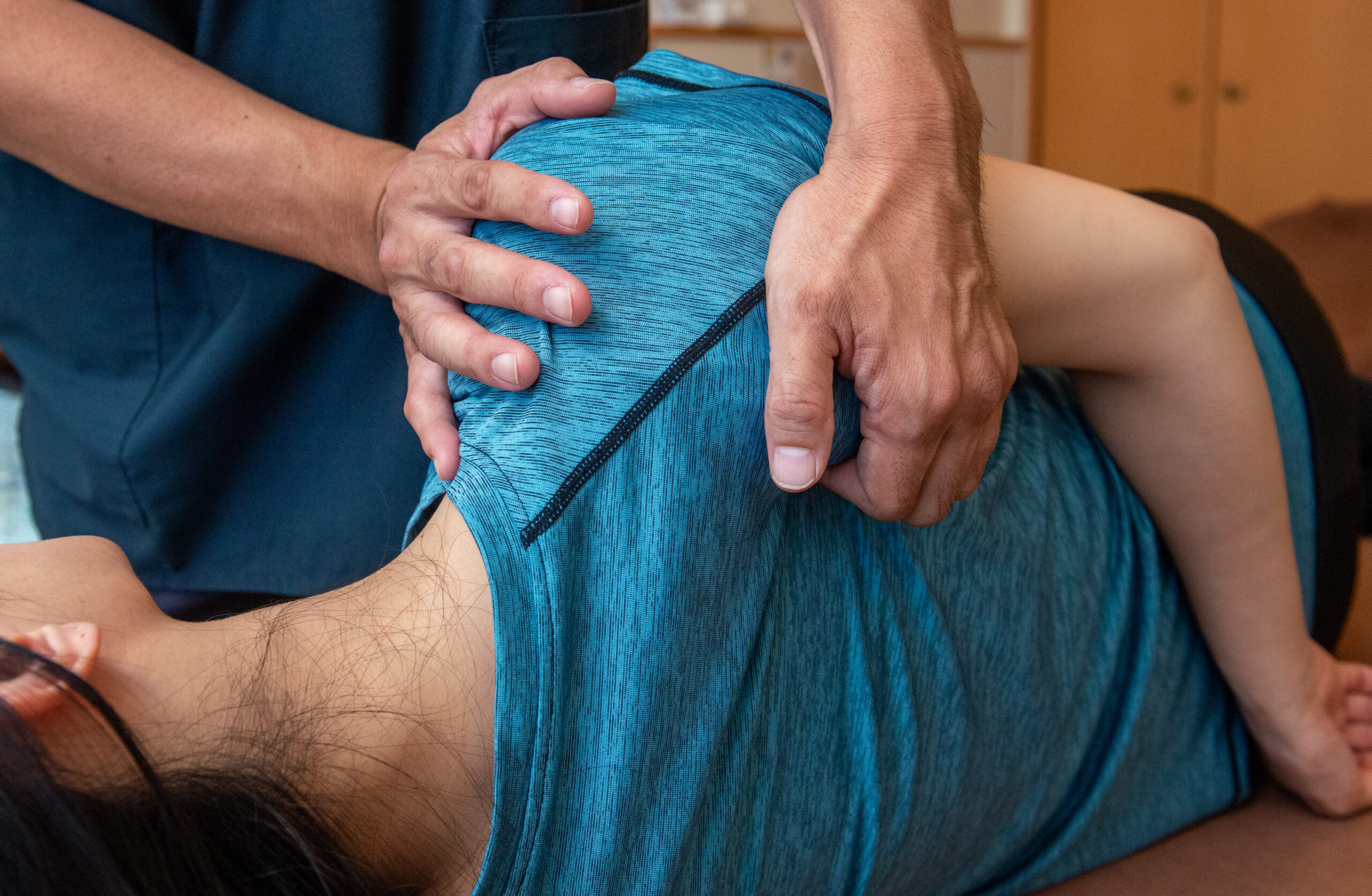
Palpating the perimeter of the scapula can lead to valuable information on scapular position that may affect shoulder function. You’re going to have to find a friend to be your lab partner on this one. Check out this picture:
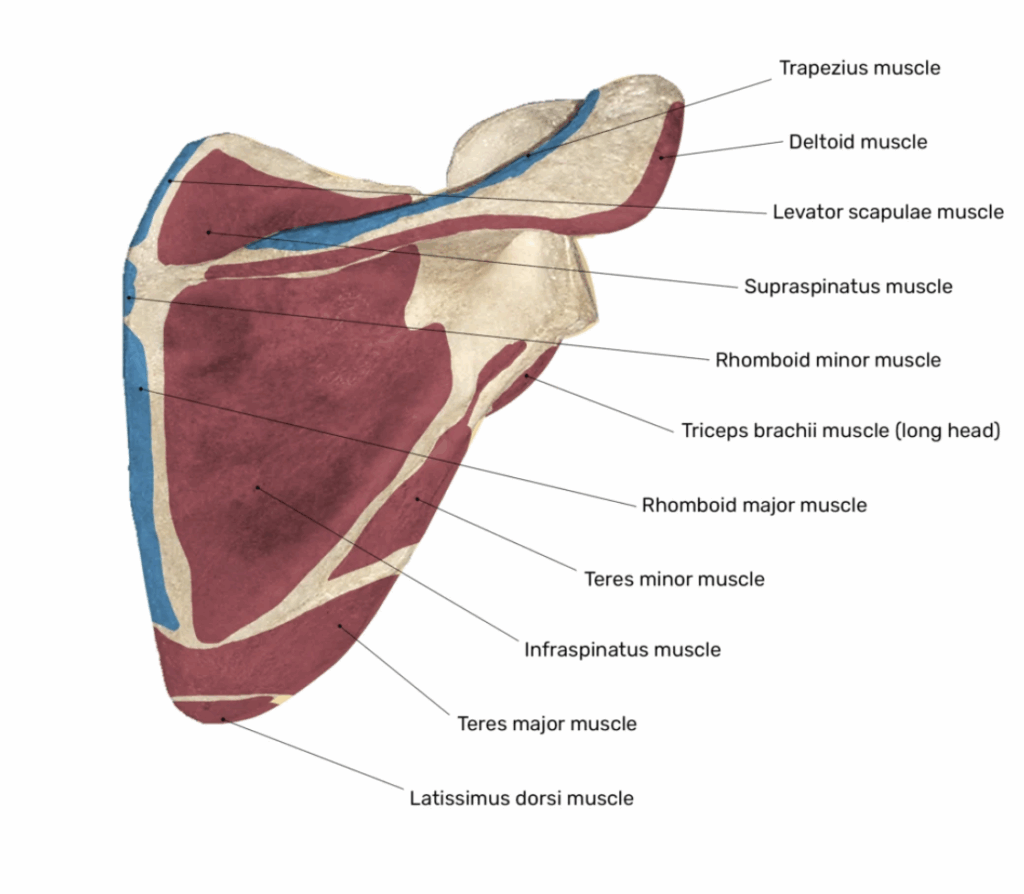
There are many muscles that attach to the posterior aspect of the scapula. Follow along with this video to help you identify key palpation points. Here is a list of some things to observe about the most common tender points on the scapula:
- On the medial border, levator scapula (superior portion) is commonly tender due to tightness of this muscle. It elevates and downwardly rotates the scapula, but if it is tender it is usually due to scapular elevation. How do you know? The upper trapezius is usually tender as well.
- On the lateral border, teres major and lat dorsi on and near the inferior angle usually exhibit tightness (tenderness). These muscles are internal rotators of the humerus, a common postural position in patients with rotator cuff tendonitis or impingement.
- The infraspinatus muscle belly located in the infraspinous fossa has three potential trigger points, one in each corner of the triangular muscle. The most common one is at the inferior angle. At this point, the muscle runs in a diagonal fashion up towards the humerus, making it an upward rotator of the scapula. How do you know? The upper trapezius is usually tender as well.
A great massage technique:
With the person in prone or side lying, passively elevate the arm and apply pressure to the lateral border of the scapula with the heel of your hand as you massage from superior to inferior like this. Think to yourself “tricep long head, teres minor, teres major, lat dorsi” as you move your hand along the lateral border. Use moderate pressure and you will find some key trigger points, most of which indicate an upwardly rotated scapula or internally rotated humerus.
A couple of interesting things:
Palpate the inferior and superior border of the spine of the scapula. Notice the upper trapezius tendon is on the superior border and the posterior deltoid tendon is on the inferior border. Releasing the fascia in this area may also relieve shoulder pain with arm elevation.
Why does this matter?
Understanding the muscles that attach to the scapula may hold the keys to restoring pain-free arm elevation. Releasing the fascia of these muscles is a simple but effective technique that should be added to your treatment tool box. Get comfortable with identifying the muscles of the scapula.
Because nobody has time to be in pain.
Until next time…

Kind Regards,
MoveWell Academy
[email protected]