

Anatomy TUESDAY – Tonic v. Phasic Muscles – Part 2 – Pec minor v. Rhomboids

This stretch is one of the most common shoulder stretches performed, elongating the rhomboid and posterior deltoid. In our study of tonic v. phasic muscles, let’s take a look at if this stretch is even important.
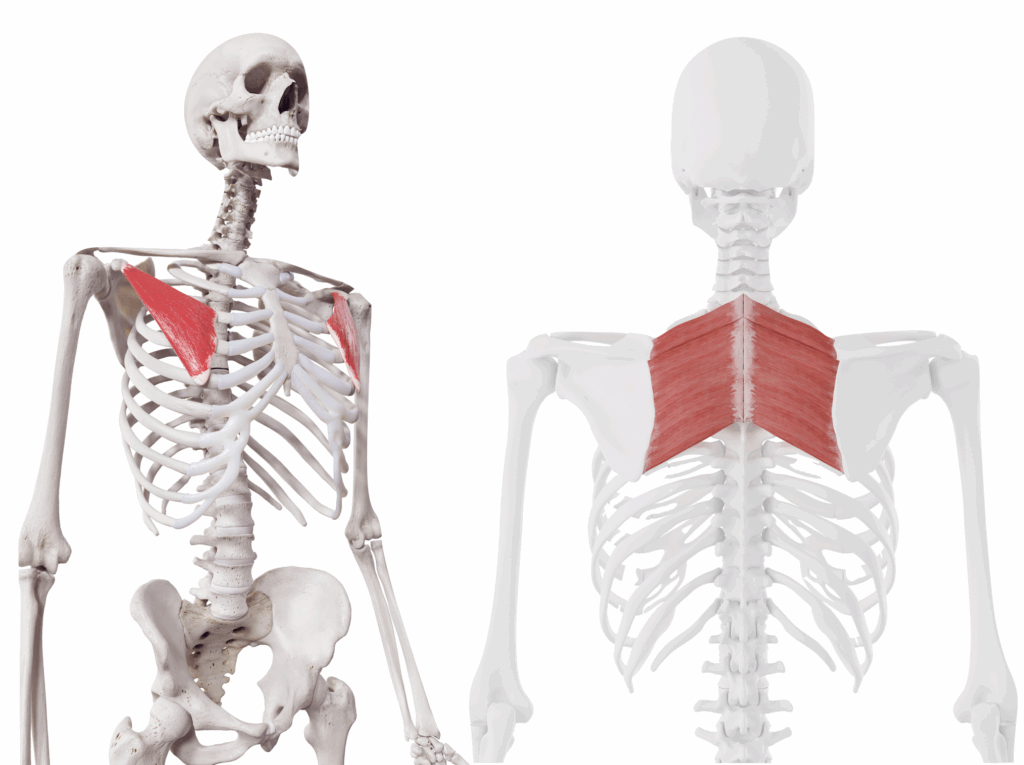
Pec minor is largely tonic and prone to tightness. It’s role is to protract the scapula. Rhomboids are predominantly phasic muscles, prone to inhibition. Their role is to retract the scapula. Both muscles perform downward rotation. In the ever constant battle against gravity, we see the tonic pecs overriding the weaker rhomboids. Sitting, working at a computer or even engaging in common exercises, our activities tend to move us into a slouched position.

In the picture on the right, pec minor is short and tight (tonic) and the rhomboids are long and weak (phasic). So in most cases, the most popular shoulder stretch really isn’t needed. We shouldn’t be stretching long/weak muscles. What should be the most important shoulder stretch is this:

Stretching of the often tight pectoralis major and minor using a door jamb might be the best thing you do for your shoulders today. One 30-second hold is all you need.
Why does this matter?
Stretching everything just to stretch is not only unnecessary but may feed into abnormal movement patterns. By respecting the physiology of tonic v. phasic muscles, you can maximize the time and effectiveness of your exercise programs. In the case of rhomboid v. pec minor, one should:
- Stretch pecs FIRST (doorway stretch, foam roll angels)
- Activate rhomboids (dumbbell bent over row, mid pulley row, reverse dumbbell flys)
Stretch the tight thing (tonic). Strengthen the weak thing (phasic).
Because nobody has time to be in pain.
Until next time…
Kind Regards,
MoveWell Academy
[email protected]