Kinesiology THURSDAY – 8 Hardest Moves After 60 – Reactive Balance
The One Skill That Prevents Most Falls (And Almost No One Trains It)
Most people think falls happen because of weakness. But that’s not usually the case.
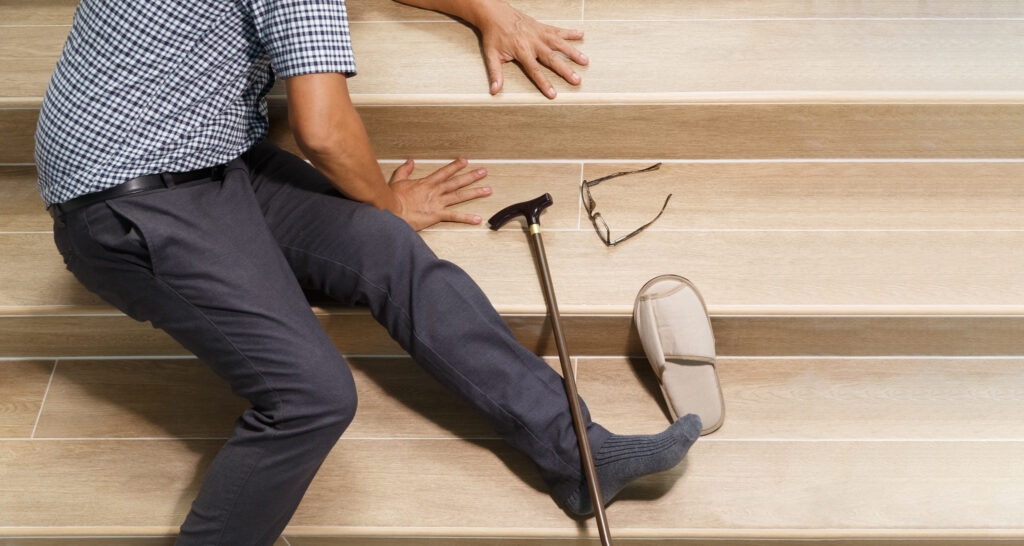
Many falls happen because the body cannot react quickly enough to recover balance after a stumble, slip, or unexpected movement. The ability to catch yourself when you trip—what researchers call reactive balance—may be one of the most important physical skills we have as we age. Yet it is also one of the least practiced.
Think about the last time you stumbled. You probably didn’t stop and carefully think about what to do. Your body reacted automatically. Your foot moved. Your arms reached out. Your muscles fired in a split second to prevent you from falling. These rapid reactions occur without conscious thought, and they depend on a complex system involving strength, balance, coordination, vision, and the nervous system.
When we are younger, these reactions happen almost instantly. As we age, however, the process often slows. Reaction times become longer. Muscles may not respond as quickly. Balance recovery becomes less automatic. As a result, a minor trip that would have been easily corrected years ago can suddenly become a serious fall.
Kinesiology of Reactive Balance
Almost all reactive balance requires two skills:
- Cross-reaching – reaching with your right hand to your left side and vice versa
- Cross-stepping – stepping your right foot towards your left and vice versa
That’s it.
Hands On Techniques to Improve Reactive Balance
If you want to help your patients improve balance, you must help them improve rotation.
- Thoracic sequence
- Subtalar joint eversion mobilization
- Release trigger points in the tibialis posterior and medial gastrocnemius
- Release trigger points in the posterior gluteus medius
- Release trigger points in the vastus lateralis
Real World Exercise to Improve Reactive Balance
- Standing cross reach – Stand in front of a countertop. Reach across your body with your right hand to touch the countertop to the left side. Return to the starting position and then reach across your body your left hand to touch the countertop on the right side. Notice when you reach to the right, you shift your weight slightly to your right leg. Perform as many repetitions as you can in 10 seconds.
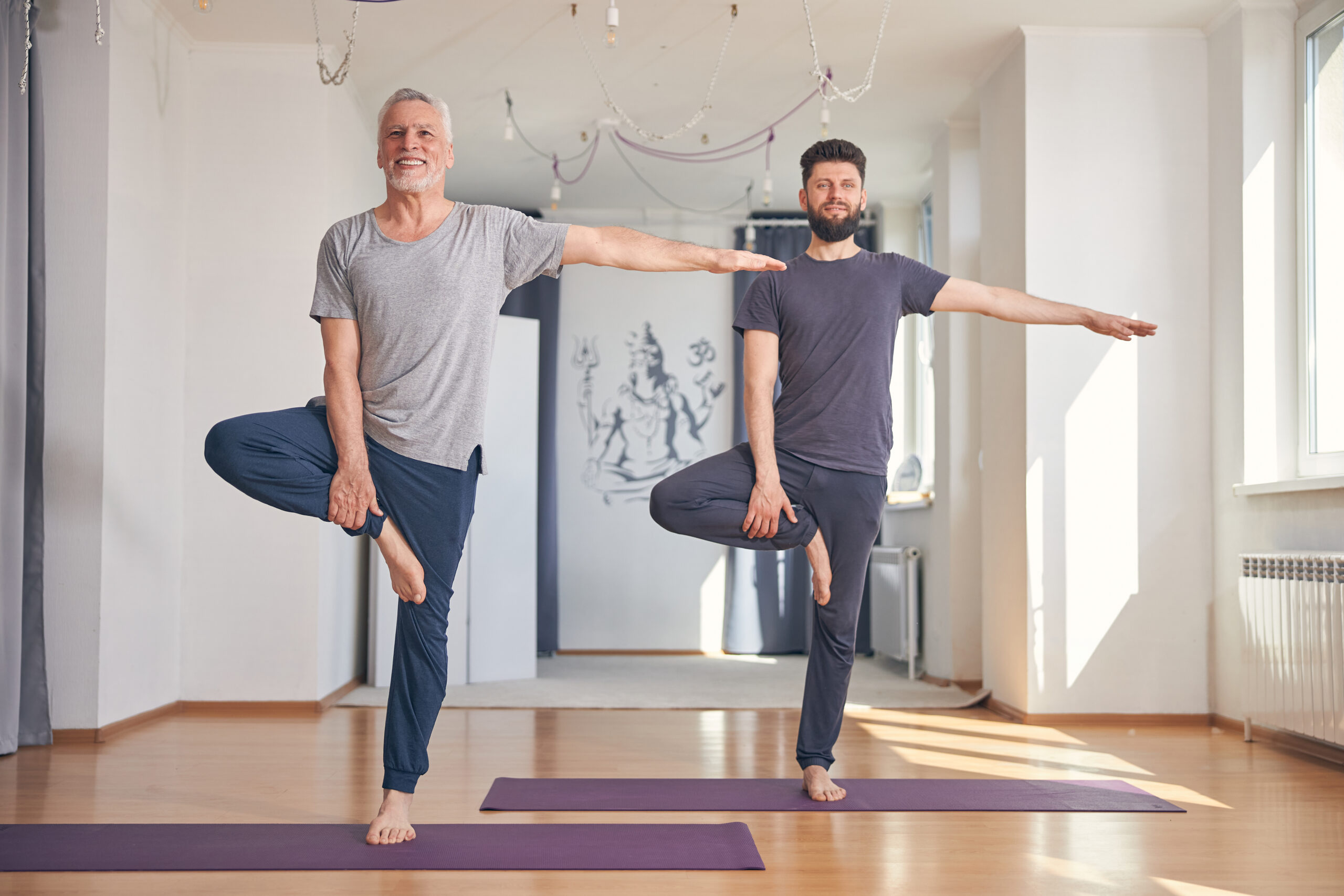
- Perform #1 while standing on one leg
- Cross stepping – Stand with your feet hip width apart. Step your right foot forward and to the left. Return to the starting position. Then step your left foot forward and to the right.
Weekly Goal
Put on some music with a good beat. Practice cross-reaching and cross stepping for one song. (Or at least one verse). Have fun!
Why does this matter?
The real value of reactive balance extends far beyond preventing falls. It influences confidence. People who trust their ability to recover from a stumble tend to move more freely, stay more active, and engage more fully in life. Those who fear falling often become cautious, limit their activities, and gradually move less. Unfortunately, reduced movement often leads to further weakness and balance decline, creating a cycle that can be difficult to break.
That is why this movement is such a fitting conclusion to our series. Getting up from a chair, balancing on one leg, walking, climbing stairs, turning, reaching overhead, and getting up from the floor are all important. But the ability to recover when something unexpected happens may be the skill that ties them all together.
As we’ve explored throughout this series, healthy aging is not about preserving athletic performance. It is about maintaining the movements that allow us to live independently, confidently, and fully. The goal is not perfection. The goal is preserving the freedom to move through the world with confidence.
Because in the end, the most important movement is not the one you perform when everything goes according to plan.
It’s the one that helps you recover when it doesn’t.
Until next time…
Kind Regards,
MoveWell Academy
[email protected]