
Kinesiology THURSDAY – 8 Hardest Moves After 60 – Walking

Most people don’t notice it at first because walking feels automatic. You’ve been doing it your entire life, so it’s easy to assume it will always stay the same. But then little things begin to change: you walk more slowly, uneven ground feels less comfortable, you watch your footing more carefully, crowded spaces feel stressful and you avoid long walks you once enjoyed.
Most people think this is “just aging.” But walking well is actually a highly complex skill—and one that can absolutely be maintained.
Kinesiology of Walking (Walk THIS Way)
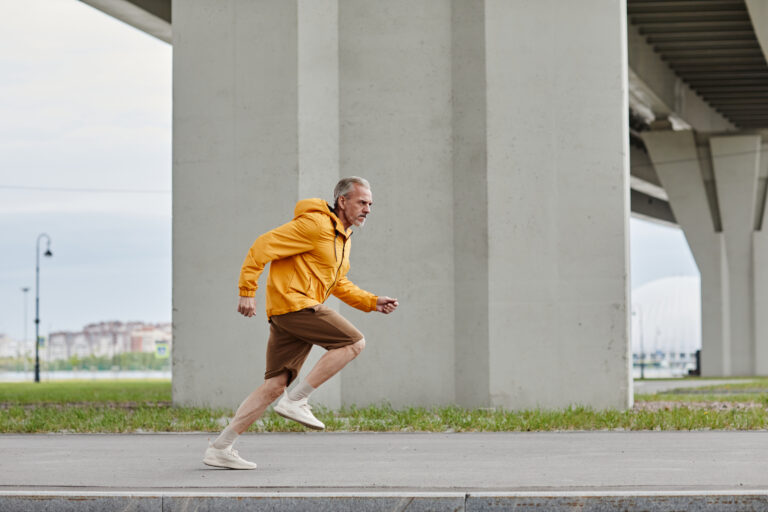
A healthy normal walk requires several things:
- Your feet should only be 2-4 inches apart
- Your toes should be pointed straight ahead
- Your arms should swing opposite to your legs (Hint: Doing #1 and #2 will make this happen naturally)
- Your knees should be unlocked (slightly bent)
- Your heel should strike on the lateral side (outside of the heel) BUT
- You should push off the ball of the big toe (that’s why the big toe is big)
These six things make it so your walk is smooth and balanced. Performing these requires: subtalar joint eversion, ankle dorsiflexion, knee flexion, hip internal rotation and trunk rotation.
Note: Walking this way also activates your core, tightening your abdominal muscles and flattens your belly. (Walking with a wide base of support, toes turned out and arms not swinging doesn’t.)
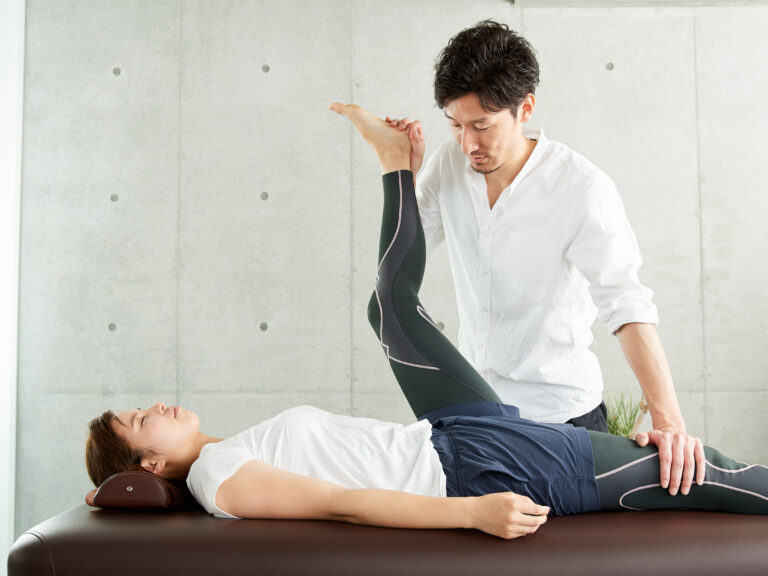
Hands-On Techniques to Improve Walking
If you want to help your patients walk more efficiently, perform the following:
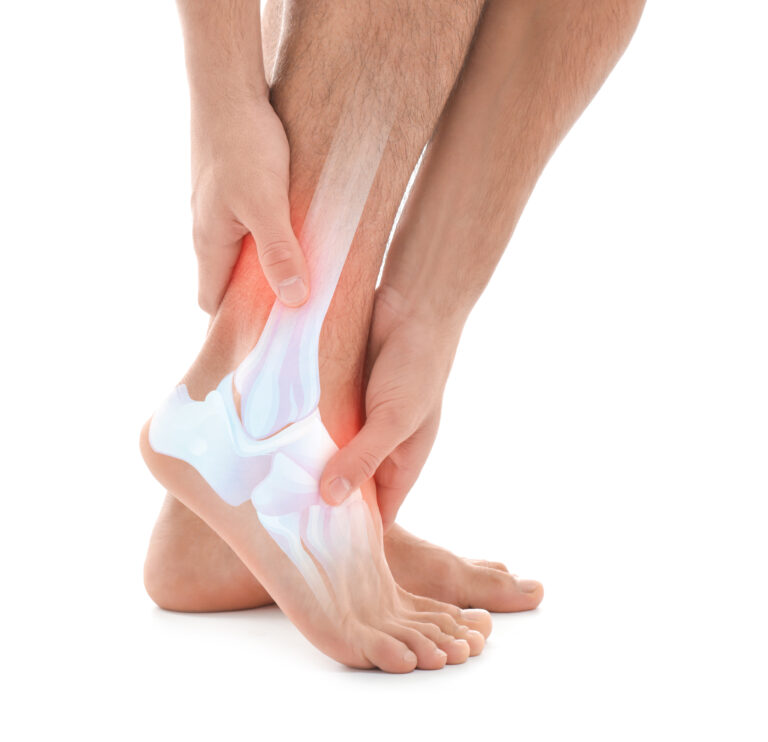
- Mobilize the subtalar joint (eversion) and talocrural joint (dorsiflexion)
- Mobilize the tarsal bones and release the plantar fascia
- Release trigger points in the posterior tibialis (medial lower leg) and medial gastrocnemius (THIS IS HUGE)
- Release trigger points in the vastus lateralis and adductors
- Release trigger points in the psoas major (especially if walking results in lower back pain)
- Release trigger points in the piriformis and posterior gluteus medius
Real World Exercise
- Stride stance walkers arms – Step one foot forward a normal stride length, keeping your stride width 2-4” apart. (If you place a place a strip of duct tape on the floor, your feet should be just on either side of the tape). Bend your elbows to 90 degrees and swing your arms back and forth as if you are walking. Perform 20 repetitions. Repeat with the other foot in front.
- Heel-toe walking with high knee marching – Find the longest hallway in your house and take 10-20 SLOW steps in this manner.
- Side stepping – Step sideways in both directions. Keep your toes pointed straight ahead and knees unlocked.
- Carioca walking – Cross one foot in front of the other and then cross the same foot behind the other as you step sideways
- Cadence walking – Practice walking to a metronome (you can download a free one on your phone). The goal is 100-120 steps per minute. Start slowly and work your way up to this speed, remembering to keep good form.
Weekly Goal: Walk for 20 minutes a day. Perform the exercises above for balance and coordination 2-3 times per week. It doesn’t need to be intense. It just needs to be consistent.
Why does this matter?
Walking isn’t just exercise. It’s freedom. It determines whether you can travel comfortably, shop independently, enjoy vacations and move through the world confidently. When walking declines, life begins to shrink. You stay home more, avoid outings and move less. And less movement leads to faster decline.
Walking well is one of the clearest signs that the body is aging with strength instead of simply aging. And the earlier you protect it, the longer you keep it. So put on your shoes and learn how to walk. In less than 30 minutes a day, you can take simple steps to expand your world.
Next, we’ll look at a movement that quietly becomes one of the biggest obstacles to independence: stepping up. Stairs, curbs, and slopes require far more strength and balance than most people realize. I hope you join me.
Because nobody has time to be in pain.
Until next time…

Kind Regards,
MoveWell Academy
[email protected]