
Kinesiology THURSDAY- Total Hip Replacement
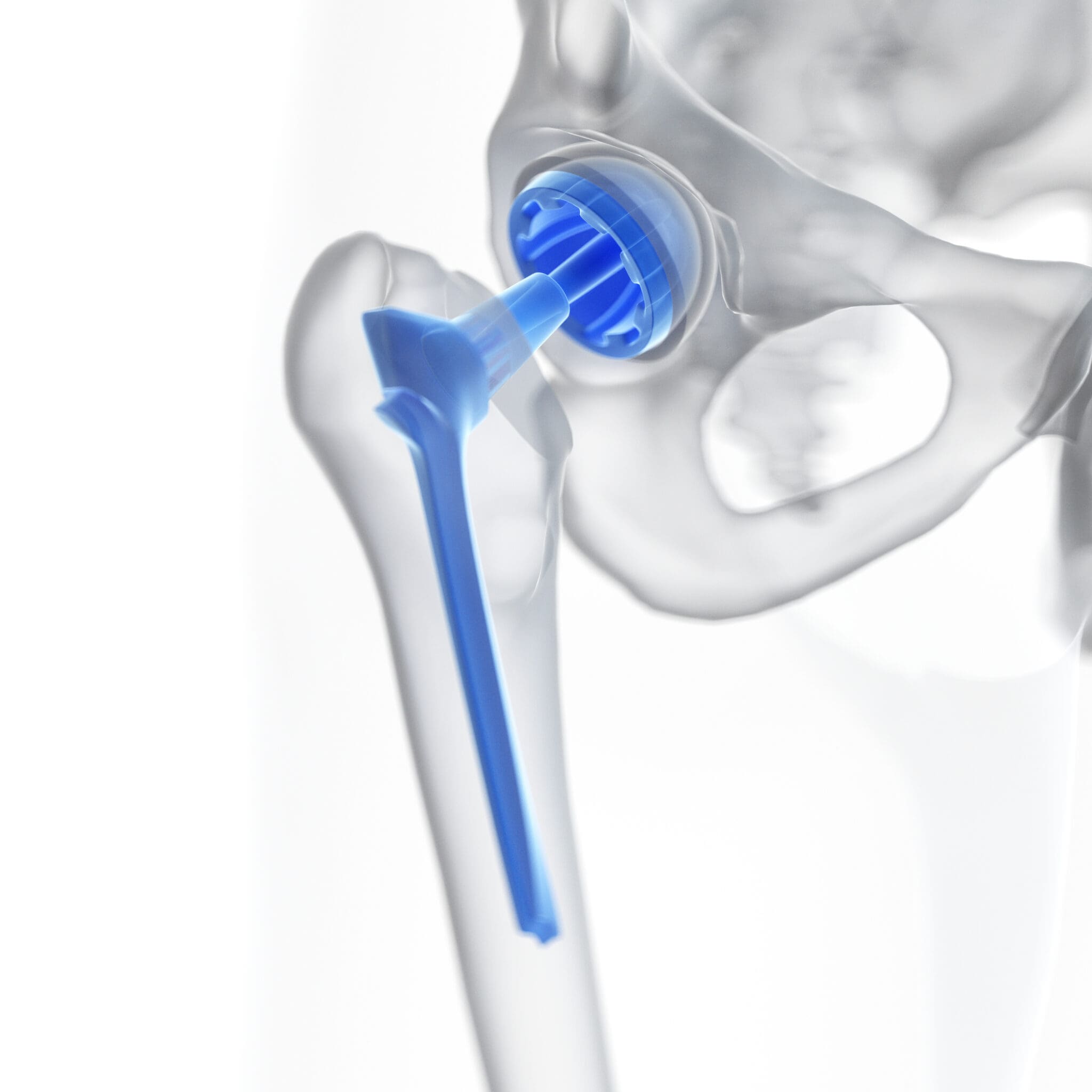
544,000. That’s the number of total hip replacements performed in the US every year. It is also one of the most successful orthopedic procedures performed, with an average dislocation rate over 6 years being 2.1% according to a meta-analysis of 125 studies. That’s pretty good odds.
Patients are often given three precautions, lasting from 6-12 weeks after surgery: no hip flexion past 90 degrees, no adduction past neutral and no internal rotation. These rules are put into place to prevent dislocation of the hip, but those rules are broken all the time without dislocation.
The first time we teach someone to go from sitting in a chair to standing, they have broken the first rule. When they stand and open a door, they likely have internally rotated their hip if the involved leg is in front. And if they reach up to grab something off a high shelf, they probably have adducted their hip past neutral.
The rule breakers are usually the innovators, after all. How can we understand these precautions? It is interesting to note that the movements that are prohibited are also the ones that, if performed in standing, would activate the most important muscles of the hip, the gluteus maximus, the gluteus medius and the deep six external rotators (piriformis, obturator internus/externus, superior and inferior gemelli and quadratus femoris). Muscles are activated when they are eccentrically loaded in a slight stretch That means in order to load the gluteus maximus, the hip must flex. To load the gluteus medius, the hip must adduct. And to load the deep external rotators, the hip must internally rotate. We could argue that breaking the precautions in weight bearing is likely the best way to prevent dislocation of the hip.
Would I perform passive, aggressive stretching of the hip in the prohibited positions?Likely not. Moving the hip in those directions without the protection of active eccentric muscle contractions may not be the safest thing in certain circumstances. But if you read the literature, you will be hard pressed to find dislocation occurring due to passive stretching.
So how can we know if a hip is at risk of dislocation? We have apprehension tests for patellar dislocation and shoulder dislocation and the thing they have in common is when a joint is pushed towards the direction of instability, the patient feels a sense of apprehension. That might be a great indicator for if a hip is feeling unstable.
But if your patient opens the door to the clinic, sits down in a chair and then stands up to greet you without a sense of apprehension, chances are you are safe to explore hip flexion past 90, adduction past neutral and internal rotation.
One final note. The best fall prevention strategies include the ability to cross step and cross reach. Sometimes breaking the rules is the safest thing to do.
One more note (because apparently I have a lot to say about this): Prohibiting the hip from performing these actions will require those movements to occur somewhere else. All of my patients with lumbar radiculopathy or idiopathic knee pain have some limitation in hip flexion, adduction or internal rotation. Hmm…
Conventional thinking says: Avoid hip flexion past 90 degrees, adduction past neutral and internal rotation for 6-12 weeks after a total hip replacement.
Real World Thinking says: Do your patients a favor and teach them to stand and move in these directions as soon as possible to create the safest environment for healing and recovery and to prevent falls. They probably have already started anyway.
Here’s what we do with our patients who have had total hip replacement.
Because nobody has time to be in pain.
Until next time…