Muscle Minute TUESDAY – Meet the Soleus
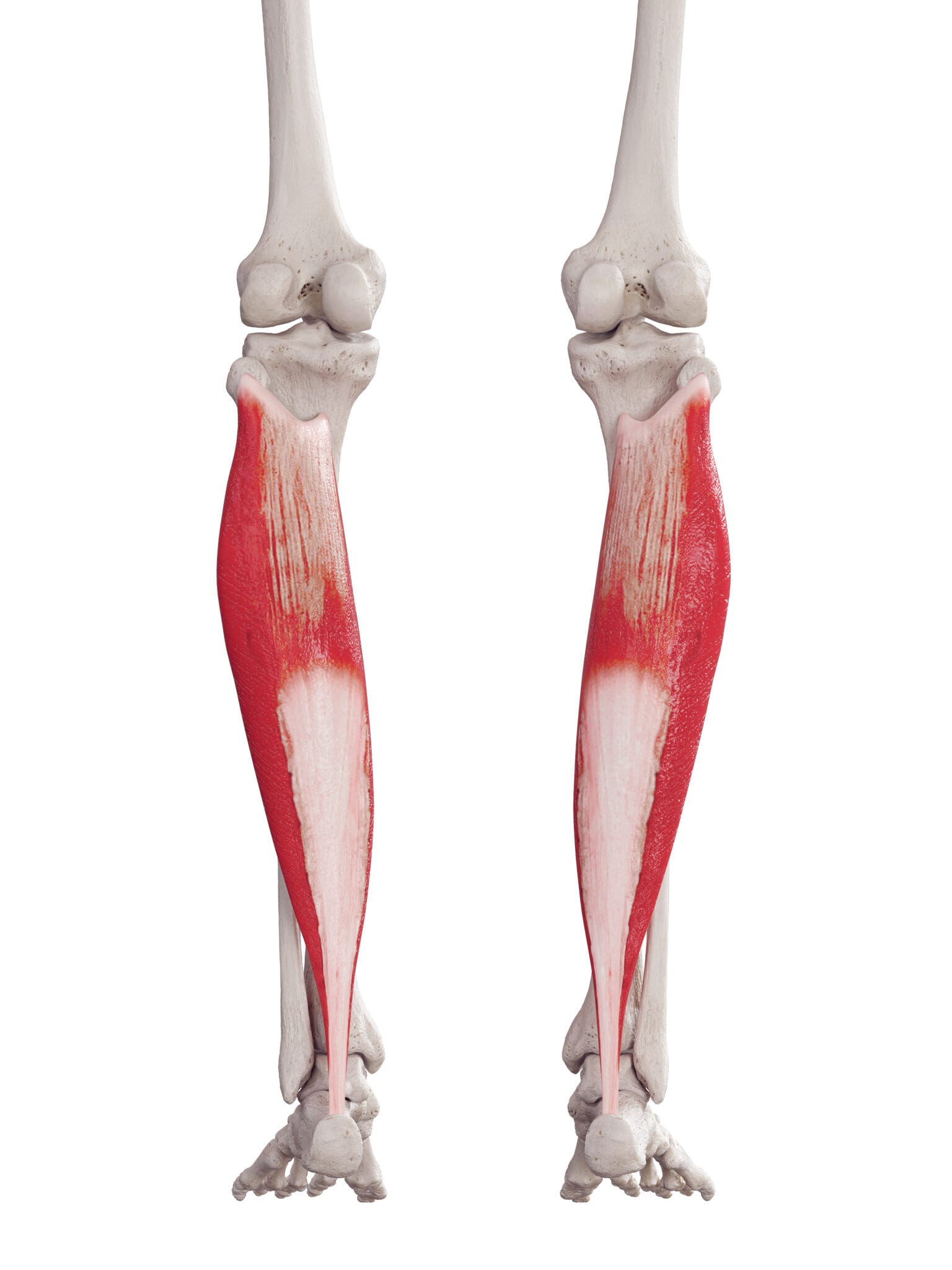
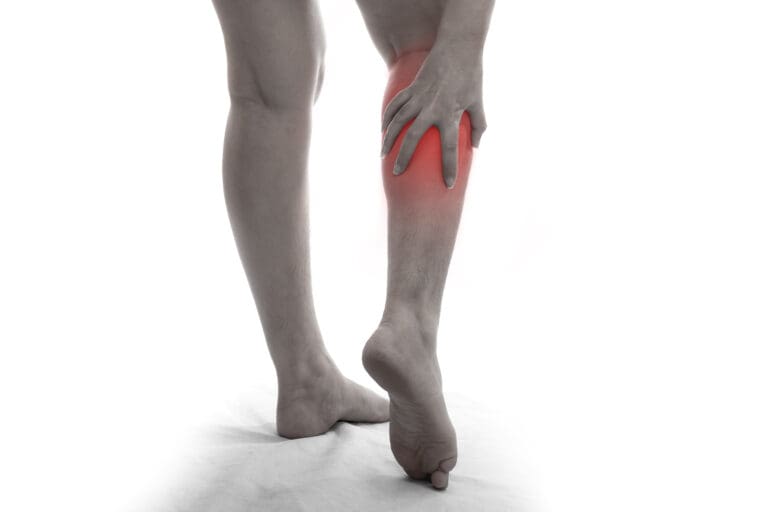
The soleus is an often forgotten calf muscle as it lies underneath the more powerful and visible gastrocnemius, but it should be considered, as trigger points in this muscle may mimic Achilles tendonitis, plantar fasciitis and sacroiliac joint pain. Intrigued? Let’s dive in…
| Origin | fibula and soleal line (tibia) |
| Insertion | Achilles tendon (calcaneus) |
| Action | plantarflexion AND deceleration of dorsiflexion and knee flexion |
| Innervation | tibial n. (L5-S2) |
| Antagonists | tibialis anterior, quadricep |
The Real World Soleus
It isn’t uncommon to see two muscles that appear to do the same job with slightly different focus and that goes for the gastrocnemius and soleus. Both are plantarflexors and decelerators of dorsiflexion, but that is where the similarities end. The soleus attaches below the knee, making it a decelerator of knee flexion during functional activities. This means it is a functional synergist to the quadricep muscle. (The gastrocnemius attaches above the knee making it a decelerator of knee extension during gait.)
The soleus is largely comprised of slow twitch fibers, making it a postural and endurance muscle, versus the fast-twitch, powerful action of the gastrocnemius. The soleus tends to get injured in endurance athletes, later in the season or later in a game. It tends to present as calf tightness, stiffness and pain that worsens gradually over time. Research shows soleus injuries are more prevalent than gastrocnemius injuries in Australian football players.
But one of the most intriguing things is the trigger point referral pattern of the soleus.
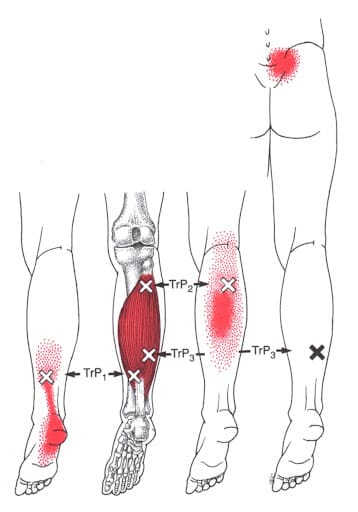
Trigger points in the medial soleus mimic Achilles tendonitis and plantar fasciitis while lateral soleus trigger points mimic sacroiliac joint pain. What shortens this muscle? A posteriorly displaced fibular head, commonly seen in over supinators.
Why does this matter?
- If someone complains of heel pain, check the soleus for trigger points (over supinator)
- If someone complains of SI joint pain, check the soleus for trigger points (over supinator)
- If someone strains the soleus, check for a weak quad as one of its primary functions is to decelerate knee flexion. (over pronator)
- The risk factors for a soleus strain: player age and previous calf or lower extremity injury (quad, hamstring, knee). Usually after injury, people tend to over supinate, even after the pain of the original injury has subsided.
Conventional thinking says: The soleus muscle plantarflexes the foot
Real World Thinking says: The soleus muscle is a synergist to the quadricep and is prone to injury if the quads are weak. It is an endurance muscle and should be trained as one (high repetition sets). Trigger points in this muscle may mimic pain above (SI joint) and below (Achilles).
The soleus…a muscle to ponder.
Because nobody has time to be in pain.
Until next time…
Kind Regards,
MoveWell Academy
[email protected]