Kinesiology THURSDAY – Deciphering Heel Pain
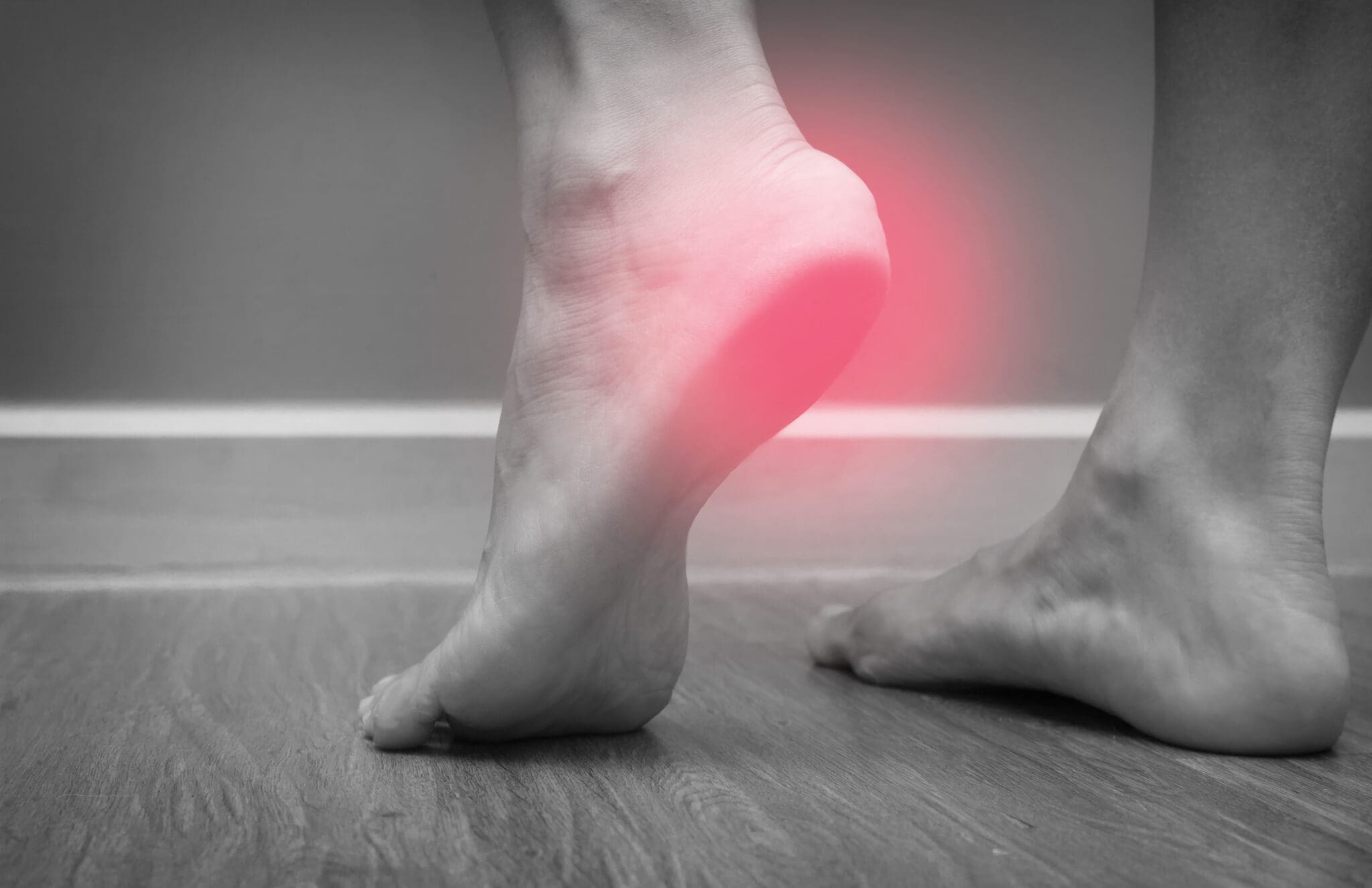
Heel pain is often diagnosed as plantar fasciitis. However, there are several other common sources for heel pain, such as calcaneal fat pad irritation and S1, S2 radiculitis. Below is a contrast of plantar fasciitis v. calcaneal fat pad irritation from a biomechanical and treatment perspective. Though subjective reports of pain may be similar, the biomechanical causes and treatment are quite different.
Plantar fasciitis is often seen in people who tend to over pronate or roll to the inside of their foot. Some signs you may be an over pronator:
- You wear out your shoes on the inside of the heel or forefoot
- Your knees fall in when you squat
- You tend to walk with your toes pointed out
Pain will usually be present with your first steps in the morning, ease up as you take a few steps and “warm-up” and then increase in the evening hours or after you have been on your feet for a long time. Tenderness is often noted on the medial calcaneal tubercle, the point of attachment of the plantar fascia.
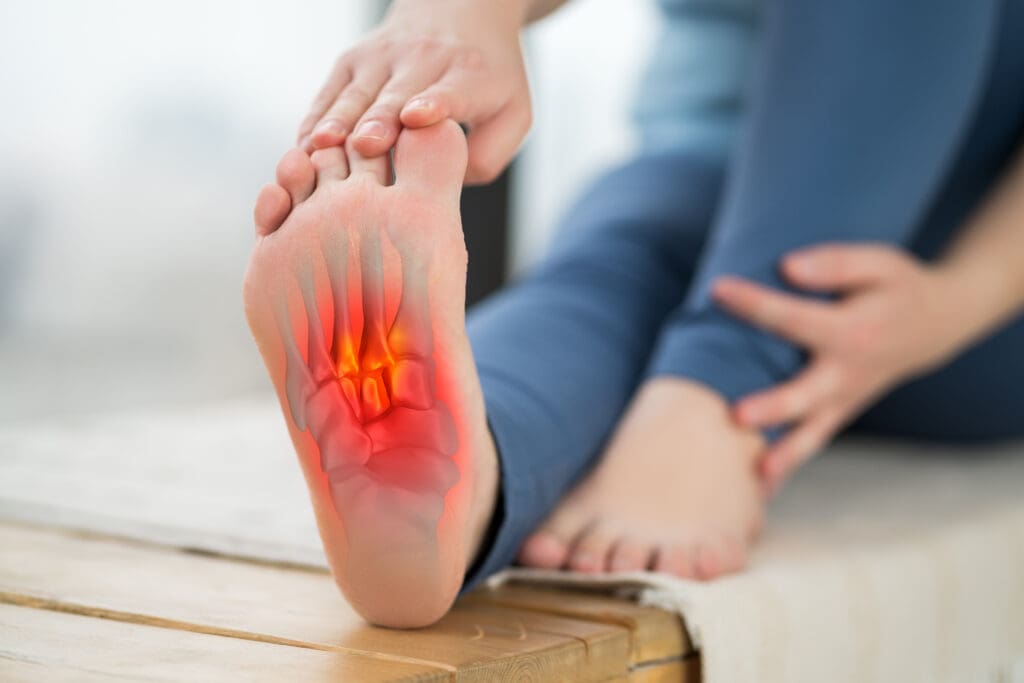
Calcaneal fat pad irritation is often seen in people who tend to over supinate or roll to the outside of their foot. Some signs you may be an over supinator:
- You wear out your shoes on the outside of your forefoot. Outside heel wear is normal as that is a normal first point of contact when your foot hits the ground, but wear on the front outside of the foot is a sign of over supination.
- Your knees fall out when you squat
- The ball of your big toe does not touch the ground when you walk
Pain will usually be present if you walk for long periods, take a rest and then go to stand up. Tenderness is often noted on the medial border of the heel (on the side versus the bottom of your foot).
S1, S2 nerve root irritation may also result in heel pain and is often evidenced with tenderness along the sacral border. The sacrum is the triangular bone on the back at the base of your spine. These nerves innervate the heel and if there is increased pressure on the S1, S2 nerve roots, one may experience heel pain with prolonged standing or with first steps in the morning. Some signs your heel pain may be a result of S1, S2 nerve root irritation:
- Your heel feels better if you do a deep squat or bend forward at the waist
- It feels good to bend forward at the waist after standing or walking for long periods
- If your heel is tender to touch when you’re lying flat on your back but less tender when palpated with your hip and knee in flexion (ex: lying on your back and pulling your knee towards your chest)
The fix
Check out the following downloads to get ideas on how to treat your heel pain and get the foot moving back to it’s correct biomechanical function with the included exercises.